
10 Things You Should Know Before Investing in Luxury Diamond Jewelry Items
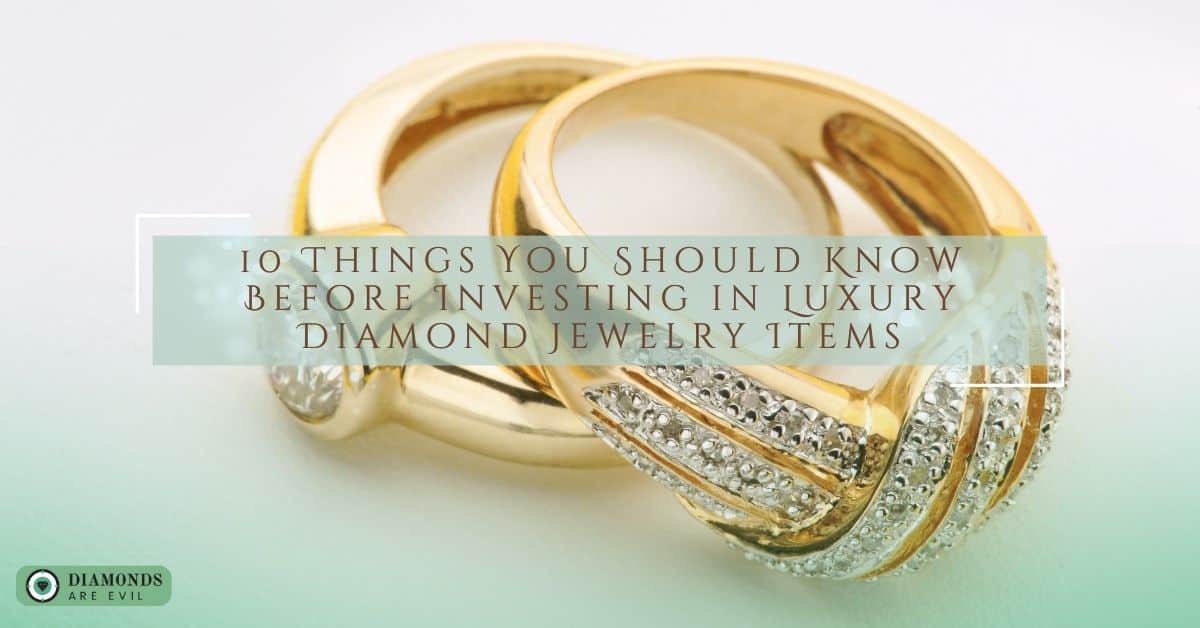
Diamond jewelry is a timeless investment that can be passed down through generations. When investing in luxury diamond jewelry items, it is important to be aware of the nuances of the market and understand the key components that make up a quality piece of diamond jewelry. From understanding the 4 C’s of diamond quality to considering the resale value, this guide will provide you with 10 key things to know before investing in luxury diamond jewelry items.
With this information, you can make an informed decision about your investment and be confident that you are making the right choice for your financial goals. Here are 10 things to consider before investing in luxury diamond jewelry items.
1. Understand The 4 C’s of Diamond Quality
The 4 C’s of diamond quality, also known as the “Four C’s of Diamonds”, are the standard by which diamonds are evaluated and graded. These four factors are Cut Carat, Color, and Clarity.
Each one of these elements plays an important role in determining the overall quality and value of a diamond. Understanding the 4 C’s is crucial for anyone looking to invest in luxury diamond jewelry as it will help you make an informed decision and ensure you are getting the best value for your money.
2. Research Different Diamond Shapes and their Relative Value
Before investing in luxury diamond jewelry items, it is important to research the different diamond shapes available and their relative value. While a round shape is the most popular due to its classic design, changing trends have led to the rise of unique cuts like marquise, cushion, or heart.
Choosing which type of cut is fashionable at any particular moment can be tricky so it is worth getting help from an expert jeweler who can advise on what might best suit your budget and taste.
| Diamond Shape | Price Range | Relative ValueRelative Value |
| Round | $1,500 – $3,000+ | High |
| Marquise | $2,500 – $5,000+ | Moderate |
| Cushion | $2,000 – $4,000+ | Moderate |
| Heart | $3,000 – $6,000+ | Moderate |
| Pear | $2,500 – $5,000+ | Moderate |
| Princess | $1,500 – $3,000+ | High |
| Emerald | $3,500 – $7,000+ | Moderate |
| Radiant | $2,200 – $4,500+ | Low |
| Asscher | $4,000 – $8,000+ | Low |
| Oval | $2,000 – $4,000+ | Moderate |
Please note that the prices and relative values listed above are approximate and can vary depending on factors such as the quality of the diamond and the specific market conditions.
3. Look for Certifications And Grading Reports
It’s important to look for certifications and grading reports from reputable organizations. These certifications and reports provide an unbiased assessment of the diamond’s quality, which can help you make an informed decision and ensure you are getting the best value for your money.
Some of the most reputable organizations that provide certifications and grading reports include:
- Gemological Institute of America (GIA)
- American Gem Society (AGS)
- European Gemological Laboratory (EGL)
- International Gemological Institute (IGI)
- Hoge Raad voor Diamant (HRD)
These organizations have strict grading standards and use state-of-the-art equipment to evaluate diamonds, so you can be confident that the diamond you are buying is of the highest quality.
4. Consider The Reputation And Trustworthiness Of The Jeweler
It’s necessary to consider the reputation and trustworthiness of the jeweler you are buying from. A reputable and trustworthy jeweler will have a history of providing high-quality diamonds and excellent customer service. They will also be able to answer any questions you may have about the diamond, its quality, and its price.
One way to determine the reputation and trustworthiness of a jeweler is to research their customer reviews and ratings. Look for reviews from independent sources, such as consumer websites, to get an unbiased opinion of the jeweler’s service and the quality of the diamonds they sell. You can also ask for recommendations from friends and family, or reach out to industry professionals like a gemologist or appraiser, who can provide valuable insight into the jeweler’s reputation.
5. Understand The Value Of Different Metal Options
When buying luxury diamond jewelry, it’s important to understand the value of different metal options for the setting and band of the jewelry. The metal used for the setting and band can greatly affect the overall look, durability, and value of the piece.
Some of the most common metal options for diamond jewelry include:
Platinum: Platinum is a strong and durable metal that is resistant to tarnish and scratches. It is also hypoallergenic and is well-suited for people with sensitive skin. Platinum is one of the most expensive metal options and is often used for high-end jewelry.
White Gold: White gold is made by alloying gold with other white metals such as palladium or nickel. It is less expensive than platinum and has a similar look. White gold is also durable, but it may require re-plating to maintain its color over time.
Yellow Gold: Yellow gold is a classic and traditional metal that is often used for diamond jewelry. It is a soft metal and can scratch easily, but it is also more affordable than platinum and white gold.
Rose Gold: Rose gold is a warm and romantic metal that is made by alloying gold with copper. It is also more affordable than platinum and white gold, and it is gaining popularity among consumers.
6. Be Aware Of Common Diamond Treatments
When buying luxury diamond jewelry, it’s important to be aware of common diamond treatments that can affect the value of the diamond. Some diamond treatments are more common than others, and some can greatly affect the value of the diamond.
Here are a few common diamond treatments to be aware of:
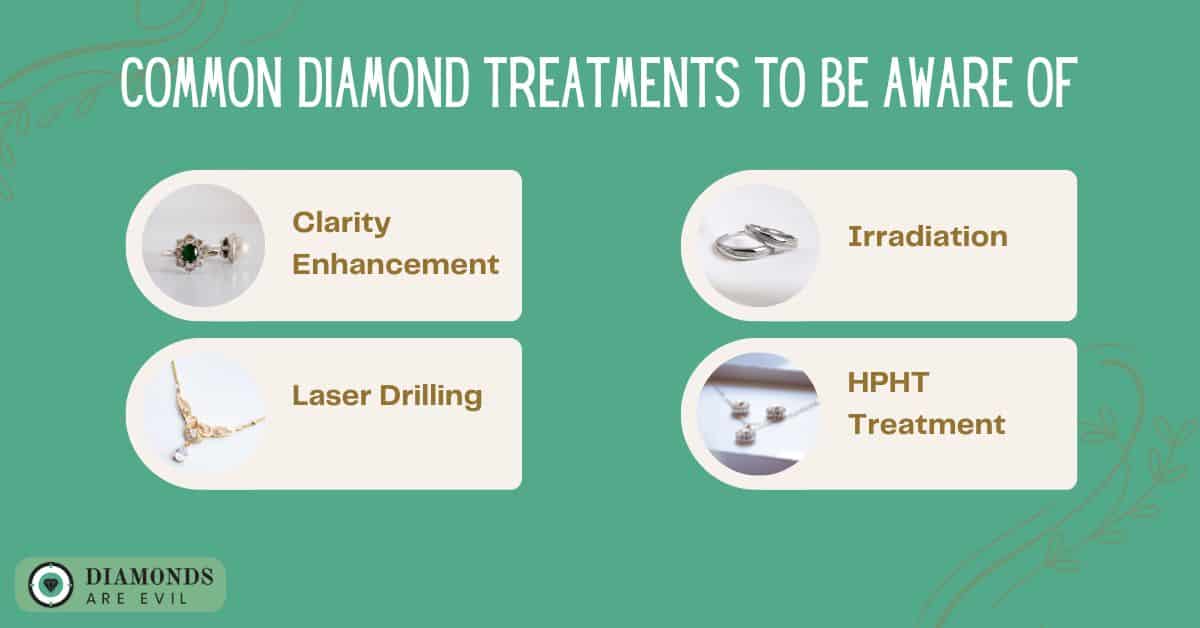
Clarity Enhancement: This is a treatment that is used to improve the appearance of a diamond’s clarity by filling in natural fractures or cavities with a substance such as resin or glass. This treatment can greatly affect the value of a diamond and it is not permanent, over time the filling may deteriorate and the diamond will lose its clarity.
Laser Drilling: This is a treatment that is used to remove black inclusions from a diamond by drilling a small hole into the diamond and removing the inclusion. This treatment can affect the value of a diamond, and make the diamond less valuable than one that has not been treated.
Irradiation: This is a treatment that is used to change the color of a diamond by exposing it to radiation. This treatment can greatly affect the value of a diamond, and it’s important to be aware of it before making a purchase.
HPHT Treatment: HPHT stands for High-Pressure High Temperature, it’s a treatment that is used to improve the color of a diamond by exposing it to high pressure and high temperature. This treatment can greatly affect the value of a diamond and it is important to know if a diamond has been HPHT treated before making a purchase.
7. Understand the Difference Between Natural and Synthetic Diamonds
Here is the difference between natural and synthetic diamonds:
| Characteristic | Natural Diamond | Synthetic Diamond |
|---|---|---|
| Origin | Formed naturally in the earth’s mantle over millions of years | Created in a laboratory using advanced technology |
| Rarity
|
Rare | Less rare |
| Value | Generally considered more valuable | Generally considered less valuable |
| Unique characteristics | Each diamond is unique with its own set of inclusions, impurities, and variations | Identical to each other as they are created in a controlled environment |
| Certification | Natural diamonds can have certifications from reputable organizations such as GIA, AGS, EGL | Synthetic diamonds can have certifications from reputable organizations such as IGI, GCAL, GIA |
It’s important to note that the above comparison is general, and the value of a diamond can be affected by other factors such as the 4 C’s (cut, carat, color, and clarity) and the diamond shape.
8. Have A Clear Budget In Mind Before Making A Purchase
Having a clear budget in mind will also help you to determine the type of diamond you can afford. A larger diamond will cost more than a smaller diamond, and a diamond with a higher quality will cost more than a diamond with a lower quality. It’s important to consider these factors when setting your budget and determining what type of diamond you can afford.
Having a clear budget in mind before making a purchase will also help you to prioritize your needs and wants. You will be able to decide what is important to you and what features you are willing to compromise on. This way, you will be able to make an informed decision and select the best option that fits within your budget.
9. Consider the Resale Value Of the Diamond Jewelry Piece
While you may be purchasing the piece with the intention of keeping it for a long time, circumstances may change and you may need to sell the piece at some point in the future.
The resale value of diamond jewelry is determined by several factors, including the quality of the diamond, the size of the diamond, the type of diamond, and the type of setting and band.
10. Familiarize Yourself With the Market Trends and Prices
By familiarizing yourself with the market trends and prices for luxury diamond jewelry items, you will be better equipped to make an informed decision when purchasing such items.
The prices of diamond jewelry can fluctuate depending on several factors, including supply and demand, market trends, and overall economic conditions.
It’s important to research the current market trends and prices for luxury diamond jewelry items before making a purchase. Prices for diamond jewelry may be higher in one location than in another, so it’s important to do your research and compare prices from different sellers.
Additionally, it’s important to be aware of the fluctuation of diamond prices in general, due to the supply and demand, mining activities, and the overall economic situation.
In conclusion
Investing in luxury diamond jewelry items is a great way to make an informed and wise investment. By understanding the 4 C’s of diamond quality, researching different diamond shapes and metal options, being aware of common treatments and their effects on value, considering the reputation of the jeweler you are buying from, and familiarizing yourself with market trends and prices, you can make a confident and informed decision about your diamond jewelry purchase.
With this knowledge and the right guidance, you will be able to find the perfect piece of luxury diamond jewelry that fits both your style and budget.