
Are Black Diamonds Real?
Black diamonds have become increasingly popular in recent years as a unique and edgy alternative to traditional white diamonds. However, there is often confusion and controversy surrounding their authenticity, leading many to ask the question, “Are black diamonds real?”
In short, the answer is yes – black diamonds are real, naturally occurring gemstones. However, there is more to the story, as there are various types of black diamonds and methods for creating them that affect their authenticity and value.
In this article, we will explore the world of black diamonds, including their physical properties, how they differ from traditional white diamonds, and their origins and value.
What are Black Diamonds?
Black diamonds are a type of diamond that are opaque and have a dark color, ranging from dark gray to almost black. They are composed of carbon, like traditional white diamonds, but their physical properties differ in several ways.
Black diamonds are typically polycrystalline, meaning that they are made up of numerous small crystals rather than a single large crystal. They also have higher porosity and greater amounts of inclusions than white diamonds. Black diamonds are much rarer than traditional diamonds and are often used in unique and unconventional jewelry designs.
The Controversy Surrounding Black Diamonds
The controversy surrounding black diamonds stems from the fact that some of them have been produced in labs, not formed naturally. Unlike traditional diamonds, black diamonds are synthetic, meaning they were made to look and feel like natural diamonds but created entirely in a laboratory. Because some people dislike the idea of artificial diamonds, there is an ongoing debate among jewelers and shoppers as to whether or not it is appropriate to buy a lab-created black diamond.
Some argue that while they may lack the beauty of traditional diamonds, lab-created stones offer significant cost savings which can make them desirable to those looking for high-quality jewelry at an affordable price. On the other hand, many people prefer the unique characteristics of natural black diamonds, arguing that these stones inherently possess more value since they were formed over millions of years by nature.

Characteristics of Natural Black Diamonds
Natural Black Diamonds are a rare and unique type of diamond that are highly prized for their striking appearance. Unlike traditional white diamonds, black diamonds are formed differently and have distinct physical characteristics. Here, we will discuss the characteristics of natural black diamonds and their value in the jewelry industry.
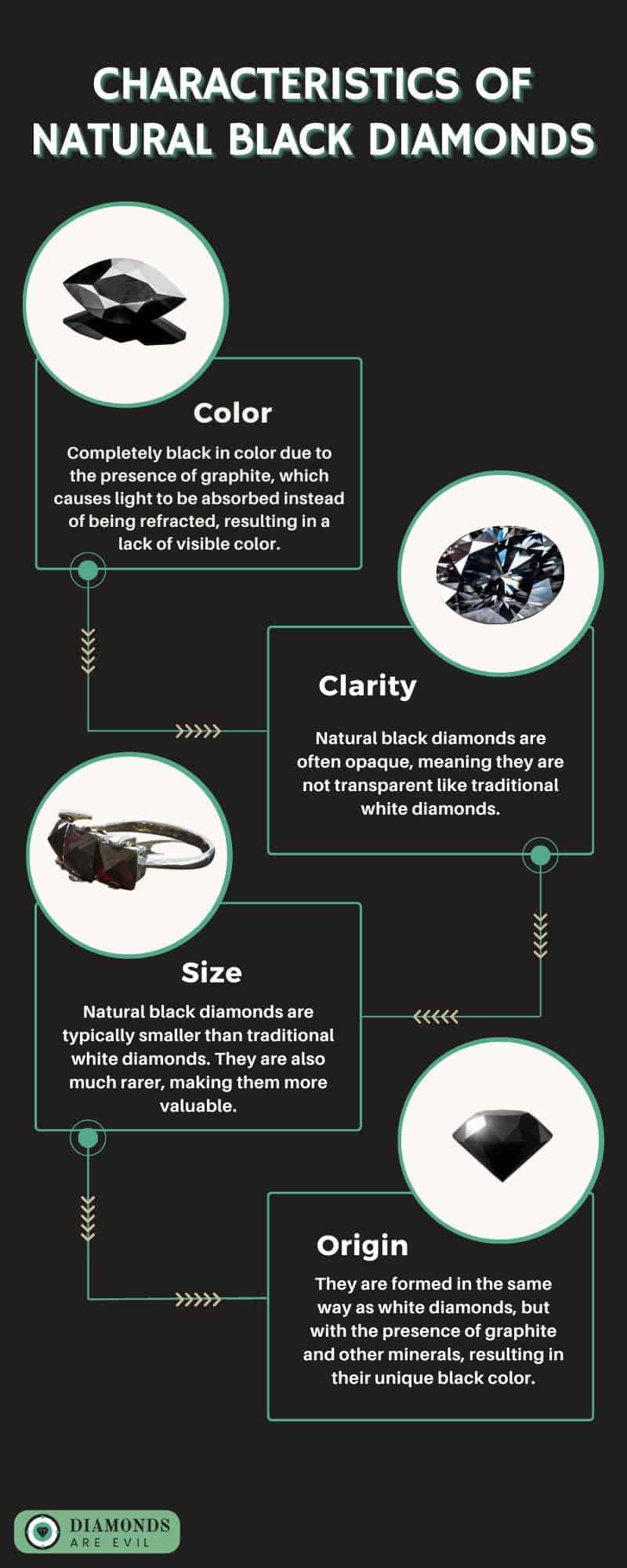
Color: Completely black in color due to the presence of graphite, which causes light to be absorbed instead of being refracted, resulting in a lack of visible color.
Clarity: Natural black diamonds are often opaque, meaning they are not transparent like traditional white diamonds.
Size: Natural black diamonds are typically smaller than traditional white diamonds. They are also much rarer, making them more valuable.
Origin: They are formed in the same way as white diamonds, but with the presence of graphite and other minerals, resulting in their unique black color.
Value of Natural Black Diamonds
Natural black diamonds are highly valued in the jewelry industry due to their rarity and unique appearance. The table below shows the estimated price range of natural black diamonds based on their carat weight and quality:
| Carat Weight | Color Grade | Clarity Grade | Estimated Price Range |
| 0.25-0.50 | G-H | VS2-I1 | $1,500-$2,500 |
| 0.51-0.75 | G-H | VS2-I1 | $2,500-$4,000 |
| 0.76-1.00 | G-H | VS2-I1 | $1,200-$2,000 |
| 1.01-3.00 | G-H | SI2 | $2,000-$5,000 |
| 3.01+ | G-H | SI2 | $5,000+ |
Characteristics of Treated Black Diamonds
Treated black diamonds have become increasingly popular in recent years, especially due to their affordability compared to natural diamonds. This type of diamond is made by applying a radiation treatment to a naturally occurring diamond, thus creating a beautiful stone with an intense black hue and striking brilliance. They can be identified mainly by their deep color, as well as the lack of fluorescence that is typically seen in naturally occurring diamonds.
Treated black diamonds possess several distinct characteristics that differentiate them from natural black diamonds. Here are the key characteristics of treated black diamonds:
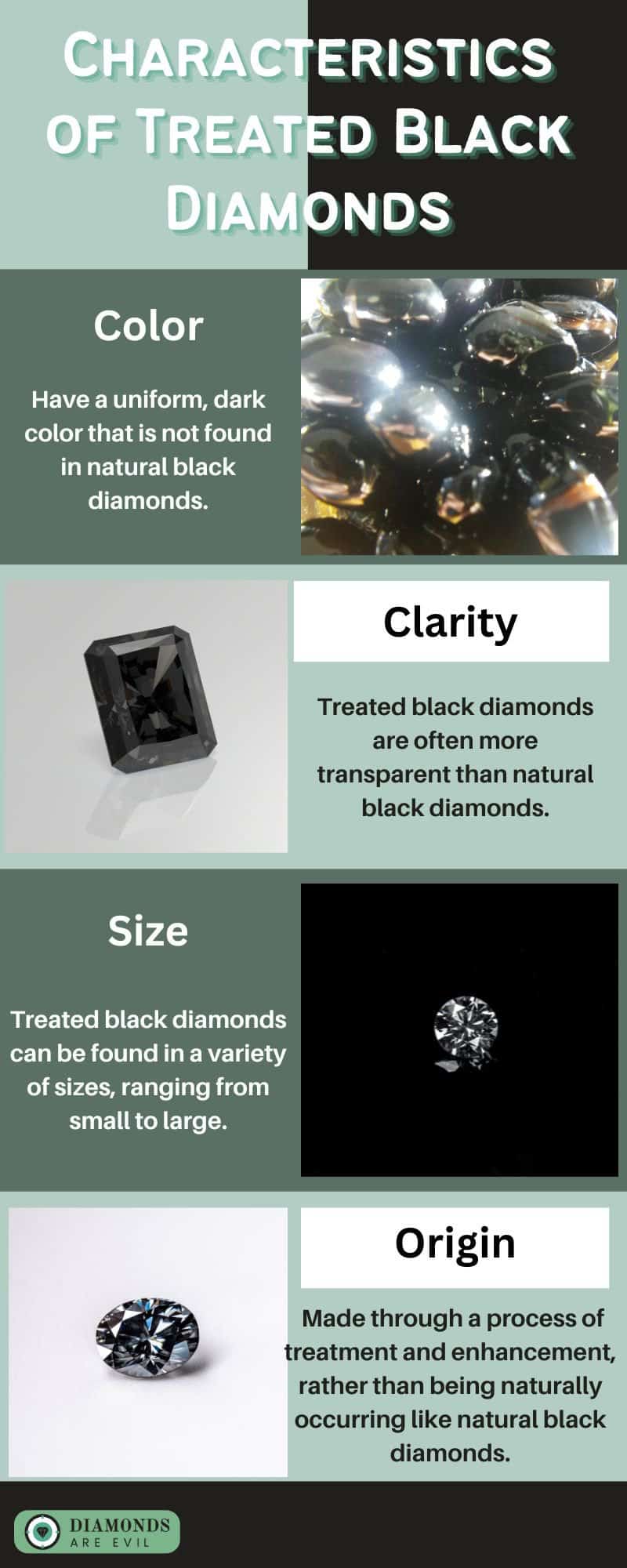
Color: Have a uniform, dark color that is not found in natural black diamonds. This is achieved through a process of irradiation and high-pressure, high-temperature treatments, which change the color of the diamond.
Clarity: Treated black diamonds are often more transparent than natural black diamonds. They may also have fewer inclusions or other imperfections, making them more visually appealing.
Size: Treated black diamonds can be found in a variety of sizes, ranging from small to large.
Origin: Made through a process of treatment and enhancement, rather than being naturally occurring like natural black diamonds.
Value of Treated Black Diamonds
Treated black diamonds are less valuable than natural black diamonds due to the fact that they have been treated and enhanced. The table below shows the estimated price range of treated black diamonds based on their carat weight and quality:
| Carat Weight | Quality | Estimated Price Range | |
| 0.5-1 | Low | $800-$1,500 | |
| Medium | $1,500-$2,000 | ||
| High | $2,000-$3,000 | ||
| 1-2 | Low | $1,500-$2,500 | |
| Medium | $2,500-$3,500 | ||
| High | $3,500-$5,000 | ||
| 2-3 | Low | $2,500-$4,000 | |
| Medium | $4,000-$6,000 | ||
| High | $6,000-$8,000 |
Differences Between Black and Traditional White Diamonds
Diamonds are one of the most precious and sought-after gemstones in the world, but not all diamonds are created equal. Black diamonds and traditional white diamonds have distinct differences that set them apart from each other. In this article, we will discuss the main differences between black and traditional white diamonds, including their color, clarity, rarity, cut, and value.
The table below discusses the main differences between black and traditional white diamonds, including their color, clarity, rarity, cut, and value.
| Category | Black Diamonds | White Diamonds |
|---|---|---|
| Color | Dark and opaque due to the presence of graphite and other impurities | Colorless or near-colorless |
| Clarity | Often more included and may have more visible blemishes | Graded on their clarity, with fewer inclusions or blemishes |
| Rarity | Relatively rare and only a small percentage of diamonds found in nature are black | More common and can be found in a wide range of sizes |
| Cut | Often cut to maximize their color and reduce the appearance of inclusions or blemishes | Typically cut to maximize their brilliance and fire |
| Value | Generally less valuable due to their lower demand and unique nature | Higher demand and more valuable, particularly for larger or higher quality stones |
In conclusion
Black diamonds are an increasingly popular alternative to traditional white diamonds. They are unique in their color and properties and have a wide range of uses, including jewelry, technology, art, and investment. Black diamonds can vary greatly in price depending on the quality, size, rarity, and demand for them.
As the popularity of black diamonds continues to grow, their value is expected to increase. Thus, they are a smart investment option for those looking to add an element of rarity and uniqueness to their portfolio.