
Are Lab-Grown Diamonds Real Diamonds?
Lab-grown diamonds are real diamonds, created in a laboratory setting instead of forming naturally beneath the Earth’s surface. Lab-grown diamonds have the same physical, chemical, and optical properties as natural diamonds, but they typically come at a lower cost and with a smaller environmental impact.
In this article, we’ll take a look at how lab-grown diamonds are made, what their properties are, and how they differ from natural diamonds. By the end of this article, you’ll have a better understanding of lab-grown diamonds and be one step closer to finding the perfect diamond for you.
What Are Lab-Grown Diamonds?
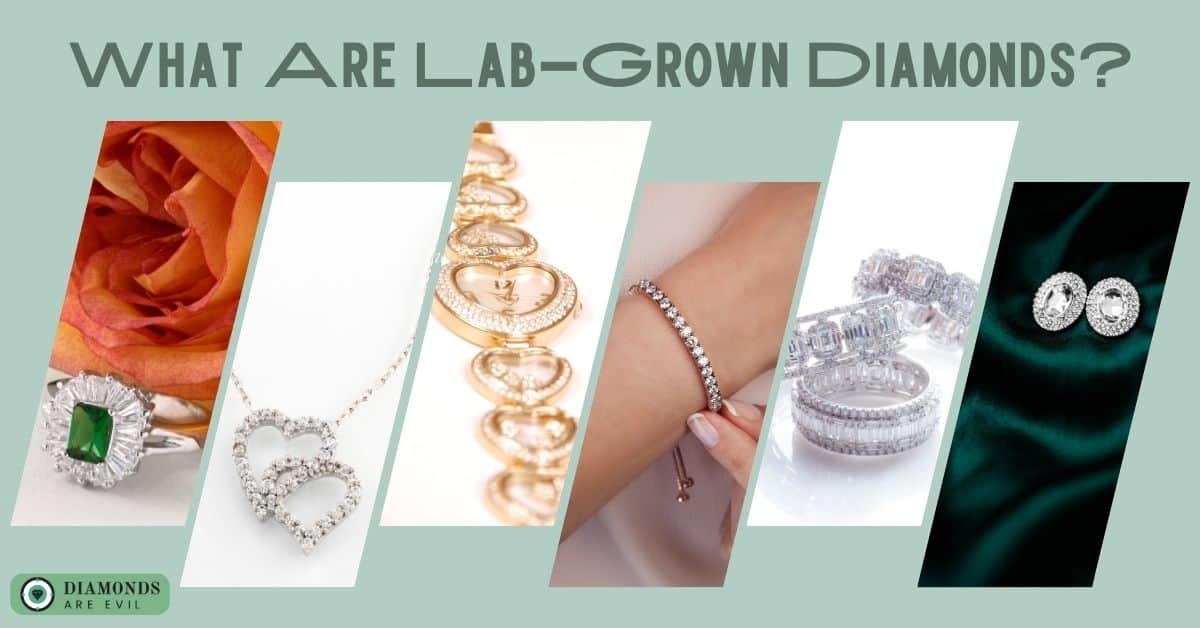
Lab-grown diamonds, also known as lab-created or cultured diamonds, are a type of diamond that is grown in a laboratory environment using advanced technological processes. These artificial diamonds have the same molecular structure, physical properties, and visual appearance as naturally mined diamonds. They contain the same combination of nitrogen and carbon atoms that provide natural diamonds with remarkable characteristics such as strength, durability, and sparkle.
Lab-grown diamonds are usually priced lower than their mined counterparts because they can be produced in high volumes using fewer resources. As the demand for ethically sourced, conflict-free diamonds continues to grow, lab-grown alternatives could become increasingly popular among consumers who are looking for an affordable and responsible way to purchase gemstones.
How Lab-Grown Diamonds Are Made
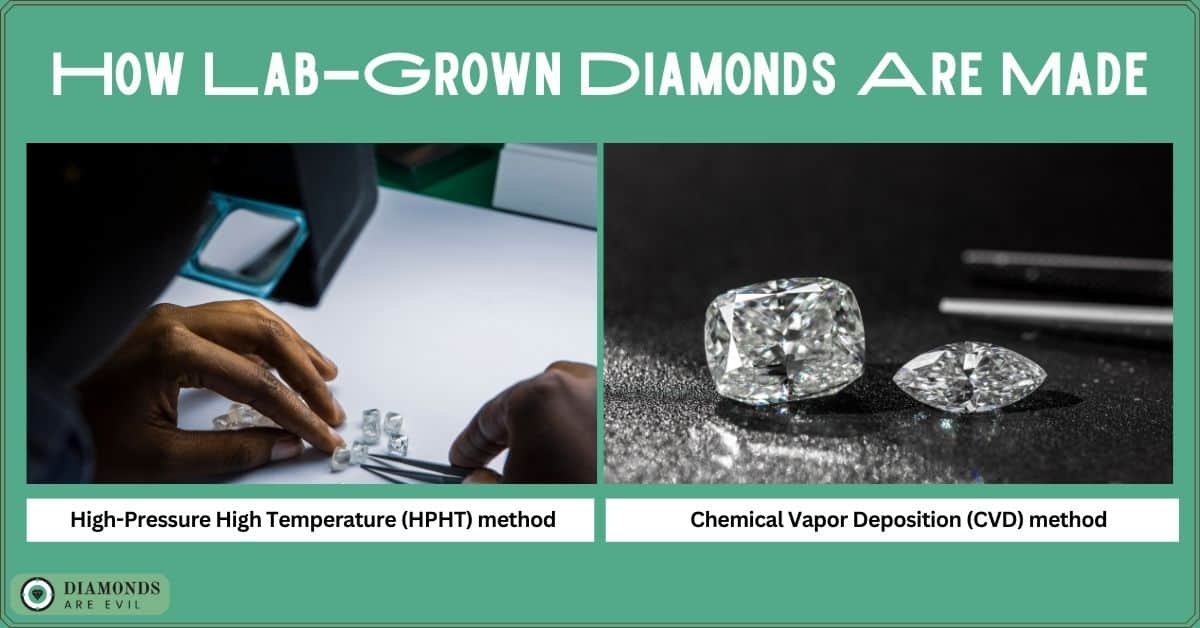
There are two main methods for growing lab-grown diamonds: High-Pressure High Temperature (HPHT) and Chemical Vapor Deposition (CVD):
High-Pressure High Temperature (HPHT) method
The HPHT method is one of the earliest methods for growing lab-grown diamonds, and it mimics the high-pressure and high-temperature conditions that natural diamonds form under. In this process, a small diamond seed is placed in a press along with a carbon-rich material, such as graphite.
The press is then heated to temperatures of around 1,800 degrees Celsius and pressurized to around 1.5 million atmospheres. Under these conditions, the carbon atoms in the graphite begin to rearrange themselves and bond together, forming a diamond crystal around the seed. The process can take several weeks to several months, and the resulting diamond is virtually identical to a natural diamond.
Chemical Vapor Deposition (CVD) method
The CVD method is a more recent method for growing lab-grown diamonds, and it involves the deposit of carbon atoms onto a substrate in a controlled environment. In this process, a small diamond seed is placed in a vacuum chamber along with a carbon-rich gas, such as methane.
The chamber is then heated to high temperatures, and plasma is used to break the carbon atoms in the gas apart. The carbon atoms then deposit onto the seed, forming a diamond crystal. This process can take several days to several weeks, and the resulting diamond is virtually identical to a natural diamond.
Properties of Lab-Grown Diamonds
Lab-grown diamonds, also known as synthetic diamonds or cultured diamonds, are diamonds that are created in a laboratory setting rather than formed naturally in the Earth. They have the same physical and chemical properties as natural diamonds, which makes them virtually identical to natural diamonds.
Physical properties of lab-grown diamonds include:
Hardness: Lab-grown diamonds have a Mohs hardness of 10, which is the highest rating on the Mohs scale. This means they are extremely hard and resistant to scratching, chipping, and other forms of wear and tear.
Crystal structure: Lab-grown diamonds have a cubic crystal structure, which is the same crystal structure as natural diamonds.
Density: Lab-grown diamonds have a density of around 3.52 grams per cubic centimeter, which is slightly less than natural diamonds which have a density of around 3.52 – 3.57 grams per cubic centimeter.
Chemical properties of lab-grown diamonds include:
Composition: Lab-grown diamonds are made of pure carbon, just like natural diamonds.
Stability: Lab-grown diamonds are stable and will not degrade over time.
Optical properties of lab-grown diamonds include:
Transparency: Lab-grown diamonds are transparent and will allow light to pass through them.
Refractive index: Lab-grown diamonds have a refractive index of 2.417, which is the same as natural diamonds.
Dispersion: Lab-grown diamonds have a dispersion of 0.044, which is the same as natural diamonds.
Lab-grown diamonds are virtually identical to natural diamonds in terms of their physical, chemical, and optical properties, which makes them hard to distinguish from natural diamonds. However, some lab-grown diamonds may contain slight impurities or growth patterns that can be detected by specialized equipment, which can distinguish them from natural diamonds.
Differences Between Lab-Grown and Natural Diamonds
While lab-grown diamonds have the same physical and chemical properties as natural diamonds, there are a few key differences that set them apart.
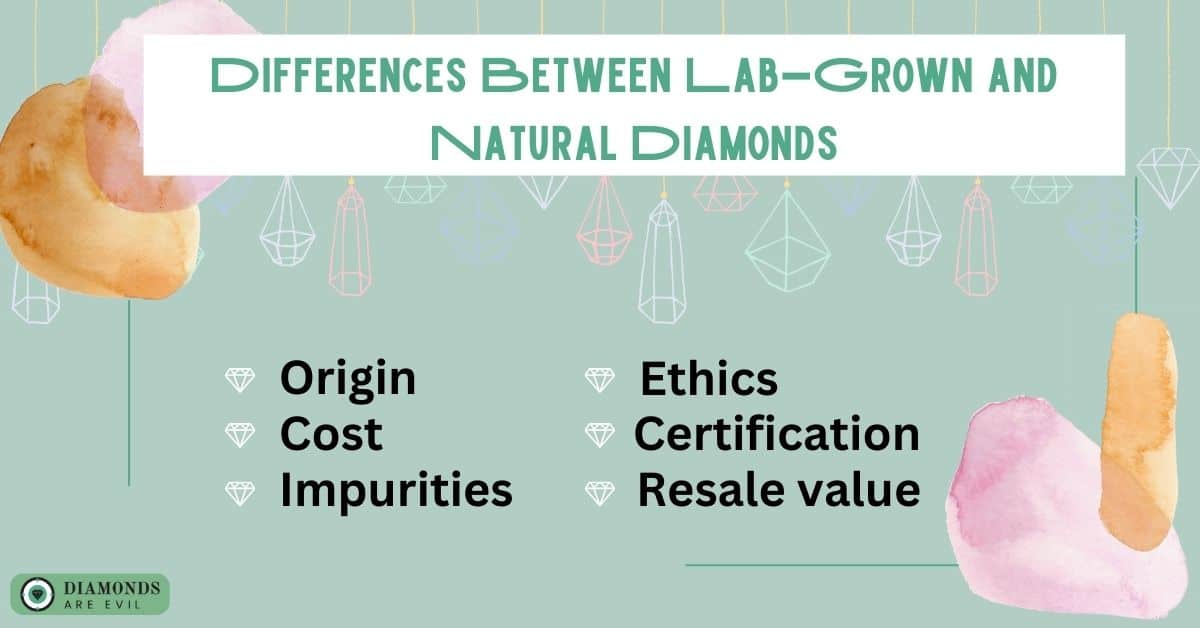
Origin: The most obvious difference between lab-grown and natural diamonds is their origin. Natural diamonds are formed deep within the Earth over millions of years, while lab-grown diamonds are created in a laboratory setting in a matter of weeks or months.
Cost: Lab-grown diamonds tend to be less expensive than natural diamonds because they are created in a controlled environment and do not require the same level of mining and extraction as natural diamonds.
Impurities: Lab-grown diamonds may contain slight impurities or growth patterns that can be detected by specialized equipment, while natural diamonds are formed under extreme pressure and temperature, and are not always perfect.
Ethics: Lab-grown diamonds are an ethical and sustainable alternative to natural diamonds, which are often associated with human rights violations and environmental degradation caused by diamond mining.
Certification: Lab-grown diamonds are certified by different organizations than natural diamonds, which may make it more difficult to verify their authenticity.
Resale value: Lab-grown diamonds have a lower resale value than natural diamonds, as their origin can be traced back to the laboratory.
In conclusion
lab-grown diamonds are an ethical and sustainable alternative to natural diamonds that can be produced in high volumes using fewer resources. They have the same physical, chemical, and optical properties as natural diamonds, but they typically come at a lower cost and with a smaller environmental impact.
With the increasing demand for ethically sourced gemstones, lab-grown diamonds could become a popular option for consumers looking for an affordable and responsible way to purchase diamond jewelry. We hope this article has helped you gain a better understanding of lab-grown diamonds so that you can make the right choice when it comes time to buy your next diamond.