
Choosing a Qualified Specialty Jeweler for Diamond Jewelry
When it comes to purchasing fine diamond jewelry, selecting the right jeweler is essential. With so many options available, choosing a qualified specialty jeweler can make all the difference when it comes to finding the perfect piece of jewelry for any occasion. When searching for a qualified specialty jeweler to purchase your diamond jewelry, it is important to look for qualities such as education and certification, industry experience and reputation, access to a variety of diamonds, and personalized service.
In this guide, we’ll discuss the qualities to look for in a qualified specialty jeweler and explore how they can help you find the right diamond jewelry. By understanding the value of a qualified specialty jeweler and exploring different diamonds and settings with them, you will be able to make an informed decision when purchasing your diamond jewelry.
Understanding the Value of a Qualified Specialty Jeweler
When it comes to purchasing fine diamond jewelry, selecting a qualified specialty jeweler is a must. A qualified specialty jeweler has the knowledge and experience needed to help you find the perfect piece of jewelry for any occasion, while also ensuring that you make an informed decision with your purchase.
When purchasing diamond jewelry from a qualified specialist, you should also expect access to a variety of quality diamonds. The jeweler should be able to provide you with a range of options and explain the differences between them. This allows you to make an informed decision about the best diamond for your needs.
The Benefits of Purchasing From a Qualified Specialty Jeweler
It is essential to find a qualified specialty jeweler, not only will they have the knowledge and experience required to help you make an informed decision, but they also provide additional benefits that come with selecting a specialist. These include:
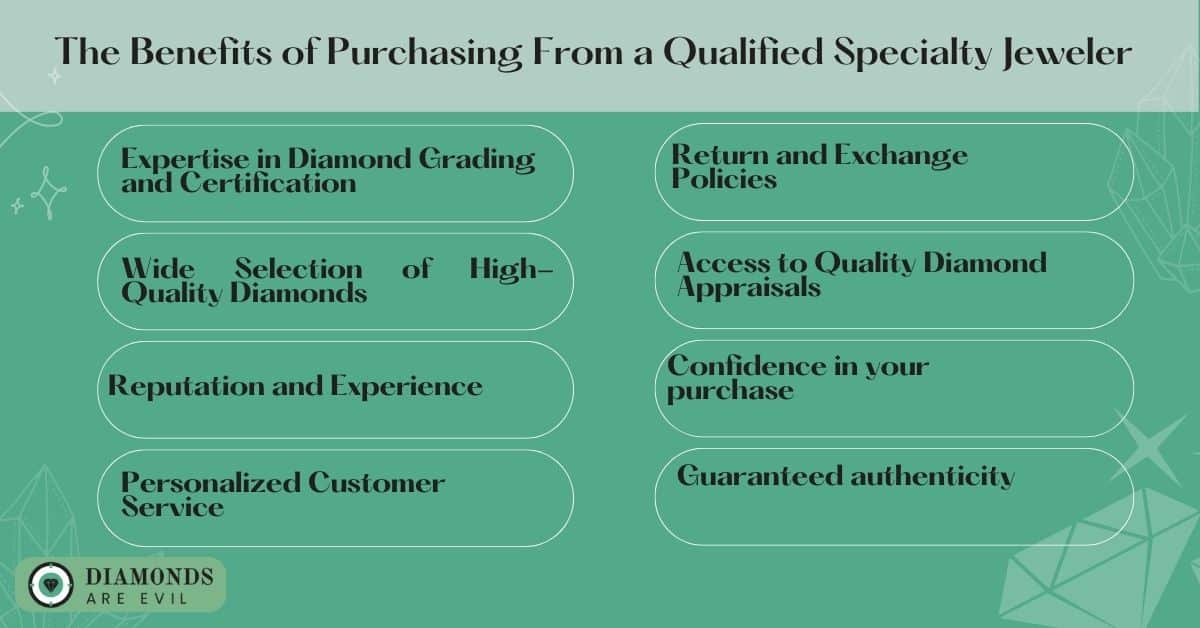
Expertise in Diamond Grading and Certification: A qualified specialty jeweler will have the knowledge and qualifications to properly evaluate and grade diamonds, ensuring that you are purchasing a high-quality piece.
Wide Selection of High-Quality Diamonds: A qualified jeweler will have a wide selection of diamonds available, including a variety of cuts, carat weights, and grades, giving you more options to choose from.
Reputation and Experience: A reputable and experienced specialty jeweler will have a long-standing reputation for providing high-quality diamonds and exceptional customer service, giving you peace of mind in your purchase.
Personalized Customer Service: A qualified jeweler will be able to provide you with personalized service and advice, helping you find the perfect piece of diamond jewelry to suit your needs and budget.
Return and Exchange Policies: A qualified jeweler will have return and exchange policies in place, allowing you to return or exchange your diamond jewelry if you are not satisfied with your purchase.
Access to Quality Diamond Appraisals: A qualified jeweler will be able to provide you with accurate appraisals of the diamond jewelry, ensuring that you are getting a fair price.
Confidence in your purchase: A qualified specialty jeweler will help you understand the value of diamonds, giving you confidence that you’re making a wise investment in a high-quality piece of jewelry.
Guaranteed authenticity: Buying from a qualified jeweler ensures that you are getting an authentic diamond and not a synthetic or fake one.
Qualities to Look for in a Qualified Specialty Jeweler
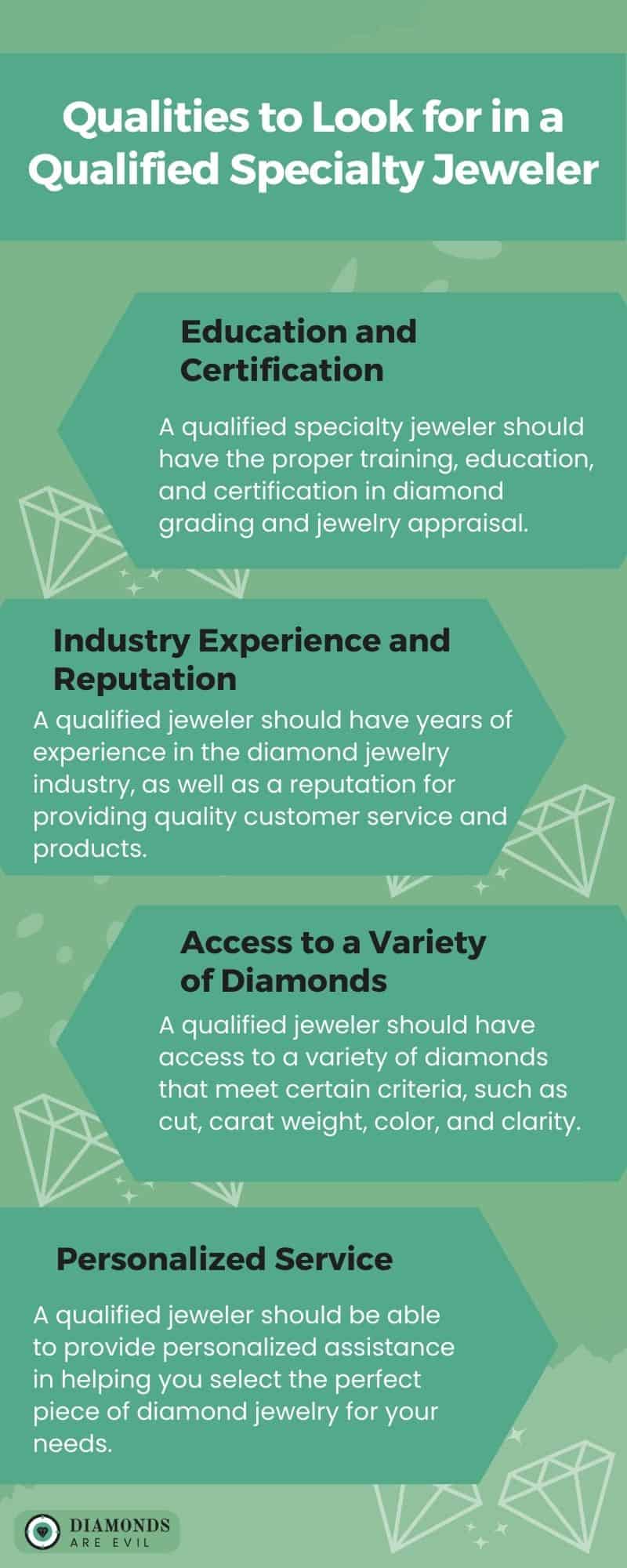
When selecting a qualified specialty jeweler, it is important to look for certain qualities that will ensure you are working with a reputable and knowledgeable professional. These include:
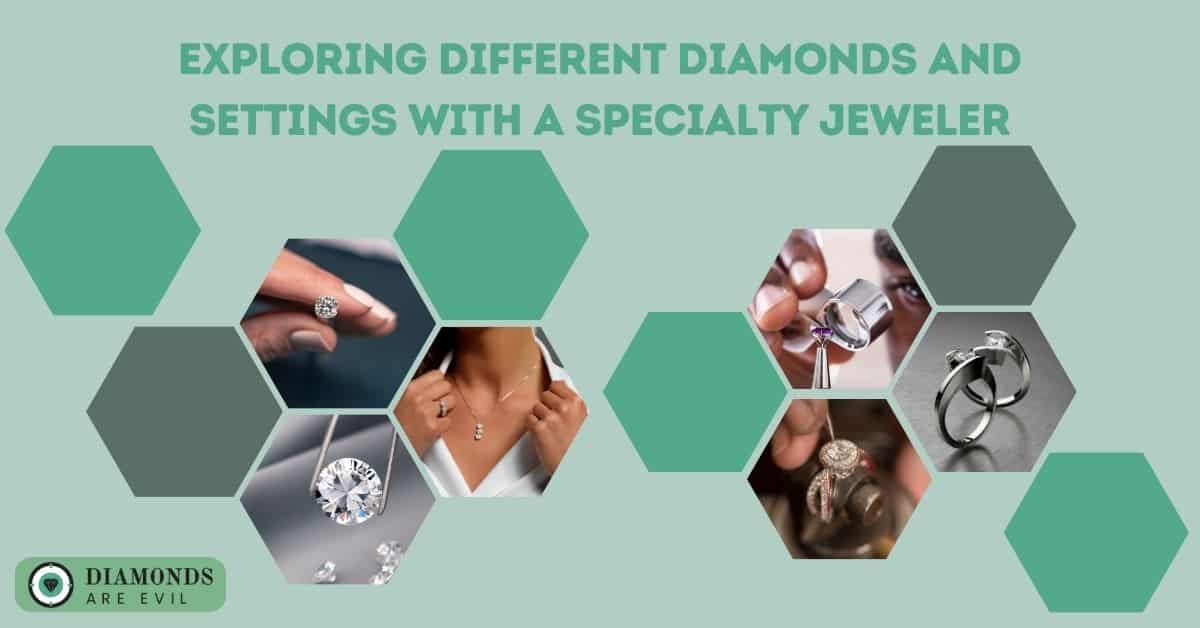
Exploring Different Diamonds and Settings with a Specialty Jeweler
One of the first things to consider when exploring different diamonds with a specialty jeweler is the “Four Cs” of diamond grading: carat weight, cut, color, and clarity. A qualified jeweler will be able to provide you with detailed information on each diamond’s attributes, helping you to understand the relationship between quality and value.
The cut of a diamond is an important aspect to consider as it affects the diamond’s brightness, fire, and overall appearance. A well-cut diamond will have a balanced symmetry and proportions, which will optimize the diamond’s brilliance and sparkle.
The color of a diamond is another important factor to consider. Diamonds are graded on a scale from D (colorless) to Z (light yellow or brown). A colorless diamond is considered the most valuable, but some people prefer a diamond with a slight hint of color, such as a yellow or pink diamond.
Tips for Choosing a Qualified Specialty Jeweler
Here are some tips to help you select the right jeweler:
| Tips for Choosing a Qualified Specialty Jeweler | Qualities |
| Look for diamond grading and certification expertise
|
A qualified jeweler should have the knowledge and qualifications to properly evaluate and grade diamonds. |
| Check the jeweler’s reputation and experience
|
Look for a reputable and experienced specialty jeweler with a long-standing reputation for providing high-quality diamonds and exceptional customer service. |
| Ask for recommendations
|
Ask friends, family, or other trusted sources for recommendations on reputable and qualified jewelers. |
| Research the jeweler’s selection
|
Make sure the jeweler has a wide selection of high-quality diamonds available, including a variety of cuts, carat weights, and grades. |
| Inquire about return and exchange policies
|
Find out if the jeweler has return and exchange policies in place, allowing you to return or exchange your diamond jewelry if you are not satisfied with your purchase. |
| Consider the jeweler’s customer service
|
Look for a jeweler who can provide personalized service and advice, helping you find the perfect piece of diamond jewelry to suit your needs and budget. |
| Confirm the jeweler’s authenticity and compliance with industry standards
|
Make sure the jeweler is authentic and complies with industry standards, such as the Kimberley Process Certification Scheme and the Responsible Jewellery Council. |
| Ask for diamond appraisals
|
A qualified jeweler should be able to provide accurate appraisals of the diamond jewelry, ensuring that you are getting a fair price. |
| Read customer feedback and reviews
|
Look for customer feedback and reviews to get an idea of the jeweler’s reputation and history of satisfied customers. |
| Visit the jeweler in person
|
It’s always best to visit the jeweler in person to see their selection, get a sense of their professionalism, and discuss your needs and preferences. |
In conclusion
When it comes to purchasing fine diamond jewelry, selecting a qualified specialty jeweler is essential. A qualified specialty jeweler has the knowledge and experience needed to help you find the perfect piece of jewelry for any occasion, while also ensuring that you make an informed decision with your purchase.
By understanding the value of a qualified specialist and exploring different diamonds and settings with them, you will be able to make an informed decision when purchasing your diamond jewelry. Additionally, look for qualities such as education and certification, industry experience and reputation, access to a variety of diamonds, and personalized service in any qualified specialty jeweler that you consider.