
Diamond Color for Jewelry: Is a Higher Grade Always Better?
The color of a diamond is one of the most important factors to consider when choosing a diamond for jewelry. While some may assume that a higher grade of color always results in a better diamond, this isn’t necessarily the case. There are several factors to consider when selecting a diamond color for your jewelry, and it’s important to understand the grading scale and other factors that can impact a diamond’s appearance and value.
In this guide, we’ll take a look at diamond color grades, factors that affect color, and tips to make sure you’re buying a high-quality diamond.
The 4 C’s of Diamond Quality
The 4 C’s of diamond quality are the standard criteria used to evaluate the value and desirability of a diamond. The 4 C’s stand for Carat Weight, Cut, Clarity, and Color.
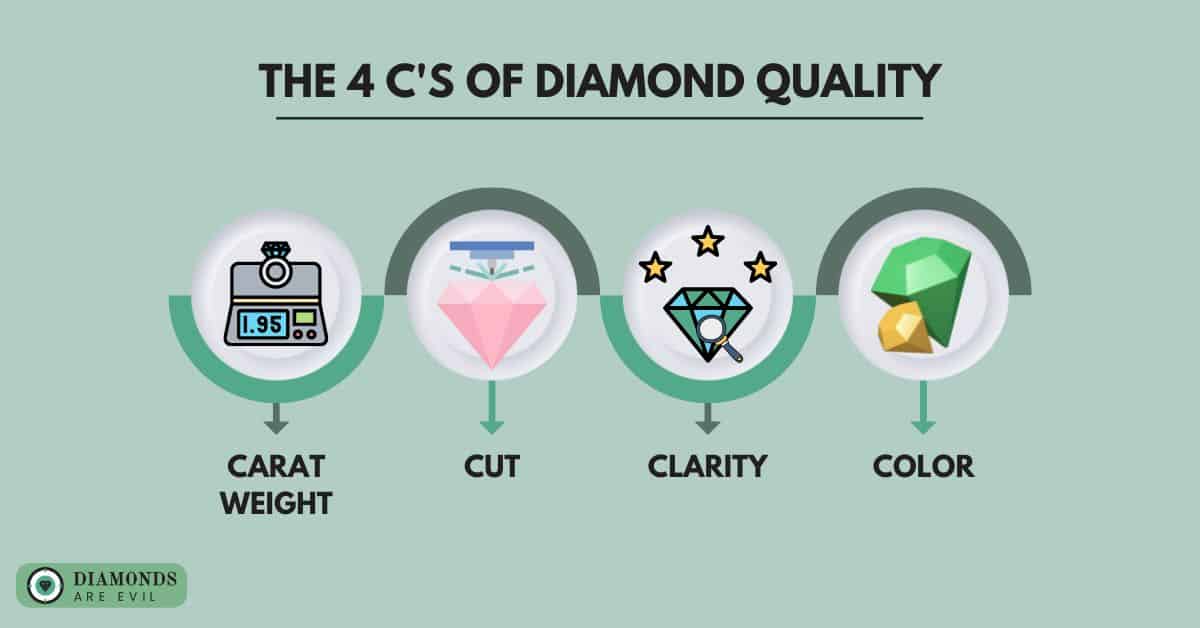
Carat Weight
Refers to the weight of the diamond, and it is measured in carats. One carat is equal to 0.2 grams. The weight of a diamond is a significant factor in its value, as larger diamonds are rarer and more valuable.
Cut
Refers to the way a diamond is shaped and how well it reflects light. The cut of a diamond can affect its brilliance, fire, and scintillation, which are the qualities that make a diamond sparkle and shine.
Clarity
Refers to the presence of blemishes or inclusions within a diamond. Blemishes are surface imperfections, while inclusions are internal imperfections. The fewer blemishes and inclusions a diamond has, the higher its clarity grade and value.
Color
Refers to the presence or absence of color in a diamond. A diamond’s color grade ranges from D (colorless) to Z (light yellow). The closer a diamond is to colorless, the higher its value and desirability.
Understanding the Color Grading Scale
Understanding the color grading scale is crucial when purchasing a diamond. The Gemological Institute of America (GIA) created a standard color grading scale that ranges from D (colorless) to Z (light yellow or brown), which is used to evaluate the quality and value of a diamond’s color.
Here, we will delve into the various color grades and their associated rarity and value. By understanding the nuances of the color grading scale, you can make an informed decision when selecting a diamond that meets your preferences and budget.
Here’s a table outlining the GIA diamond color grading scale:
| GIA Color Grade | Color Description | Color Range |
|---|---|---|
| D | Colorless | 0-1 |
| E | Colorless | 1-2 |
| F | Colorless | 2-3 |
| G | Near Colorless | 3-4 |
| H | Near Colorless | 4-5 |
| I | Near Colorless | 5-6 |
| J | Near Colorless | 6-7 |
| K | Faint Yellow | 7-8 |
| L | Faint Yellow | 8-9 |
| M | Faint Yellow | 9-10 |
| N | Very Light Yellow | 10-11 |
| O | Very Light Yellow | 11-12 |
| P | Very Light Yellow | 12-13 |
| Q | Light Yellow | 13-14 |
| R | Light Yellow | 14-15 |
| S | Light Yellow | 15-16 |
| T | Light Yellow | 16-17 |
| U-Z | Fancy Yellow | 17-23 |
The GIA color grading scale ranges from D (colorless) to Z (light yellow or brown). The grades are determined by comparing a diamond to a set of master stones with known color grades. Diamonds with less color (or a more colorless appearance) are graded higher, while those with more color are graded lower. Diamonds that display more intense color than Z are considered “Fancy Color” diamonds and are graded separately on a different color scale.
Factors Affecting Diamond Color
When selecting a diamond for jewelry, there are certain factors that can affect its color grade. Knowing what these factors are and how to identify them will help you make an informed decision when choosing a stone.
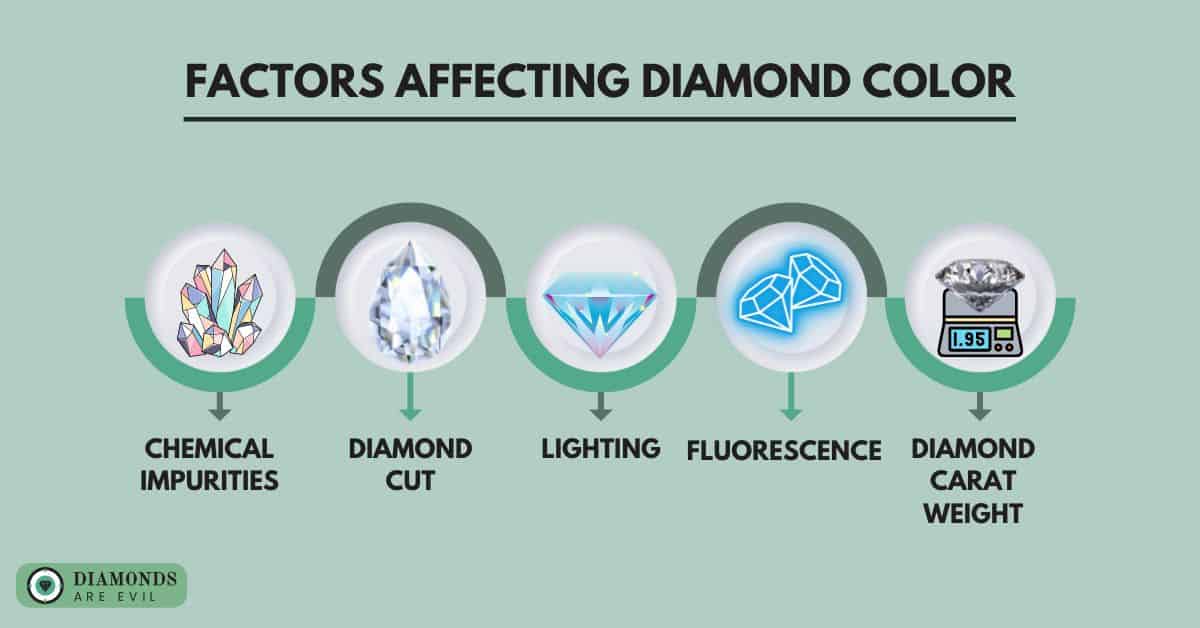
The following is a list of the primary factors that influence a diamond’s color:
Chemical impurities: The presence of impurities or chemical elements within the diamond’s crystal structure can affect its color. For example, the presence of nitrogen can cause a yellow or brownish tint in a diamond.
Diamond Cut: The cut of a diamond can affect its color by influencing how it reflects light. A poorly cut diamond may not reflect light as effectively, causing it to appear darker or less vibrant.
Lighting: The lighting conditions under which a diamond is viewed can affect its perceived color. Different lighting sources can create different color reflections and distort the diamond’s true color.
Fluorescence: Some diamonds exhibit fluorescence, which is when they emit a soft glow when exposed to ultraviolet light. Fluorescence can make a diamond appear whiter, yellow, or blue depending on the diamond’s color and the type of light.
Diamond carat weight: The carat weight of a diamond can also impact its color. Larger diamonds tend to show more color than smaller diamonds, making it more challenging to find a colorless diamond of significant size.
Is a Higher Grade Always Better?
When it comes to diamond color grading, many people assume that a higher grade is always better. While it’s true that higher color grades are generally rarer and more valuable, there are many other factors that can affect the beauty and value of a diamond. For example, a diamond with a lower color grade but an excellent cut may appear more vibrant and have more sparkle than a diamond with a higher color grade but a poor cut.
Personal preference, budget, and other factors affecting diamond color must be considered when selecting a diamond. Ultimately, the best diamond color grade depends on a variety of factors, and a lower color grade diamond that is well cut and has excellent clarity may be a better choice than a higher color grade diamond that lacks these qualities.
Choosing the Right Diamond Color for Your Jewelry
Choosing the right diamond color is essential when selecting a diamond for your jewelry. The color of a diamond can significantly impact the appearance and value of the stone, so it’s crucial to choose a diamond color that meets your personal preferences and budget. To select the right diamond color for your jewelry, consider the type of jewelry you’re purchasing and the style you’re looking to achieve.
Additionally, consider the other factors that affect diamond color, such as cut, clarity, and carat weight. A well-cut diamond can appear more vibrant and sparkle more than a poorly cut diamond, while a larger carat weight may show more color than a smaller diamond. Ultimately, selecting the right diamond color for your jewelry is a personal decision that should take into account your preferences, budget, and the other factors that impact diamond color.
Tips for Buying High-Quality Diamonds
Here are some tips to consider when buying high-quality diamonds:
- Familiarize yourself with the 4 Cs of diamond quality: carat weight, cut, color, and clarity.
- Choose a reputable and trustworthy jeweler who can provide expert advice and guidance.
- Prioritize the cut quality of the diamond above all else, as it has the most significant impact on appearance and sparkle.
- Set a realistic budget and prioritize spending based on your preferences and priorities.
- Consider purchasing a diamond with a grading report from a recognized gemological laboratory.
- Look for diamonds that are certified by reputable organizations such as the Gemological Institute of America (GIA).
- Consider purchasing a diamond with a fluorescence grade of “none” or “faint” to ensure optimal appearance and beauty.
In conclusion
When selecting a diamond for jewelry, it is important to consider the 4 Cs of diamond quality and understand how they impact value. Additionally, familiarize yourself with the GIA color grading scale and know what factors can affect a diamond’s color.
The best color grade depends on personal preference, budget, and other factors affecting diamond color, and it is important to take these into consideration when making your selection. With the right knowledge and guidance, you can be sure that you are purchasing a high-quality diamond that meets your unique needs and preferences.