
Do Diamonds Lose Resale Value?
With the popularity of purchasing luxury items, understanding how these investments are valued is important. When it comes to diamonds, many people want to know, “Do Diamonds Lose Resale Value?”
While diamonds are often considered valuable investments, they do not always hold their resale value. Factors such as market demand, the diamond’s quality, and the seller’s reputation can all impact its resale price.
If you’re looking for an accurate answer, this article will discuss the factors that can influence a diamond’s resale value and provide insight on what you need to consider when considering reselling your diamond.
Learning the key details about diamond valuation will help you make well-informed decisions about your investment.
What Is the Resale Value of Diamonds?
Knowing the resale value of a diamond should be part of any person’s diamond-buying decision-making process. Many people buy their diamond, hoping to pass it down to future generations. That makes understanding how a diamond will retain its value over time or potentially lose value an important question.
Depending on the market and supply conditions, diamonds can either appreciate in value or depreciate over time, making this an important factor to consider when purchasing diamonds.
Additionally, as eras evolve and diamonds become dated, not all styles are equally valued in the resale market – so people looking to invest their money into such stones need to investigate what type of stone has the most favorable return potential.
Educating oneself on this marketplace before buying is wise for any diamond purchaser, even if they only consider it as an investment piece.
Factors That Affect Diamond Resale Values
When considering selling a diamond, it is important to consider Diamond resale values. Several factors can affect the resale value of diamonds:
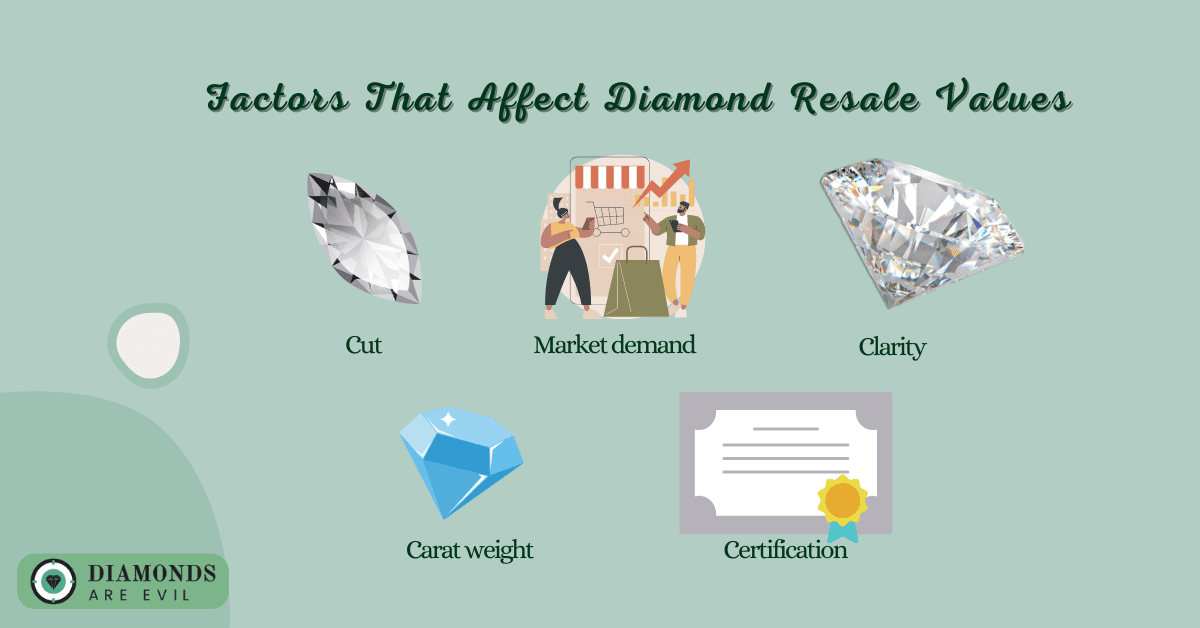
1. Cut: The cut of a diamond is one of the most critical factors affecting its value. A well-cut diamond will have more sparkle and brilliance, making it more desirable and valuable.
2. Carat weight: The carat weight of a diamond is another essential factor in its value. Larger diamonds are rarer and more valuable than smaller ones.
3. Clarity: A diamond’s clarity refers to inclusions or blemishes within the stone. Diamonds with fewer inclusions are more valuable than those with more inclusions.
4. Certification: The certification of a diamond by a reputable grading laboratory, such as GIA or AGS, can increase its value. The certification objectively evaluates the diamond’s quality, which can increase buyers’ confidence in the stone.
5. Market demand: The market demand for diamonds can significantly impact their resale value. When demand for diamonds is high, prices will be higher, and when demand is low, prices will be lower. Economic conditions, fashion trends, and consumer preferences all influence market demand for diamonds.
How to Determine the True Worth of a Diamond
When considering selling a diamond, many people wonder how to determine the stone’s true value. Unfortunately, there is no definitive answer, as the value of a diamond can vary greatly depending on some factors. However, there are some steps you can take to get a general idea of your diamond’s worth.
- First, research the 4 Cs of diamonds: cut, clarity, color, and carat weight. These factors will affect both the beauty and value of your diamond.
- Next, find comparable diamonds on the market to understand what others sell similar stones for.
- Finally, consult a professional jeweler or appraiser to get a more accurate estimate of your diamond’s value.
Remember that diamonds often lose significant value when sold, so don’t expect to receive full market value for your stone. However, by researching and consulting with experts, you can get a good idea of what your diamond is worth and ensure you get a fair price.
Can Diamonds Lose Their Value Over Time?
When considering purchasing diamonds, it is important to understand the resale value. Fortunately, diamonds maintain their value over time due to their scarcity and continued demand.
While the size and quality of the diamond do affect the resale value, their price generally remains consistent compared to when they were purchased. Certified diamonds with recognized grading reports tend to remain more valuable through resale, even if insignificant damage was caused from general wear and tear.
Additionally, resizing or resetting a diamond does not lower its value significantly as long as a skilled jeweler implements expert procedures. When considering investing in diamonds for its resale value, it is vital that you take into consideration an experienced jeweler’s opinion on condition, setting, and repair costs associated with it, if any.
Tips for Getting the Best Return When Reselling Diamonds
Reselling diamonds can be lucrative, but getting the best return can be challenging. Here are some tips to help you get the best return when reselling diamonds:
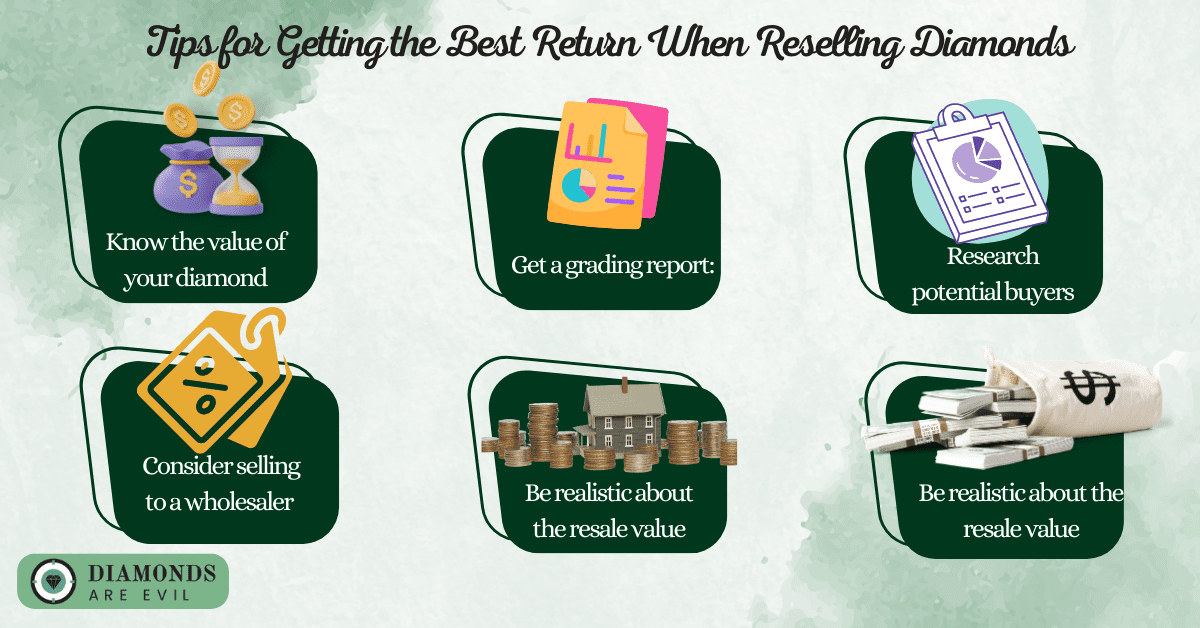
Know the value of your diamond : To get the best return when reselling diamonds, you need to understand the value of your diamond. This requires knowing the 4Cs of diamonds (cut, color, clarity, and carat weight) and how they affect the value of your diamond. You can also consult a professional gemologist for a more accurate valuation.
Get a grading report : A grading report from a reputable gemological laboratory like the GIA or AGS can help establish the value of your diamond. This report objectively evaluates the 4Cs of your diamond and can help you negotiate a better price when reselling.
Research potential buyers : Do your research and find potential buyers with a good reputation and willing to pay a fair price for your diamond. Look for established jewelry stores or reputable online diamond buyers with positive reviews and ratings.
Consider selling to a wholesaler : Selling to a wholesaler can be a quick and easy way to sell your diamond. Wholesalers typically buy diamonds in bulk and are willing to pay a fair price for high-quality stones.
Be realistic about the resale value : Diamonds are not a guaranteed investment, and the resale value may be lower than what you paid. Be realistic about the potential resale value of your diamond, and don’t expect to get the full retail price.
Sell at the right time : The diamond market fluctuates, so selling your diamond at the right time is essential. Consider selling when demand is high, such as around the holidays or during engagement season.
In conclusion
The resale value of diamonds is something to consider when deciding whether or not to purchase one. Diamonds are a valuable asset that can retain or lose value based on several factors, such as clarity, cut, and care.
Careful consideration should be taken when making this investment to ensure maximum return. Although there are many variables to consider, knowing how diamond values could change over time is an important part of owning one.