
How Heat and Cold Can Damage Your Diamonds
Diamonds are considered one of the most beautiful and precious gems in the world. They represent love, commitment, and luxury which has made diamonds a favorite among many people as an engagement or wedding ring. But it’s important to understand how heat and cold can damage your diamond’s appearance, structure, and value.
Extreme temperature exposure can lead to damage and degradation of diamonds. Heat can cause thermal shock, which can crack the stone. Cold temperatures can damage diamonds, particularly if there are sudden temperature changes. Avoid exposing them to extreme temperatures and take steps to minimize the risk of thermal shock.
This guide will discuss how heat and cold damage diamonds, what you can do to protect your diamond from temperature-related damage, and more.
The Effects of Extreme Temperatures on Diamonds
When exposed to extreme temperatures, diamonds can experience thermal shock. Thermal shock occurs when a diamond is subjected to sudden or drastic changes in temperature that cause the stone to crack or fracture.
Heat causes the diamond’s lattice structure to expand and contract quickly, putting stress on the gem and making it more likely to break. Cold temperatures also cause thermal shock, as the gem contracts quickly, leading to internal fracturing.
Diamonds can also experience abrasive damage from extreme temperatures. Heat causes the diamond to expand and rub against its settings or other diamonds in a ring. This can create scratches and abrasion on the stone’s surface, reducing its clarity and value.
Cold temperatures can cause similar abrasive damage. In addition, diamonds are vulnerable to discoloration when exposed to extreme cold or heat. This can lead to a dulling of the diamond’s brilliance and sparkle.
How Heat Can Damage Your Diamonds
Diamonds are one of the most valuable gems in the world, and it’s no wonder when you consider their durability and brilliance. But before you show off that diamond engagement ring to your friends, you should be aware that heat can damage your stones.
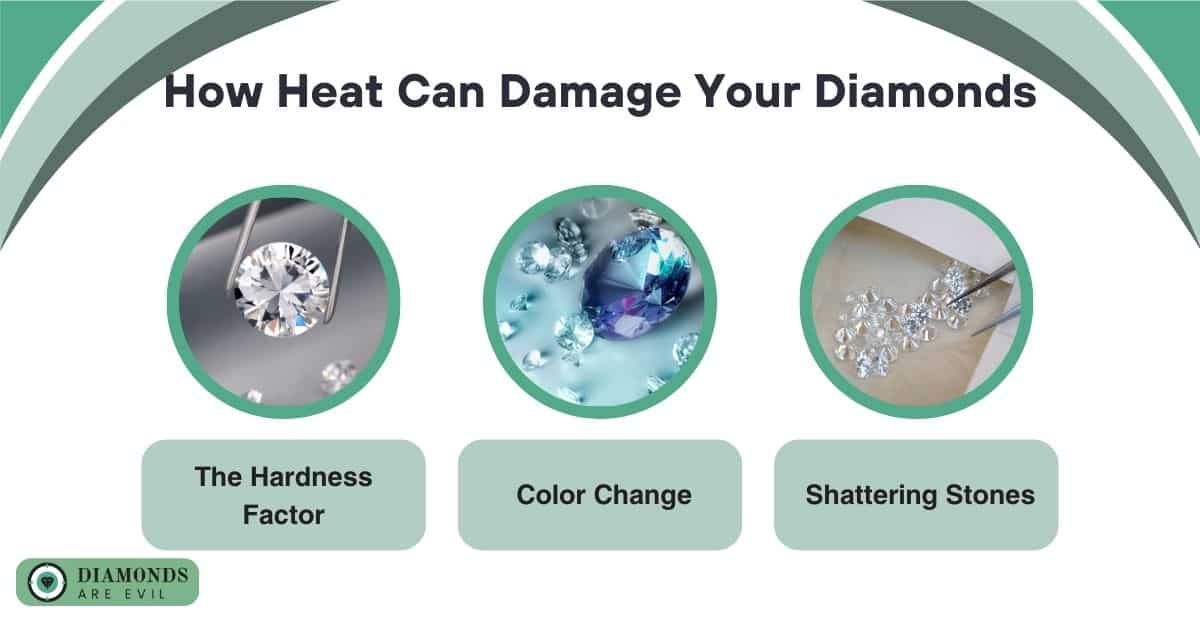
Heat can weaken the hardness of diamonds, cause them to change color, or even cause them to shatter. Keep reading for more information on how heat can damage your diamonds so you know what precautions to take in protecting these special gems from harm.
The Hardness Factor
The hardness of a diamond is measured by its Mohs scale rating. A diamond rated 10 on this scale is incredibly hard and resistant to scratches or other signs of wear and tear. But over time, too much exposure to temperatures above the recommended levels can weaken that hardness and make it prone to scratches and discoloration.
Color Change
Heat can also cause a diamond’s color saturation–or its lack thereof–to diminish over time as well. When exposed to high temperatures for prolonged periods, clear diamonds may appear more yellow or orange in hue due to oxidation caused by the higher temperature.
This does not necessarily mean that all colorless stones will suffer from this. Some stones will be unaffected by prolonged exposure to high temperatures but others may require additional maintenance or treatments if they begin showing signs of color change as a result of being overheated in extreme conditions.
Shattering Stones
In especially extreme cases where diamond jewelry has been heated beyond certain degrees Celsius–usually around 1050°C or 1912°F–the stone itself may even “shatter” due to thermal shock due to too sudden and dramatic changes in temperature throughout its structure which causes fractures within its crystalline form.
Thermal shock fractures manifest themselves visibly across the surface area in lines resembling spider webs which form suddenly when exposed to huge differences between ambient temperatures outside versus inside its core structure. However, these fractures are typically not visible under normal magnification used for jewelry grading purposes so keep an eye out for any noticeable visual changes if any doubt arises about the condition or quality of your precious gemstones.
The Role of Thermal Shock in Diamond Damage
Thermal shock occurs when extreme heat is applied to a diamond. When exposed to sudden and drastic temperature changes, the gemstone can crack or fracture. The rapid expansion of the stone pulls it apart, resulting in visible damage that can reduce its value significantly.
In addition to damaging the gemstone itself, thermal shock can also damage the setting of a diamond engagement or wedding ring. If an extreme temperature change is applied to the metal of a ring, it can cause structural weaknesses that make it vulnerable to cracking or breaking.
The Effects of Cold Temperatures on Diamonds
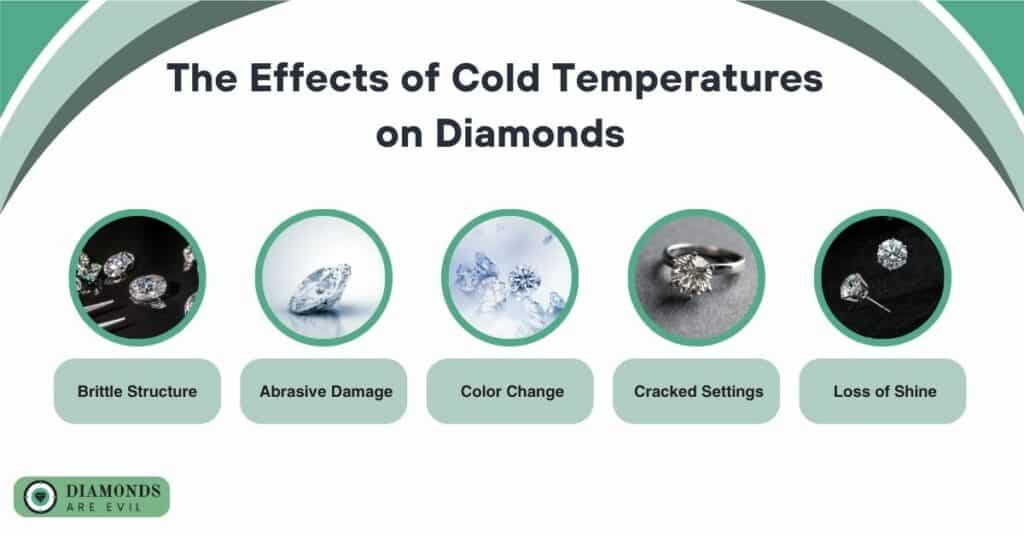
It’s important to understand how cold temperatures can damage your diamond’s appearance, structure, and value. Here, will discuss how extreme cold affects diamonds:
Brittle Structure
When exposed to cold temperatures, diamonds can become brittle and more prone to cracking. This is because the gem’s lattice structure contracts quickly, causing the stone to weaken considerably.
As the diamond continues to contract, it puts stress on its internal structure which can cause fissures or fractures. These may not be visible at first but can still be detected with a loupe or microscope if the damage is significant enough.
Abrasive Damage
Cold temperatures can also lead to abrasive damage to diamonds. As the gemstone contracts in cold temperatures, it can rub against its settings or other stones in a piece of jewelry. This friction creates scratches and abrasion on the diamond’s surface which reduces its clarity and value.
Color Change
The color of a diamond can be affected by extremely cold temperatures. This is because the gem’s lattice structure contracts rapidly, causing changes in how it reflects and refracts light. The result can be a dulling or discoloration of the diamond’s brilliance, which reduces its appeal and value.
Cold temperatures can also change the color saturation of the diamond and make it appear more yellow or orange in hue. This is a result of oxidation caused by exposure to extremely cold temperatures and can be difficult to reverse without proper care.
Cracked Settings
Cold temperatures can also cause damage to the settings of diamond jewelry. When exposed to extreme cold, metal rings are more likely to crack or break due to their structural weaknesses.
The same is true for any other type of setting such as prongs or bezels that hold a diamond in place. These weakened structures may not be visible at first but can lead to further damage if they become cracked or broken.
Loss of Shine
Diamonds are renowned for their beautiful shine, however, extreme temperatures can cause a diamond to lose its sparkle. This is because the gem’s lattice structure contracts rapidly in cold weather and expands quickly when exposed to heat.
These sudden changes put stress on the stone, causing it to dull. The result is a lack of brilliance that can affect the diamond’s overall appeal.
Protecting Your Diamonds from Extreme Temperatures
It is essential to protect your diamonds from extreme temperatures, which can cause thermal shock, abrasive damage, color change, cracked settings, and loss of shine. Here, we will discuss how heat and cold can affect diamonds and what you can do to protect them from temperature-related damage.
Avoid Direct Heat Sources: When possible, keep your diamond jewelry away from direct sources of heat such as open flames and hot ovens.
Remove Your Diamonds from Jewelry Before Heating: If you need to expose jewelry to a heat source, be sure to remove the diamond first to keep it safe from thermal shock.
Secure Settings & Gemstones: Make sure the settings and gemstones of your jewelry are secure, as sudden temperature changes can put stress on the metal and create structural weaknesses.
Store Out of Direct Sunlight: To protect diamonds from discoloration or fading due to heat, try storing them away from direct sunlight when not using them.
Avoid Extreme Cold Temperatures: If possible, keep your diamond jewelry away from extremely cold temperatures as this can cause the stone to become brittle and more likely to fracture due to thermal shock.
Have Jewelry Professionally Cleaned & Inspected Regularly: Keeping your diamond jewelry professionally cleaned and inspected regularly can help protect it from damage due to extreme temperatures.
Properly Insure Your Jewelry: Make sure your diamond jewelry is properly insured in case of any accidental damage or theft.
Regular Maintenance: Have your diamonds professionally checked regularly to make sure they are free of any signs of wear and tear from exposure to extreme temperatures.
In conclusion
Diamonds are precious gems that require care and protection against extreme temperatures. Heat and cold can both damage diamonds as they cause thermal shock, abrasive damage, discoloration, cracked settings, and loss of shine. To minimize the risk of permanent damage to your diamonds due to temperature changes, make sure to avoid exposing them to direct heat sources, and remove them from your jewelry before heating an item.
Secure their settings and gemstones, store them out of direct sunlight, avoid extremely cold temperatures, have them professionally cleaned and inspected regularly, insure the items are properly, and keep up with regular maintenance. With these precautions in mind, you can ensure that your diamonds remain safe from temperature-related damage.