
How Lab-Made Diamonds Compare to Natural Diamonds in Terms of Quality
Lab-made diamonds are structurally identical to natural diamonds but may have fewer impurities. They are more affordable, eco-friendly, and socially responsible, while natural diamonds may hold more value over time. The decision comes down to personal preference and priorities.
In this blog post, we will explore the pros and cons of both lab-made and natural diamonds so that you can make an informed decision when selecting the perfect diamond for you or your loved one. We will examine how they differ in terms of quality, price, and environmental impact to help you make the best choice possible. Read on to learn more!
Understanding the Differences Between Lab-Made and Natural Diamonds
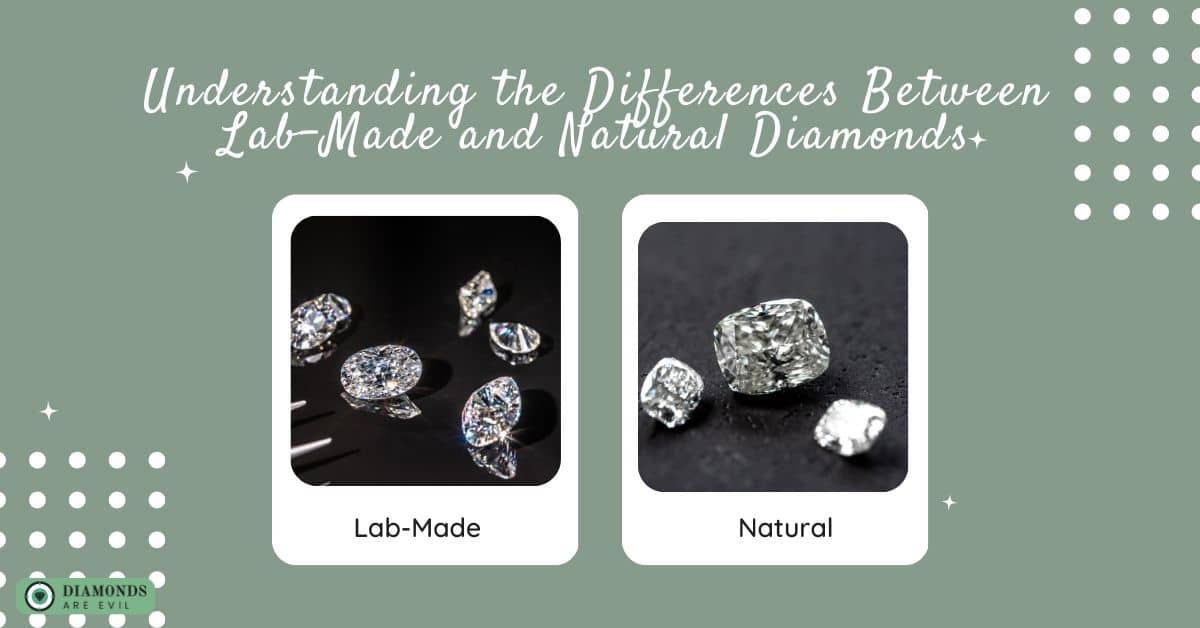
Natural diamonds are developed over millions of years deep inside the earth, whereas lab-made diamonds are produced in a laboratory. Both diamonds share the same crystal structure and are formed entirely of carbon.
Lab-created diamonds are made using two processes: High Pressure, High Temperature (HPHT), and Chemical Vapor Deposition (CVD).
In the HPHT process, diamond seed particles placed in a carbon-rich environment are exposed to high pressure and high temperatures. These conditions mimic those of the natural diamond formation process.
CVD diamonds are created by using a special reactor to break down gas molecules into individual carbon atoms, which then crystallize on the surface of diamond seed particles.
The price of lab-created diamonds is lower, and they are also seen as being more morally and environmentally responsible. Although they might be rare and expensive, natural diamonds are frequently linked to unethical actions. The choice between synthetic and natural diamonds ultimately comes down to priorities and personal preferences.
Comparing the Quality of Lab-Made and Natural Diamonds
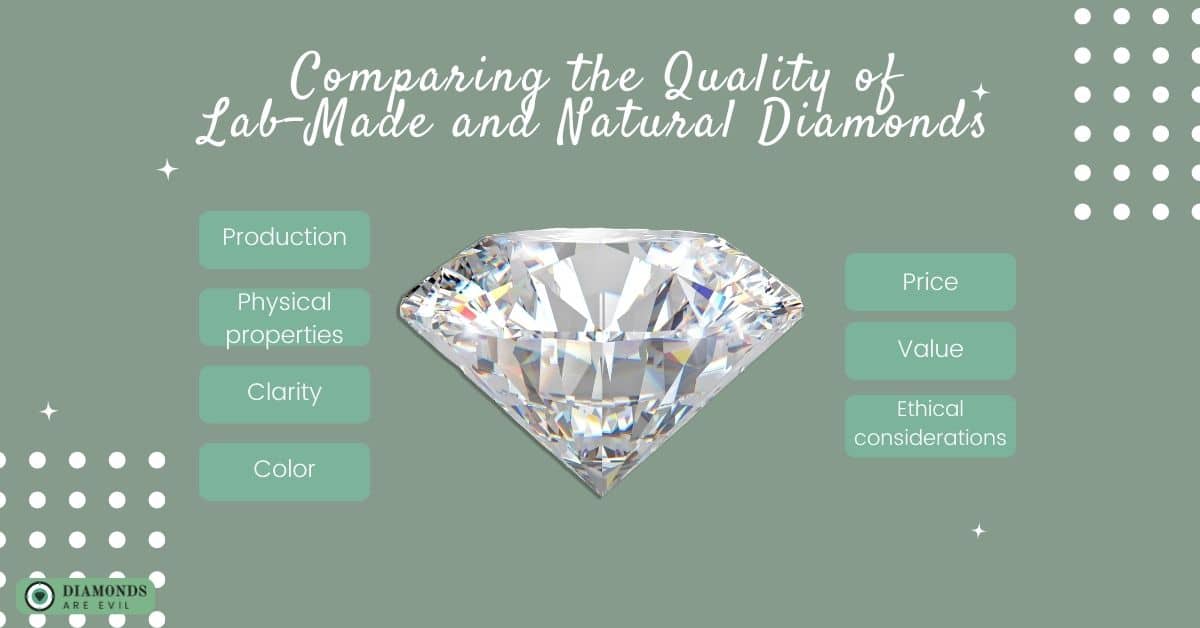
When choosing a diamond, both natural and lab-created diamonds are popular choices. When contrasting the qualities of lab-created and natural diamonds, there are some significant variances to keep in mind despite their shared similarities.
| Factor | Lab-Made Diamonds | Natural Diamonds |
|---|---|---|
| Production | Created in a lab | Mined from the earth |
| Physical properties | Virtually identical to natural diamonds | Virtually identical to lab-made diamonds |
| Clarity | Often have fewer inclusions and blemishes | Can have natural inclusions and blemishes |
| Color | Produced in a limited range of colors | Can come in a wide range of natural colors |
| Price | Typically less expensive than natural diamonds | Generally more expensive than lab-made diamonds |
| Value | May not hold value as well over time | Can hold or even appreciate in value over time |
| Ethical considerations | Conflict-free and environmentally friendly | May be associated with unethical practices in some regions |
It’s crucial to remember that the decision between lab-created and natural diamonds ultimately comes down to priorities and personal preference.
A lab-created diamond may be preferred by some owing to its affordability and ethical reasons, while real diamonds may be preferred by some for their distinctive characteristics.
Whatever option you choose, it’s critical to comprehend the distinctions between the two kinds of diamonds in order to make a well-informed purchase.
Examining the Price Differences Between Lab-Made and Natural Diamonds
The cost is one of the biggest distinctions between lab-created and natural diamonds. For people looking for a diamond but on a tight budget, lab-created diamonds are frequently less expensive than natural diamonds of equivalent quality.
| Factor | Lab-Made Diamonds | Natural Diamonds |
|---|---|---|
| Production Cost | Lower cost due to fewer resources and labor needed | Higher cost due to mining and extraction processes |
| Supply and Demand | Increasing supply and demand reduces price | Rarity increases price |
| Quality | Prices increase with quality, but remain lower than natural diamonds | Prices increase exponentially with quality |
| Size | Prices increase with size, but remain lower than natural diamonds | Prices increase exponentially with size |
While lab-created diamonds are typically less expensive than genuine diamonds, it’s crucial to remember that over time, their value might not increase in the same way. Since there is a limited quantity of natural diamonds and they are frequently viewed as investments, lab-created diamonds might not have the same long-term worth.

Evaluating the Impact of Lab-Made and Natural Diamonds
The environmental and social impacts of both lab-created and natural diamonds are crucial to consider when making a decision.
Natural diamonds have been linked to unethical practices in some regions as they are typically mined using unsafe labor conditions, with little regard for the environment.
Lab-made diamonds, on the other hand, can be seen as more ethical due to the fact that they don’t require mining and thus have a lower environmental footprint. They are also conflict-free, so you can be sure that the diamond you purchase was not sourced unethically.
Ultimately, understanding the differences between lab-made and natural diamonds is important when making your decision. Natural diamonds feature unique imperfections and may hold or increase in value over time, while lab-made diamonds are eco-friendly and often more budget-friendly. Consider your priorities and budget carefully when evaluating the different options available to you.
Factors to Consider When Deciding Between Lab-Made and Natural Diamonds
When deciding between lab-made and natural diamonds, there are a few key points to consider.
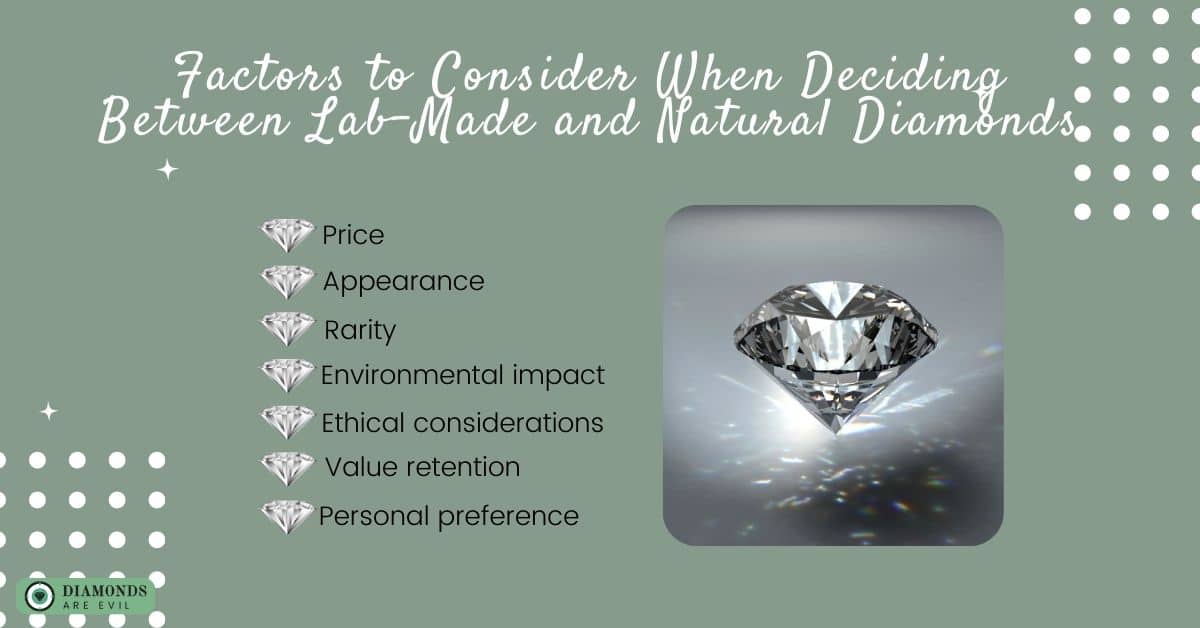
Price
Lab-made diamonds are generally more affordable than natural diamonds of comparable quality.
Appearance
Lab-made diamonds are visually identical to natural diamonds and have the same physical properties, including hardness, strength, and fire.
Rarity
Natural diamonds are rare and unique, while lab-made diamonds are mass-produced.
Environmental impact
Lab-made diamonds have a lower carbon footprint and are less resource-intensive than natural diamonds.
Ethical considerations
Natural diamonds can be sourced from conflict areas where profits are used to fund armed conflict and human rights abuses. Lab-made diamonds, on the other hand, are conflict-free and can provide a more ethical option.
Value retention
Natural diamonds can retain more value over time, making them a better option for those looking to invest in fine jewelry.
Personal preference
Ultimately, the decision between lab-made and natural diamonds comes down to personal preference and values.
By considering these factors, individuals can make an informed decision when deciding between lab-made and natural diamonds.
In conclusion
Lab-made and natural diamonds both have their advantages and disadvantages. Lab-made diamonds are more affordable, environmentally friendly, and provide a conflict-free alternative, while natural diamonds offer unique imperfections and can hold or increase in value over time.
Ultimately, the choice depends on personal preference and priorities. By understanding the differences between the two, individuals can make an informed purchase that best suits their needs.