
How to Spot a Fake Diamond
Diamonds are precious and beautiful gemstones that have been treasured for centuries. As one of the most valuable gems on the market, it is important to be able to tell if a diamond is real or fake. Fake diamonds are created to look like the real thing but do not hold value due to their lack of quality.
To spot a fake diamond, you need to have a basic understanding of diamond quality and common types of fake diamonds. You can visually inspect the stone, check its weight and density, test its thermal conductivity, and perform refraction and fog tests. Additional tips include checking for flaws and consulting with a reputable jeweler.
This guide will help you understand diamond quality, identify common types of fake diamonds, and learn how to use methods for spotting a fake diamond.
Common Types of Fake Diamonds
Diamonds are highly valuable and sought-after gems, which unfortunately makes them a target for counterfeiters. If you’re in the market for a diamond, it is crucial to be able to identify the common types of fake diamonds to avoid getting scammed. Here are some common types of fake diamonds:
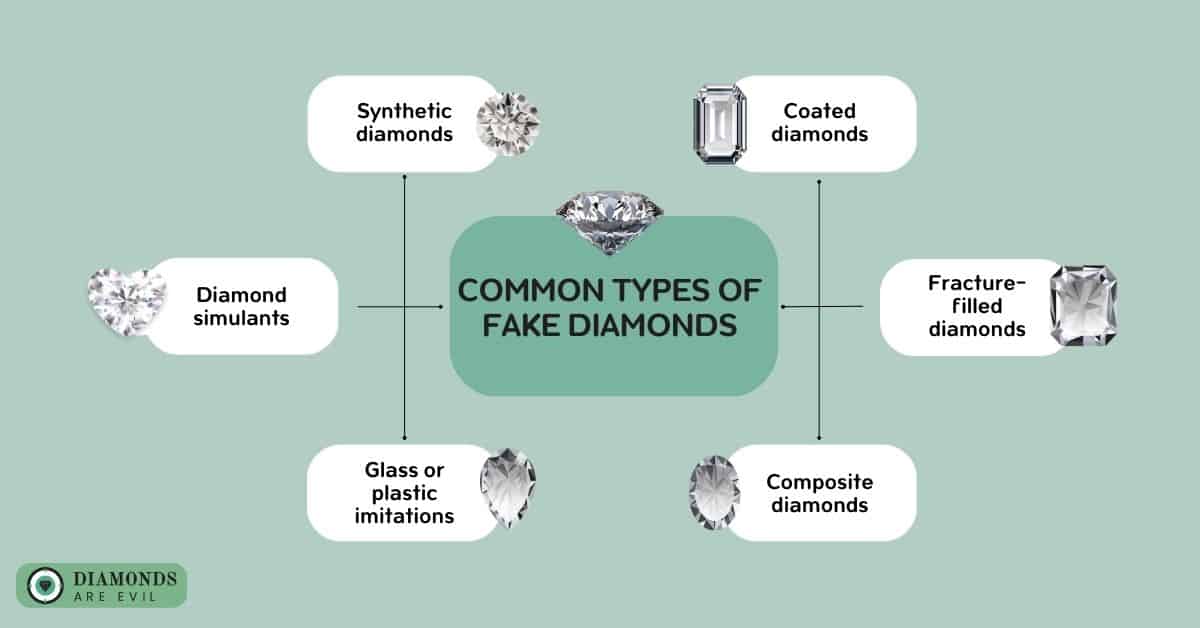
Synthetic diamonds: These are diamonds that are made in laboratories and have the same chemical composition and crystal structure as natural diamonds.
Diamond simulants: These are stones that look like diamonds but have different chemical compositions. Examples include moissanite, cubic zirconia, and white sapphire.
Glass or plastic imitations: These are cheap imitations that are made to look like diamonds but are not valuable.
Coated diamonds: These are diamonds that have a thin layer of diamond on the surface of the stone, making them appear more valuable than they are.
Fracture-filled diamonds: These are diamonds that have been treated with a filling material to hide internal flaws.
Composite diamonds: These are diamonds that are made from multiple smaller diamonds that have been fused together.
Methods for Spotting a Fake Diamond
Fake diamonds can be difficult to spot, and if you’re not careful you might end up buying something that looks real but isn’t. To avoid this, here are five methods for spotting a fake diamond:
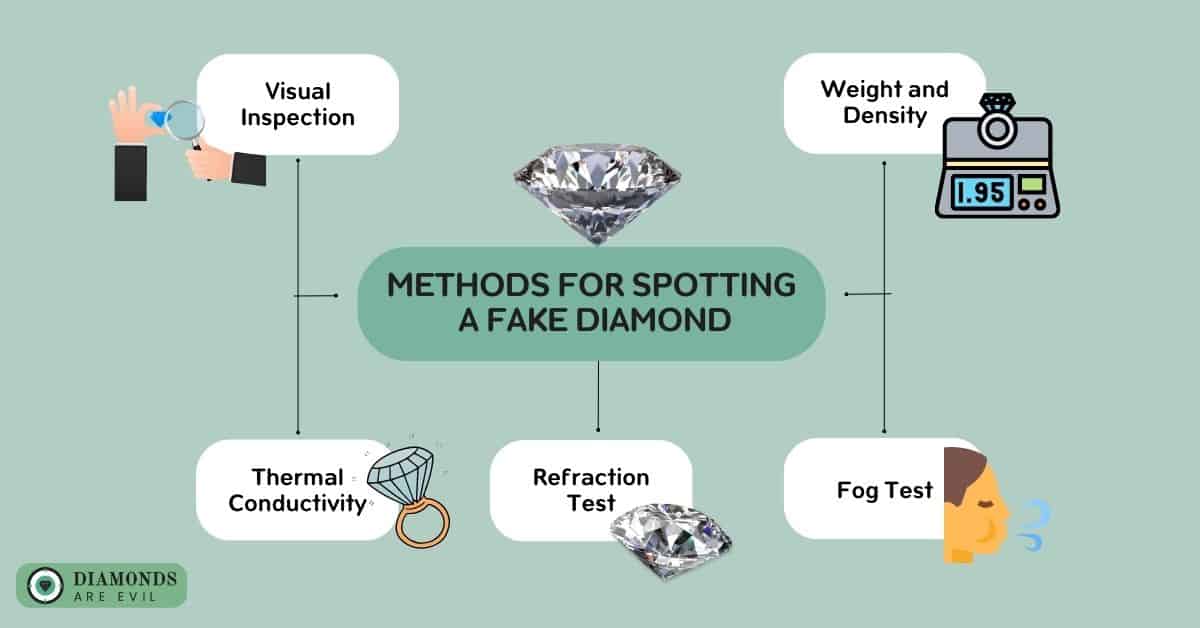
Visual Inspection
The most common way to spot a fake diamond is through visual inspection. Take a close look at the clarity of the stone and make sure it’s free from cloudiness or inclusions. Looking for symmetry, size, shape, and color can all help determine whether the diamond is genuine or not.
Weight and Density
Real diamonds are heavier than other stones of similar appearance and size. They also have higher density due to their molecular structure. Weighing the stone on an accurate scale can give an indication as to whether it’s real or not.
Thermal Conductivity
Genuine diamonds conduct heat better than synthetics do; this means that when placed near extreme heat sources like flames, they will disperse heat faster than fake diamonds. This method must be used with caution as exposure to extreme temperatures may damage the stone itself.
Refraction Test
True diamonds sparkle differently due to their unique crystal structure; therefore, studying the refraction of light through the diamond can help identify it as real or fake. Choosing an area of uniformity in the stone’s surface helps best incorporate this test into your visual inspection routine.
Fog Test
When breathed heavily, a genuine diamond won’t fog up; however, synthetic diamonds will get momentarily cloudier until the fog completely evaporates again – making it easy to differentiate between them using just your breath!
Additional Tips for Identifying a Fake Diamond
Identifying a fake diamond can be challenging, especially for those who are not familiar with the characteristics of real diamonds. Here are some additional tips that can help you identify a fake diamond:
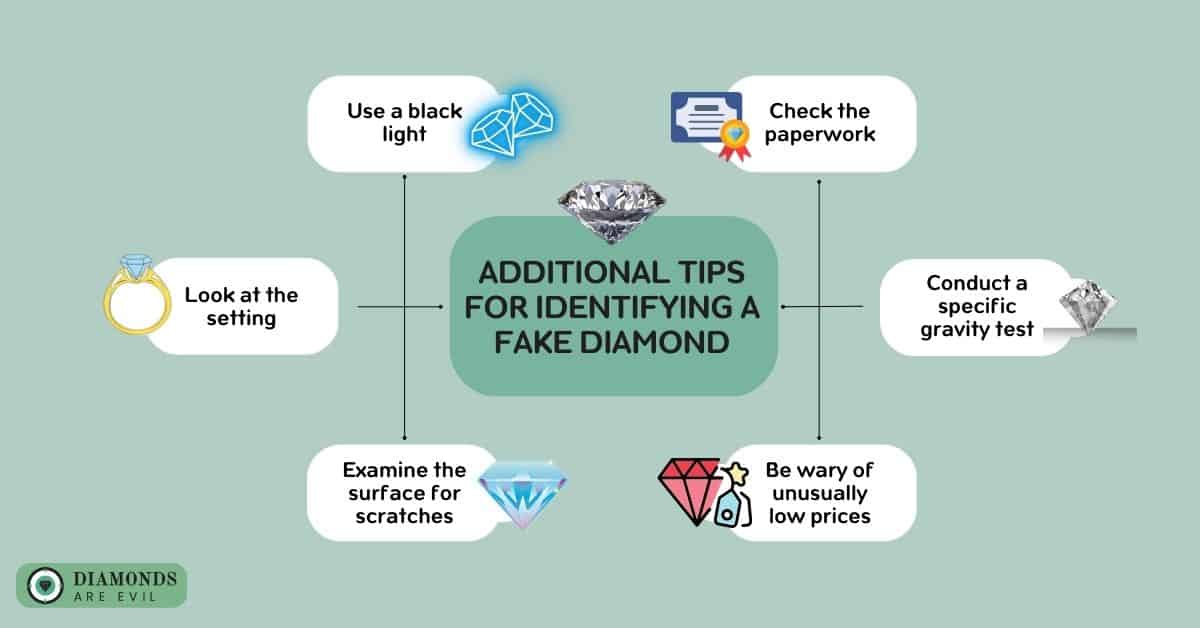
Use a black light: Real diamonds will glow blue under ultraviolet light, while many fake diamonds will not.
Look at the setting: If the setting looks cheap or poorly made, it could be a sign that the diamond is fake.
Examine the surface for scratches: Real diamonds are very hard and do not scratch easily, so if you notice scratches on the surface, it could be a fake diamond.
Check the paperwork: A reputable jeweler should provide a certificate of authenticity or a diamond grading report from a reputable laboratory. If the paperwork looks suspicious or is missing altogether, it could be a fake diamond.
Conduct a specific gravity test: Real diamonds have a high specific gravity, which means they will sink in water. If the diamond floats, it could be a fake diamond.
Be wary of unusually low prices: If the price of a diamond seems too good to be true, it probably is. Fake diamonds are often sold at very low prices to entice buyers.
In conclusion
Understanding diamond quality and being able to spot a fake is essential when buying diamonds. Knowing the common types of fake diamonds, using methods for spotting a fake, and keeping additional tips in mind can help you make sure that the diamond you buy is genuine.
If you’re ever unsure about a diamond’s authenticity, it is recommended that you consult with a reputable jeweler. With the right knowledge and resources, you can ensure that your diamond is real and of high quality.