
Lab-Grown Diamonds vs. Moissanite: Natural Diamond Alternatives
Lab-grown diamonds and moissanite are two popular options for couples who want the beauty and brilliance of a diamond without the environmental or cost implications. Lab-grown diamonds are created in a lab environment, while moissanite is produced from a rare mineral found in nature. Both offer unique benefits when compared to natural diamonds, such as color and clarity, cost, and durability.
In this article, we will explore the differences between lab-grown diamonds and moissanite.
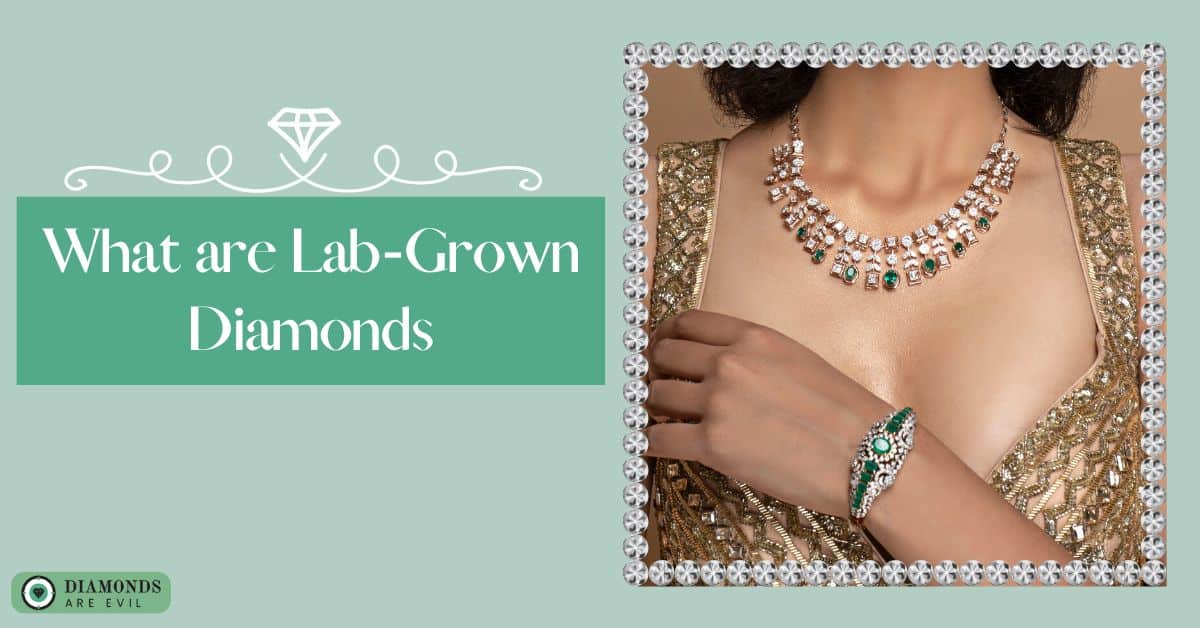
What are Lab-Grown Diamonds
Lab-grown diamonds are a type of diamond created through advanced technology in a laboratory setting. They are produced using high pressure and high temperature (HPHT) or chemical vapor deposition (CVD) methods, which replicate the natural process in which diamonds are formed.
Lab-grown diamonds are chemically, physically, and optically identical to mined diamonds, making them suitable for use in jewelry. They can be cut, polished, and set in the same manner as mined diamonds. Lab-grown diamonds offer a beautiful, affordable, and responsible alternative to mined diamonds for those seeking a diamond for their jewelry.
What is Moissanite
Moissanite is a naturally occurring mineral (silicon carbide) that was first discovered in a meteor crater in Arizona in 1893. It is a rare mineral in nature, but can also be synthesized in a laboratory.
Moissanite is known for its high brilliance, fire, and luster, which makes it a popular choice for use in jewelry as a diamond alternative.
It is also harder than most other gemstones and more durable than other diamond alternatives, making it a suitable choice for everyday wear. Moissanite is a unique and beautiful gemstone that offers a cost-effective and durable alternative to diamonds for those seeking a special piece of jewelry.
Benefits of Natural Diamond Alternatives
Natural diamond alternatives, such as lab-grown diamonds and moissanite, offer several benefits over mined diamonds.
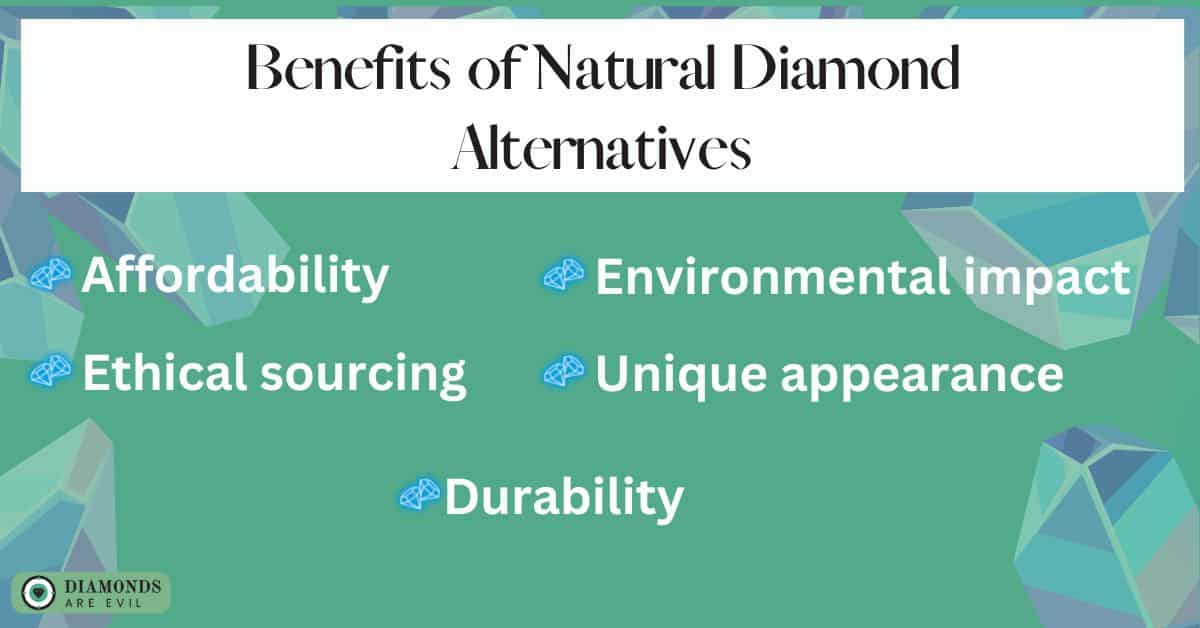
Affordability: Natural diamond alternatives are often sold at a lower price point compared to mined diamonds, making them a more accessible and budget-friendly option for those seeking a diamond for their jewelry.
Ethical sourcing: Natural diamond alternatives are not linked to human rights abuses or conflict, as they are not mined from the earth. This means that consumers can feel good about their purchase, knowing that it was not associated with any unethical practices.
Environmental impact: The mining process can have negative impacts on the environment, such as deforestation, soil erosion, and water pollution.
Unique appearance: Natural diamond alternatives, such as moissanite, have a unique and distinct appearance compared to diamonds, which can make for a one-of-a-kind piece of jewelry.
Durability: Natural diamond alternatives, such as moissanite, are often more durable than other diamond alternatives, making them a suitable choice for everyday wear.
Pros and Cons of Lab-Grown Diamonds and Moissanite
Lab-grown diamonds and moissanite are both popular natural diamond alternatives that offer several advantages over mined diamonds. However, there are also some drawbacks to consider when choosing between the two.
Pros of Lab-Grown Diamonds:
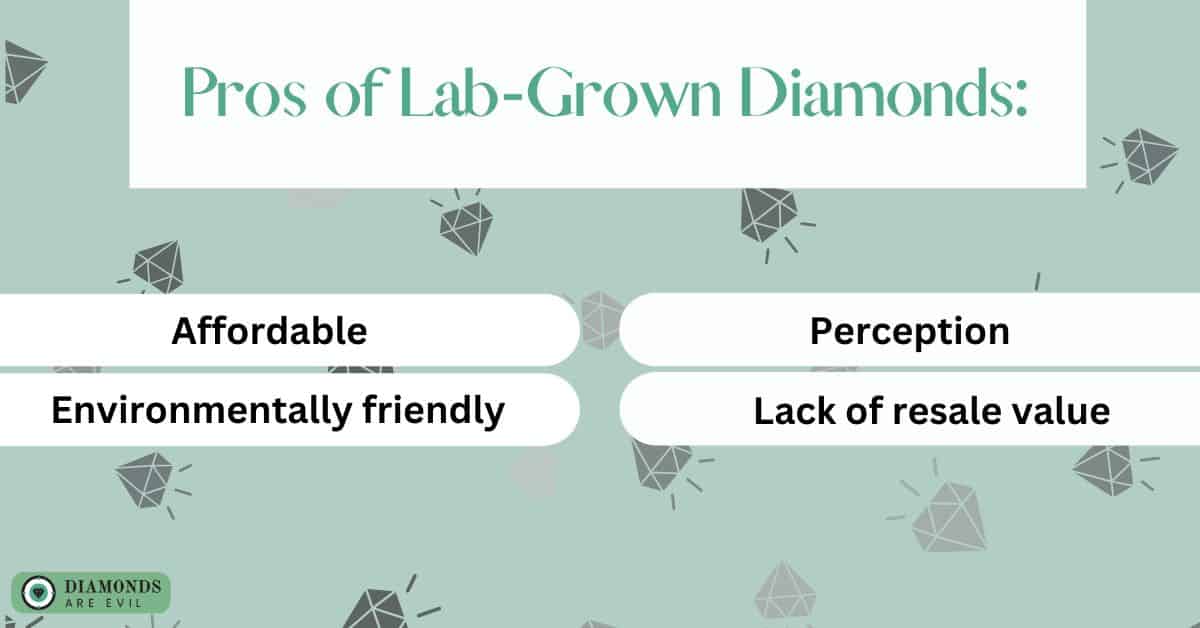
Affordable: Lab-grown diamonds are often sold at a lower price point compared to mined diamonds, making them a more accessible option for those seeking a diamond for their jewelry.
Identical to mined diamonds: Lab-grown diamonds are chemically, physically, and optically identical to mined diamonds, making them suitable for use in jewelry.
Environmentally friendly: Lab-grown diamonds are created in a laboratory environment and do not require mining, making them an environmentally friendly alternative to mined diamonds.
Ethically sourced: Lab-grown diamonds are not linked to human rights abuses or conflict, as they are not mined from the earth.
Cons of Lab-Grown Diamonds:
Perception: Some people may not view lab-grown diamonds as “real” diamonds, as they are not mined from the earth.
Lack of resale value: Lab-grown diamonds may not have the same resale value as mined diamonds, as the market for them is still relatively new.
Pros of Moissanite:

Affordable: Moissanite is often less expensive than lab-grown diamonds, making it an even more budget-friendly option for those seeking a diamond-like appearance.
Unique appearance: Moissanite has a unique and distinct look compared to diamonds, which can make for a one-of-a-kind piece of jewelry.
Durable: Moissanite is harder than most other gemstones and more durable than other diamond alternatives, making it a suitable choice for everyday wear.
Environmentally friendly: Moissanite is created in a laboratory environment and does not require mining, making it an environmentally friendly alternative to mined diamonds.
Cons of Moissanite:
Perception: Some people may not view moissanite as a “real” diamond alternative, as it has a unique and distinct appearance.
Lack of resale value: Moissanite may not have the same resale value as mined diamonds, as the market for it is still relatively small.
Comparing Lab-Grown Diamonds and Moissanite
Both lab-grown diamonds and moissanite offer affordable and responsible alternatives to mined diamonds for those seeking a special piece of jewelry. However, the choice between the two will ultimately come down to personal preference and factors such as cost, appearance, and durability.
| Feature | Lab-Grown Diamonds | Moissanite |
| Cost
|
Less expensive than mined diamonds | Less expensive than lab-grown diamonds |
| Appearance
|
identical to mined diamonds | Unique and distinct appearance |
| Durability
|
Same as mined diamonds | Harder than most gemstones |
| Environmental impact | Environmentally friendly (created in a laboratory) | Environmentally friendly (created in a laboratory) |
| Ethical sourcing | Ethically sourced (not linked to human rights abuses or conflict) | Ethically sourced (not linked to human rights abuses or conflict) |
| Resale value
|
May have a lower resale value | May have a lower resale value |
In conclusion
In conclusion, lab-grown diamonds and moissanite are two popular natural diamond alternatives that offer couples beautiful and responsible options for their engagement rings. Both have their own unique benefits in terms of cost, appearance, durability, and ethical sourcing. When choosing between the two, it is important to consider factors such as cost, personal preference, and desired appearance.
Ultimately, the choice should come down to what will best suit your individual needs and preferences. No matter which option you choose, lab-grown diamonds or moissanite can provide an affordable and ethical alternative to mined diamonds when selecting the perfect diamond for your engagement ring.