
Natural VS Lab-Grown Diamond VS Moissanite Center Stone
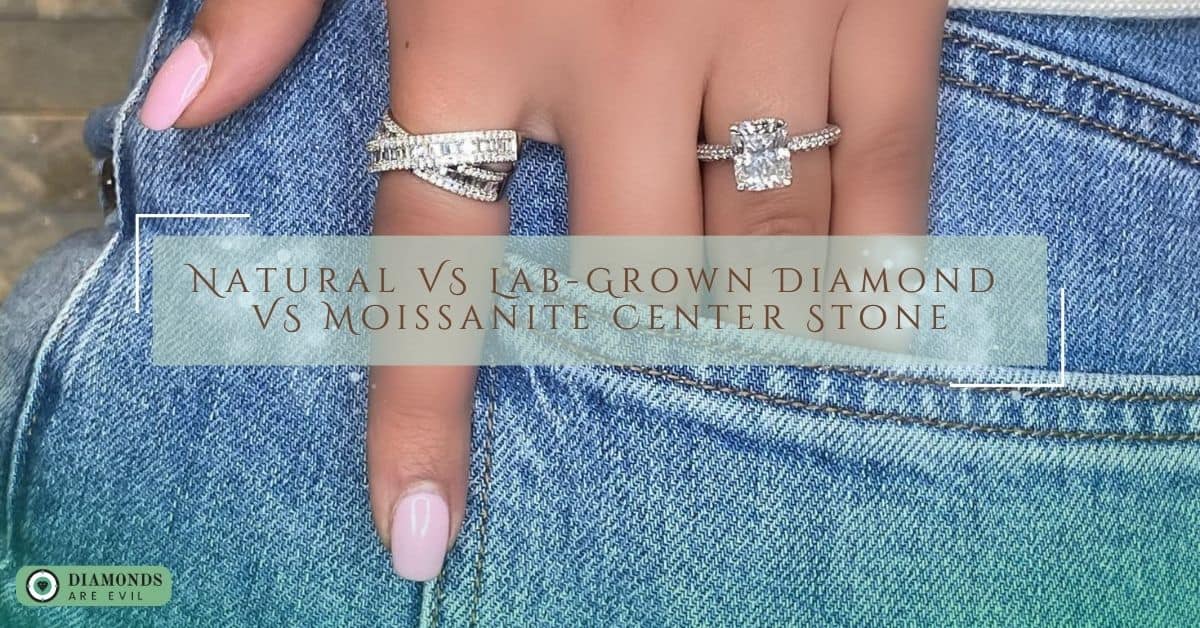
When it comes to engagement rings, you have a number of options for your center stone. Natural diamonds, lab-grown diamonds, and moissanite are all viable options that offer unique benefits. Compare the physical properties, cost, and environmental impact of each option with our helpful tables to decide which is best for you!
In this article, we will review the definitions and characteristics of each stone type as well as compare their physical, chemical, cost, and environmental properties in order to make your decision easier.
Natural Diamond
Natural diamonds are the most traditional stone type when it comes to engagement rings, and for good reason. Natural diamonds are created by extreme heat and pressure deep within the Earth’s mantle over millions of years. These diamonds have a unique molecular structure that is unmatched by any man-made counterpart. This strong bond gives them several properties including hardness, brilliance, and durability.
- Physical Properties: Natural diamonds are incredibly strong and durable due to their strong molecular structure. The hardness of natural diamonds makes them resistant to chipping or scratching, which is great for everyday wear. Furthermore, their unique crystal structure creates a substantial amount of light reflection and refraction, giving them their signature sparkle.
Chemical Properties: Natural diamonds are composed of single atoms of carbon arranged in a perfect lattice structure known as “cubic zirconia”. This strong molecular bond makes the diamond incredibly strong and resistant to heat or other environmental factors like air pressure.
Cost: Natural diamonds are typically the most expensive option due to their rarity and desirability. They can range in price from hundreds of dollars to tens of thousands, depending on size and quality.
Environmental Impact: Natural diamonds are one of the more environmentally friendly stone types due to their lack of synthetic production.
Pros and Cons
| Pros | Cons |
| Natural diamonds have the strongest molecular bond of all stone types, making them highly resistant to scratching and chipping
|
Natural diamonds are the most expensive type of stone due to their rarity and desirability. |
| Natural diamonds are renowned for their brilliance and sparkle due to their unique crystal structure.
|
The mining process for natural diamonds can have a significant environmental impact. |
| They come with intricate variations in color, clarity, shape, and size.
|
Many ethical issues are associated with the diamond industry, making it important to buy from reputable sources.
|
Lab-Grown Diamond
Lab-grown diamonds are a recent innovation in the jewelry industry, offering an eco-friendly alternative to natural diamonds. These diamond stones are also available in a wide range of shapes, sizes, colors, and clarity grades.
Physical Properties: Lab-grown diamonds are composed of the same carbon atoms as natural diamonds, giving them a comparable level of hardness and resistance to scratches and chips. Additionally, their crystal structure creates a sparkle similar to that of real diamonds.
Chemical Properties: Like natural diamonds, lab-grown diamonds are composed of single atoms of carbon arranged in a perfect cubic zirconia structure. This gives them the same strength and resistance to heat and other environmental factors.
Cost: Lab-grown diamonds typically cost less than natural diamonds, making them an affordable alternative for those on a budget. However, they can still range in price depending on size and quality.
Environmental Impact: Lab-grown diamonds are a much more sustainable option than natural diamonds due to the lack of energy used in their production process.
Pros and Cons
| Pros | Cons |
| Lab-grown diamonds are composed of the same carbon atoms as natural diamonds, giving them comparable hardness and sparkle.
|
Lab-grown diamonds are not as rare or desirable as natural diamonds, which may affect their resale value. |
| They are available in a wide range of shapes, sizes, colors, and clarity grades. | The technology for lab-grown diamonds is still relatively new, and advancements have been made in the past few years that may make them less durable than natural diamonds. |
| Lab-grown diamonds typically cost less than natural diamonds, making them an affordable alternative.
|
Lab-grown diamonds may not have the same level of sparkle as real diamonds due to their imperfections in production. |
Moissanite
Moissanite is a relatively new diamond alternative that has been gaining popularity in recent years. These stones are made of silicon carbide and are created in laboratories to imitate the beauty of diamonds without having to break the bank. They have a unique molecular structure that gives them hardness, brilliance, and durability comparable to real diamonds.
Physical Properties: Moissanite stones have a strong molecular structure that makes them incredibly hard and resistant to scratching or chipping. They also have a unique refractive index which creates their signature sparkle, much like natural diamonds.
Chemical Properties: The chemical composition of moissanite is silicon carbide, with its cubic zirconia structure giving it strength and resistance to heat or other environmental factors.
Cost: Moissanite stones are typically much more affordable than diamonds, making them a great option for those on a budget.
Environmental Impact: As no mining is required for their production, moissanite stones are a much more eco-friendly option than natural diamonds. However, some energy is still used in the laboratory process.
Pros and Cons
| Pros | Cons |
| Moissanite has a strong molecular structure that makes it highly resistant to scratching or chipping
|
Moissanite is not as rare or desirable as natural diamonds, which may affect their resale value. |
| It has a unique refractive index which creates its signature sparkle.
|
The technology for moissanite is still relatively new and advancements have been made in the past few years that may make them less durable than natural diamonds. |
| Moissanite stones are typically much more affordable than diamonds.
|
Moissanite may not have the same level of sparkle as real diamonds due to their imperfections in production. |
Cost Comparison of Natural Diamond, Lab-Grown Diamond, and Moissanite
| Stone Type | Natural Diamond | Lab-Grown | Moissanite |
| Price per Carat | $2,000 – $20,000+ | $800 – $5,000 | $500 – $1,200 |
Natural diamonds are more expensive than lab-grown and moissanite but come with unique variations in clarity, color, shape, and size. Lab-grown diamonds cost significantly less than their natural counterparts while offering the same quality and brilliance.
In conclusion
When it comes to selecting the perfect center stone for your engagement ring, there is no one-size-fits-all solution. Lab-grown diamonds offer an eco-friendly alternative without compromising on quality and sparkle, but they may not have the same resale value as natural stones.
Moissanite is an affordable option with a low environmental impact, though it may lack the sparkle of real diamonds. Consider your lifestyle, budget, and environmental values when selecting the perfect center stone for your engagement ring!