
Real or Fake? Tips for Testing Diamond Jewelry at Home

To test if diamond jewelry is real or fake, there are a few simple tests that can be done at home. One can use a loupe to examine the diamond for imperfections and measure its density by dropping it in water. A fog test and a heat test can help distinguish between real and fake diamonds. However, professional testing is recommended for accurate results.
In this post, we’ll explore some of the best ways to test diamond jewelry at home, so you can shop with confidence and make sure you’re getting your money’s worth.
Distinguishing Real and Fake Diamond Jewelry
Distinguishing real and fake diamond jewelry is crucial when investing in precious stones. Vendors have various tricks up their sleeve when it comes to passing off fake diamonds as real ones. However, knowing the five qualities of a real diamond greatly helps in finding out the authenticity of a stone.
Real diamonds refract light in a unique way. It generates a rainbow of colors, whereas fake ones do not display the same prism effect. Professional jewelers use special equipment to further ensure a diamond’s authenticity. Educating yourself on the specifics of diamonds and consulting with trusted professionals can save you from spending thousands on fake jewelry.
Tip #1: Look for Hallmarks
Hallmarks are vital markers of a diamond’s quality. It represents the standard benchmarks used to determine the worth of this precious gemstone. These distinct markers are a set of symbols imprinted on a diamond’s band or setting that serve as an intricate system of grading the diamond.
While these symbols may differ from one region to another, the value assigned to them is standardized across the jewelry industry. Diamond buyers who are well-versed in the significance of these hallmarks can make educated purchases. This will ensure that they get the best value for their money.
Examples of commonly used hallmarks
Diamonds are highly prized for their beauty and durability. It makes them one of the most sought-after gemstones in the world. When purchasing a diamond, it’s important to be aware of the hallmarks.
These hallmarks are a set of criteria that help determine the value of a diamond. This includes its cut, color, clarity, and carat weight. Here are some examples of commonly used hallmarks in diamonds:
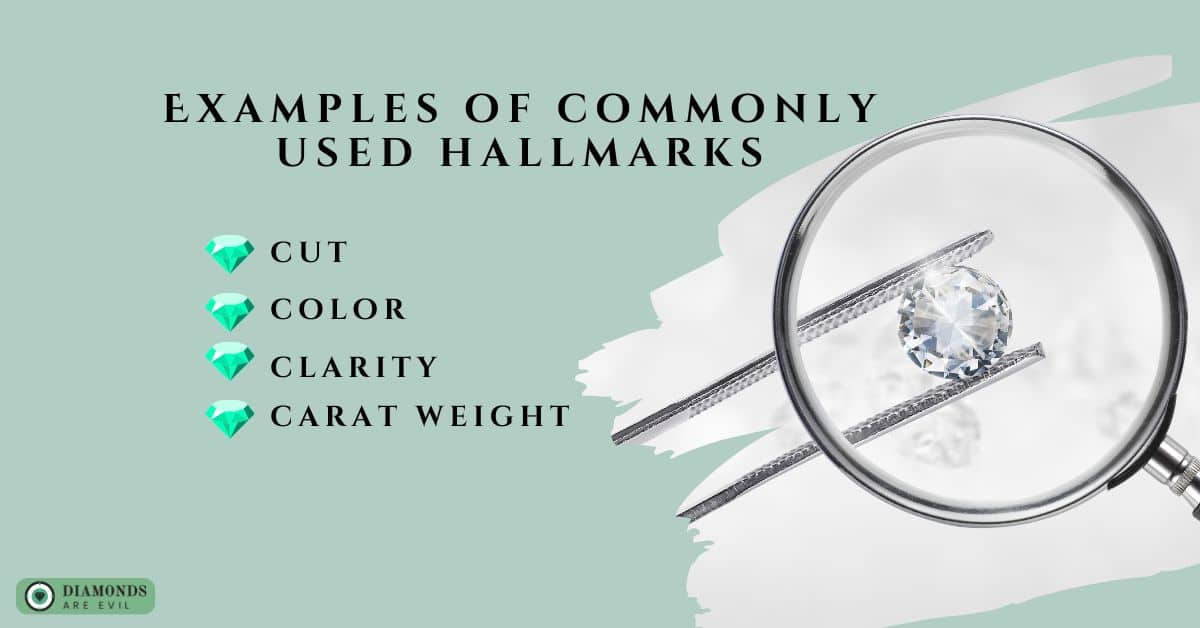
- Cut: The cut of a diamond refers to its overall proportions and the quality of its faceting. A well-cut diamond will have excellent symmetry, proportions, and polish, resulting in maximum brilliance and fire. Common cut grades include excellent, very good, good, fair, and poor.
- Color: The color of a diamond refers to the presence or absence of color in the stone. The most valuable diamonds are colorless, while those with a yellow or brown tint are considered lower quality. Color grades are determined by a scale that ranges from D (colorless) to Z (light yellow).
- Clarity: The clarity of a diamond refers to the number and size of inclusions (internal flaws) and blemishes (external flaws) in the stone. A diamond with fewer inclusions and blemishes will be more valuable. Clarity grades range from Flawless (no inclusions or blemishes visible under 10x magnification) to Included (inclusions visible to the naked eye).
- Carat weight: The carat weight of a diamond refers to its size, with one carat equal to 0.2 grams. Larger diamonds are generally more valuable, but a diamond’s value is also affected by its cut, color, and clarity.
Tip #2: Conduct a Visual Inspection
To truly appreciate the value of a diamond, an examination of its appearance is necessary. A skilled and trained appraiser will analyze the diamond’s color, clarity, cut, and carat weight.
The diamond’s color grading is based on a scale from D (colorless) to Z (light yellow or brown), with the most valuable diamonds being those with the least amount of color. Clarity grading looks at the presence of any inclusions or blemishes on or within the diamond, with the highest grading being Flawless.
The cut of the diamond is also crucial in determining its beauty and sparkle, with a well-cut diamond displaying more brilliance and fire than a poorly cut one. The carat weight is the measurement of a diamond’s weight, with larger diamonds generally being more expensive.
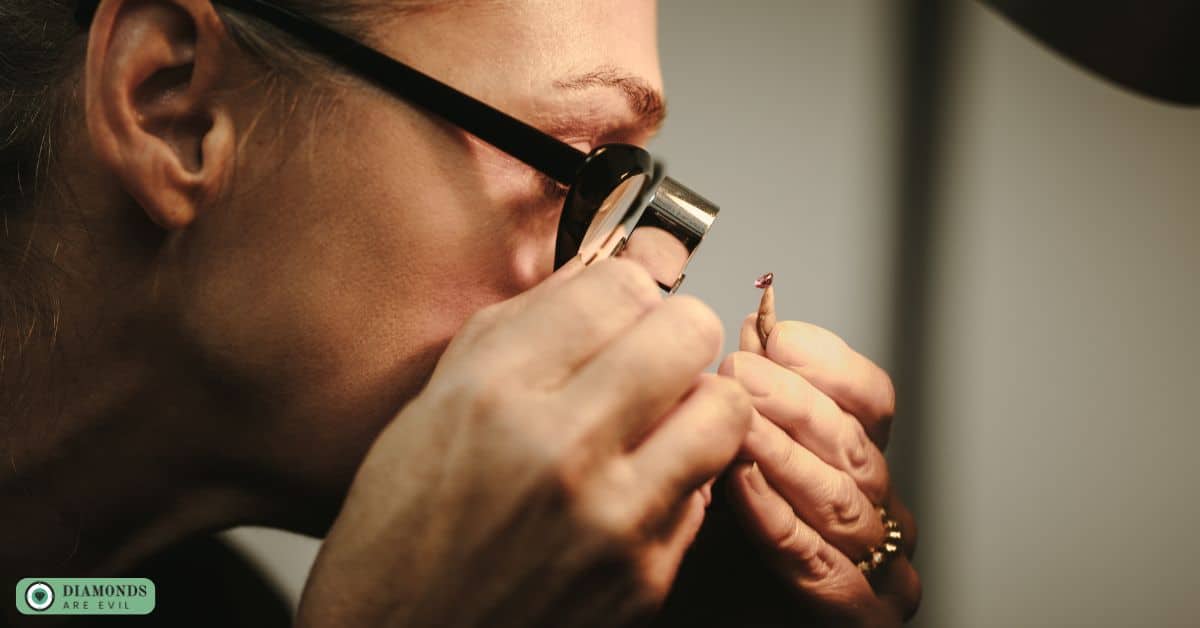
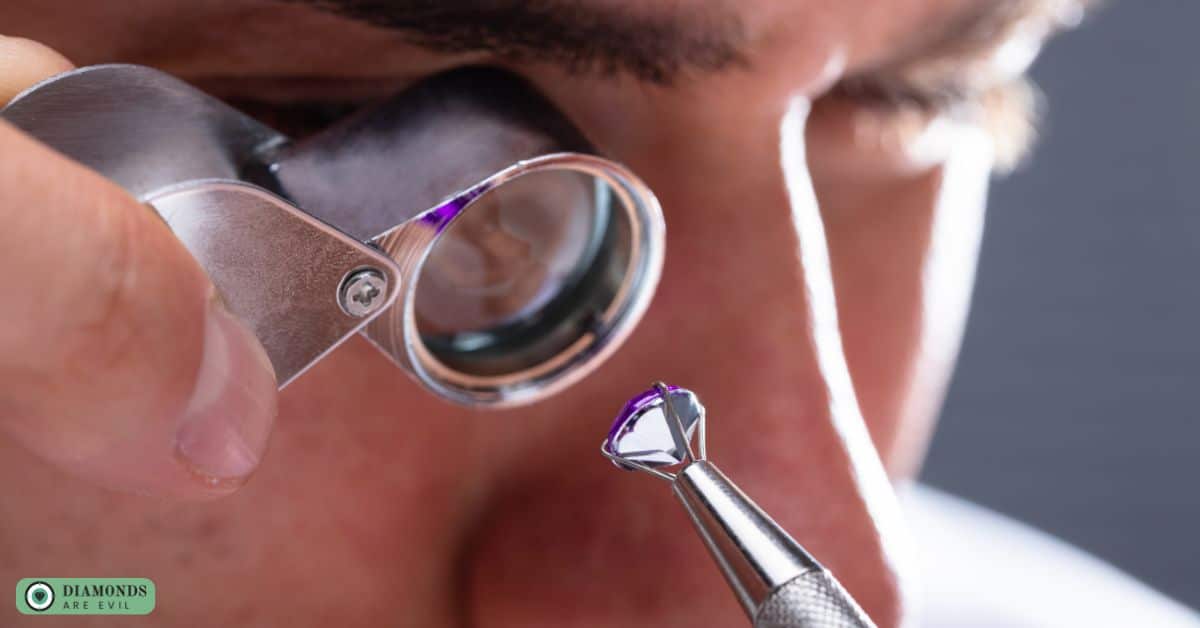
Use of a magnifying glass or loupe
One of the most useful tools in the examination process is a magnifying glass, specifically a loupe. With this tool, you can hone in on the fine details that make each diamond unique.
You can analyze the color, clarity, and cut of the stone with unparalleled precision. It truly is amazing how a tiny, handheld instrument can offer so much insight into the world of diamonds.
Tip #3: The Fog Test
The fog test, also known as the diamond fog test, is a quick and easy way to determine whether a diamond is real or fake. To perform the test, hold the diamond close to your mouth and breathe on it, fogging up the surface.
If the fog clears away quickly, the diamond is likely real. However, if the fog takes a few seconds to clear, or if it stays on the surface for a while, the diamond is likely fake. This is because diamonds are good conductors of heat, so the warmth of your breath will cause the fog to disappear quickly.
On the other hand, materials like glass or cubic zirconia are not as conductive, so the fog will stay on the surface for a while. The fog test is a simple way to verify the authenticity of a diamond without the need for any special equipment or expertise.
Interpreting the results of the fog test
When it comes to evaluating the quality of a diamond, the fog test is a common method used to measure its authenticity. This test is simple but effective, and involves breathing hot air onto the diamond’s surface to create a layer of fog.
If the fog clears within two seconds, then the diamond is likely real. On the other hand, if the fog lingers for longer than two seconds, then it could be due to a fake diamond’s thermal conductivity level.
Tip #4: The Water Test
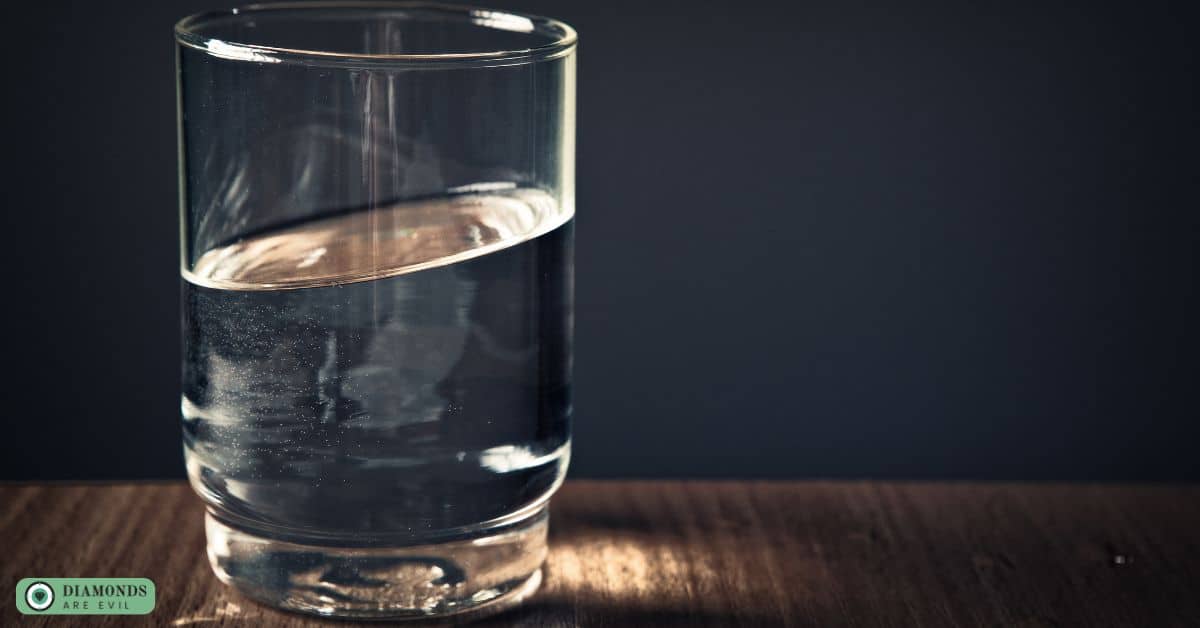
One way to determine the authenticity of a diamond is through the water test. This simple test involves filling a glass with cold water and dropping the diamond into the glass. If the diamond sinks to the bottom, it is likely a true diamond, as real diamonds have high densities.
However, if the diamond floats or glides on the surface of the water, it is likely a fake. This test is not foolproof, as some synthetic diamonds also have high densities, but it is a quick and easy way to check for authenticity.
Procedure for conducting the water test
The water test is another simple and quick method for determining whether a gemstone is a real diamond or a simulant such as cubic zirconia or moissanite. The test is based on the fact that diamonds have a high density, which means they sink in water, while simulants have a lower density and will float.
While this test is not foolproof and should not be the sole method for verifying a diamond’s authenticity, it can provide a useful indication of a gemstone’s composition. Here is the procedure for conducting the water test:
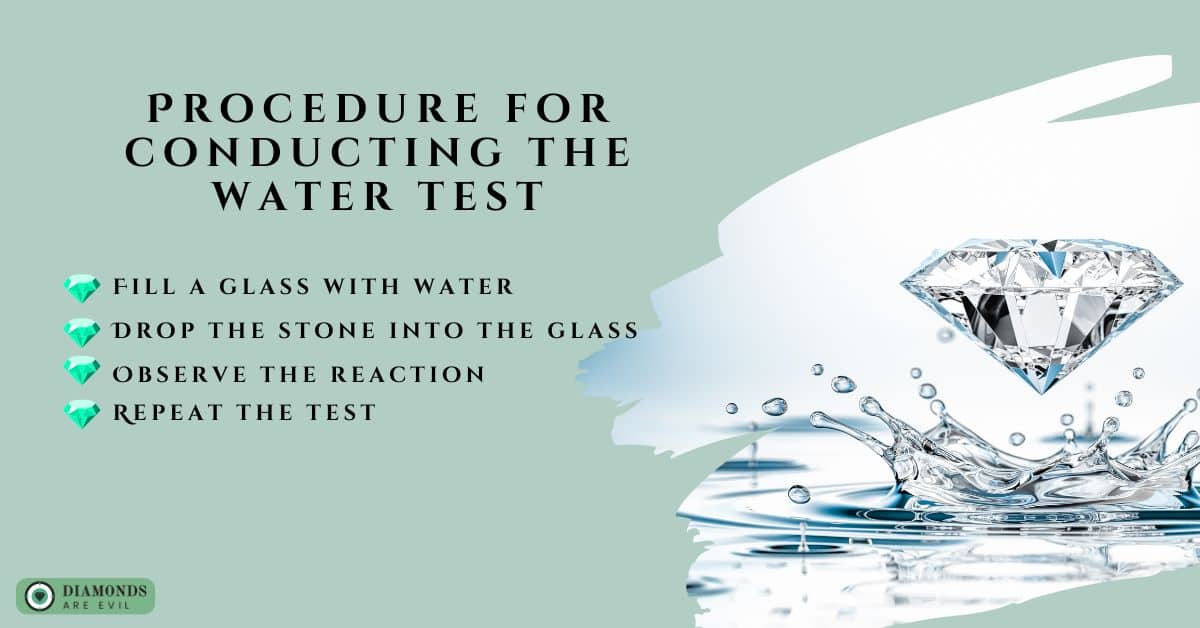
Fill a glass with water: Use a clean and clear glass and fill it with water up to about ¾ full.
Drop the stone into the glass: Carefully drop the gemstone into the water.
Observe the reaction: Observe whether the stone sinks to the bottom of the glass or floats on the surface. If it sinks, it is likely a real diamond. If it floats, it may be a simulant.
Repeat the test: If the stone floats, repeat the test with a known real diamond to compare results. If the suspected diamond still floats, it is likely a simulant.
Tip #5: The Heat Test
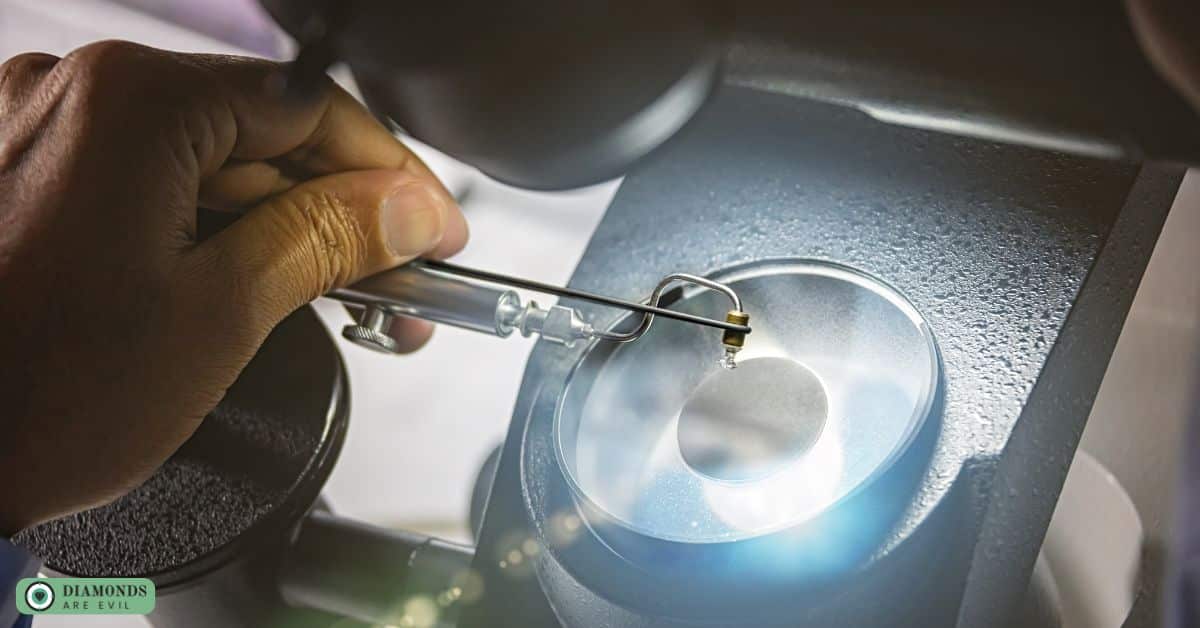
In the world of diamonds, the heat test is an important aspect of determining a diamond’s authenticity. It involves exposing the diamond to extreme temperatures and observing its reaction.
A real diamond will not be affected by the heat, while a synthetic or fake diamond will suffer damage or discoloration. This complex test requires skilled professionals who use special equipment to ensure accurate results. It’s not something you should try at home!
Interpreting the results of the heat test
Interpreting the results of a heat test is a crucial step in determining the authenticity of a diamond. Heat tests are commonly used in the diamond industry to identify any enhancements or treatments that may have been done to a diamond.
During the test, the diamond is exposed to high temperatures and closely examined for any changes in appearance. If the diamond is authentic, it should remain unchanged by the heat. However, if it has undergone any treatments or enhancements, such as fracture filling, the heat will cause the diamond to change color, creating telltale signs that the diamond has been altered.
In Conclusion
As diamonds are one of the most expensive and sought-after gems, it is essential to determine whether the diamond jewelry you have is real or fake. There are various tips and methods available for testing the authenticity of diamonds at home, including using a magnifying glass, testing with water, or using a diamond tester.
These methods aim to detect differences in the physical properties of a real diamond compared to a fake one. It is crucial to keep in mind that while these techniques may give some indication, only a professional diamond grading report from a certified gemologist can provide a definitive answer.