
Synthetic or Lab-Created Diamonds vs Natural Diamonds
Synthetic or lab-created diamonds have been gaining popularity in recent years as a more affordable alternative to natural diamonds. But what are the differences between synthetic and natural diamonds, and which type of diamond is right for you?
In this blog post, we’ll compare synthetic vs natural diamonds so you can make an informed decision when selecting your diamond. We’ll cover the differences in color, clarity, price, durability, and more to help you decide which type of diamond to purchase for your special occasion. After reading this post, you’ll have all the information you need to make an informed decision when it comes to selecting a diamond. Let’s get started!
Synthetic Diamonds vs Natural Diamonds
Diamonds are precious gemstone that has been highly valued for centuries. They are used in jewelry, industrial tools, and even as investment assets. However, not all diamonds are created equal. There are two main types of diamonds: synthetic diamonds and natural diamonds.
Synthetic diamonds, also known as lab-grown diamonds, are diamonds that are created in a laboratory setting using advanced technology. They are chemically and physically identical to natural diamonds but are produced in a controlled environment.
Natural diamonds, on the other hand, are diamonds that are formed in the Earth’s mantle over millions of years. They are mined from the Earth and are not produced in a laboratory.
Below is a comparison table that highlights the key differences between synthetic and natural diamonds:
| Feature | Synthetic Diamonds | Natural Diamonds |
| Origin | Created in a laboratory |
Formed in the Earth’s mantle over millions of years
|
| Cost | Less expensive | More expensive |
| Environmental Impact | Less impactful |
More impactful due to the mining process
|
| Availability | Readily available |
Limited availability due to mining and supply
|
| Certification | May not be certified |
Often certified by organizations such as GIA
|
It’s important to note that while synthetic diamonds may be less expensive and more readily available, they are not always certified by organizations such as the Gemological Institute of America (GIA). This means that they may not have the same value as certified natural diamonds.
Overall, both synthetic and natural diamonds have their unique characteristics and benefits. Synthetic diamonds are a more ethical and sustainable choice, while natural diamonds are considered more traditional and valuable. The choice between synthetic and natural diamonds ultimately depends on personal preference, budget, and the usage of the diamond.
Why it is important to be informed when selecting a diamond
It is important to be informed when selecting a diamond because diamonds can vary greatly in terms of quality, value, and authenticity. Being informed allows you to make an informed decision about which diamond to purchase and ensures that you are getting the best value for your money.
Knowing about the 4 C’s (carat, cut, color, and clarity) of a diamond can help you understand the quality of the diamond you are considering. Additionally, understanding the difference between natural and synthetic diamonds can help you make an informed decision about which type of diamond is best for you.
Furthermore, being informed about certification and grading can also help you ensure that you are purchasing a diamond that has been independently evaluated and certified for quality. In short, being informed about diamonds can help you make a better decision about which diamond to purchase and ensure that you are getting the best value for your money.
Differences in Color
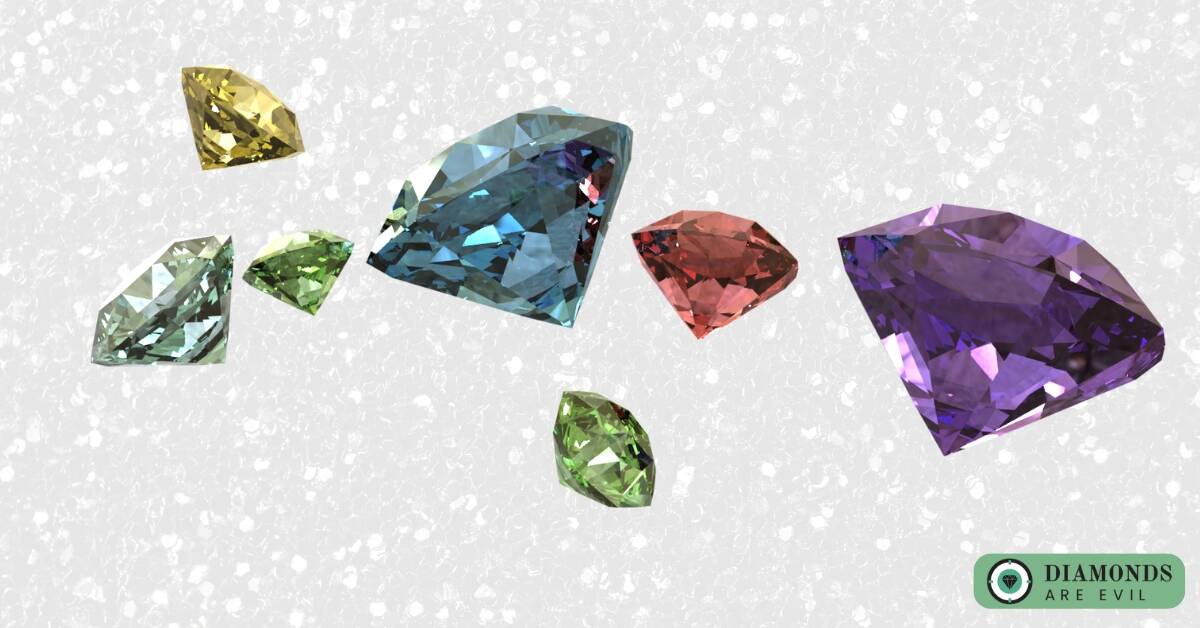
The color of a diamond is one of the four C’s that determine the quality and value of a diamond. The color of a diamond is judged on a scale from D (colorless) to Z (light yellow or brown). Synthetic diamonds, natural diamonds, and other types of lab-grown diamonds can vary greatly in terms of color.
Below is a comparison table that highlights the key differences in color between synthetic diamonds, natural diamonds, and other types of lab-grown diamonds:
| Feature | Synthetic Diamonds | Natural Diamonds |
Other types of Lab-Grown Diamonds
|
| Color | Typically colorless | Colorless to light yellow/brown |
Varies depending on the process used
|
| Advantages | Consistent color | Natural color variations |
Can be grown in a specific color if desired
|
| Disadvantages | Limited color options | Natural variations can be less desirable |
The color may be less stable over time
|
When it comes synthetic diamonds, are typically colorless and consistent in color, making them a popular choice for those looking for a colorless diamond. However, synthetic diamonds are limited in color options, and that’s the main disadvantage.
Natural diamonds, on the other hand, can vary in color from colorless to light yellow or brown. This natural variation in color can be desirable for some, but less desirable for others.
Other types of lab-grown diamonds such as HPHT diamonds can be grown in a specific color if desired. However, the color may be less stable over time and can change depending on the conditions the diamond is exposed to.
Differences in Clarity
The clarity of a diamond is one of the four C’s that determine the quality and value of a diamond. Clarity refers to the presence of internal and external characteristics called inclusions and blemishes. Synthetic diamonds, natural diamonds, and other types of lab-grown diamonds can vary greatly in terms of clarity.
Below is a comparison table that highlights the key differences in clarity between synthetic diamonds, natural diamonds, and other types of lab-grown diamonds:
| Feature | Synthetic Diamonds | Natural Diamonds |
Other types of Lab-Grown Diamonds
|
| Clarity | Typically flawless | Varies, can have inclusions and blemishes |
Varies depending on the process used
|
| Advantages | Consistent clarity | Natural variations in clarity can be desirable |
Can be grown with desired level of clarity
|
| Disadvantages | Limited variations in clarity | Natural inclusions and blemishes can lower value |
Quality of clarity may not be as stable over time
|
When it comes synthetic diamonds, are typically flawless, which makes them a popular choice for those looking for a diamond with high clarity. However, synthetic diamonds are limited in variations of clarity, and that’s the main disadvantage.
Natural diamonds, on the other hand, can vary in clarity from flawless to diamonds with visible inclusions and blemishes. This natural variation in clarity can be desirable for some, but less desirable for others.
Other types of lab-grown diamonds such as CVD diamonds can be grown with a desired level of clarity. However, the quality of clarity may not be as stable over time and can change depending on the conditions the diamond is exposed to.
Differences in Price
Price is an important factor when it comes to purchasing a diamond, and synthetic diamonds, natural diamonds, and other types of lab-grown diamonds can vary greatly in terms of price.
Below is a comparison table that highlights the key differences in price between synthetic diamonds, natural diamonds, and other types of lab-grown diamonds:
| Feature | Synthetic Diamonds | Natural Diamonds |
Other types of Lab-Grown Diamonds
|
| Price | Typically less expensive | Typically more expensive |
Varies depending on the process used
|
| Advantages | More budget-friendly | Considered more valuable |
Can be grown with desired level of quality and size
|
| Disadvantages | Lower value | Higher cost |
Price may not be as stable over time
|
When it comes to synthetic diamonds, are typically less expensive than natural diamonds, making them a popular choice for those working within a budget. However, synthetic diamonds are considered less valuable than natural diamonds, and that’s the main disadvantage.
Natural diamonds, on the other hand, are typically more expensive than synthetic diamonds. This is because natural diamonds are considered more valuable due to their rarity and the fact that they are formed over millions of years in the earth’s mantle.
Other types of lab-grown diamonds such as CVD diamonds can be grown with a desired level of quality and size, but the price may not be as stable over time and can change depending on the supply and demand.
Differences in Durability
Durability is an important factor when it comes to purchasing a diamond, as a durable diamond is less likely to break or chip. Synthetic diamonds, natural diamonds, and other types of lab-grown diamonds can vary greatly in terms of durability.
Below is a comparison table that highlights the key differences in durability between synthetic diamonds, natural diamonds, and other types of lab-grown diamonds:
| Feature | Synthetic Diamonds | Natural Diamonds |
Other types of Lab-Grown Diamonds
|
| Durability | Typically very durable | Typically very durable |
Varies depending on the process used
|
| Advantages | Consistent durability | Natural variations in durability can be desirable |
Can be grown with desired level of durability
|
| Disadvantages | Limited variations in durability | Natural variations in durability can be less desirable |
Durability may not be as stab
|
When it comes to synthetic diamonds, are typically very durable and consistent in terms of durability, making them a popular choice for those looking for a durable diamond. However, synthetic diamonds are limited in variations of durability, and that’s the main disadvantage.
Natural diamonds, on the other hand, are typically very durable, but there can be variations in durability due to the natural formation process.
Other types of lab-grown diamonds such as HPHT diamonds can be grown with a desired level of durability, but the durability may not be as stable over time and can change depending on the conditions to which the diamond is exposed.
In conclusion
Both synthetic diamonds and natural diamonds have their unique characteristics and benefits. Synthetic diamonds are a more ethical and sustainable choice, while natural diamonds are considered more traditional and valuable.
After considering the differences in color, clarity, price, durability, and other factors between synthetic and natural diamonds, it is ultimately up to you to decide which type of diamond is right for you.
No matter what you choose, it is important to be informed and well-researched when selecting a diamond so that you can make an educated decision and get the best value for your money. We hope this blog post has helped guide you through the process of selecting the perfect diamond!