
The Battle of the Sparkles: Diamonds vs Cubic Zirconia
The battle between diamonds and cubic zirconia as the go-to gemstone for jewelry is a hot topic. Diamonds have always been a traditional choice for high-end pieces, but cubic zirconia has emerged as an affordable alternative. Examining their composition, physical properties, and economic and social impact. Their ethical and environmental concerns help you make an informed decision when it comes to adding some sparkle to your life.
Are you looking to purchase a diamond but concerned about the price tag? Or maybe you’re interested in something with a look similar to that of a diamond but without breaking the bank. If so, then it may be time for you to consider the battle of the sparkles: diamonds versus cubic zirconia.
In this blog post, we’ll be exploring the origin and composition of both diamonds and cubic zirconia, their physical properties and characteristics, and the economic and social impacts of each. Ethical and environmental concerns that come with purchasing diamonds or cubic zirconia, as well as factors to consider when deciding between the two. So let’s get started on this sparkly journey!
The Origin and Composition of Diamonds and Cubic Zirconia
Diamonds and cubic zirconia are two of the most popular stones used in jewelry. Diamonds have been treasured for centuries, while cubic zirconia is a more modern invention.
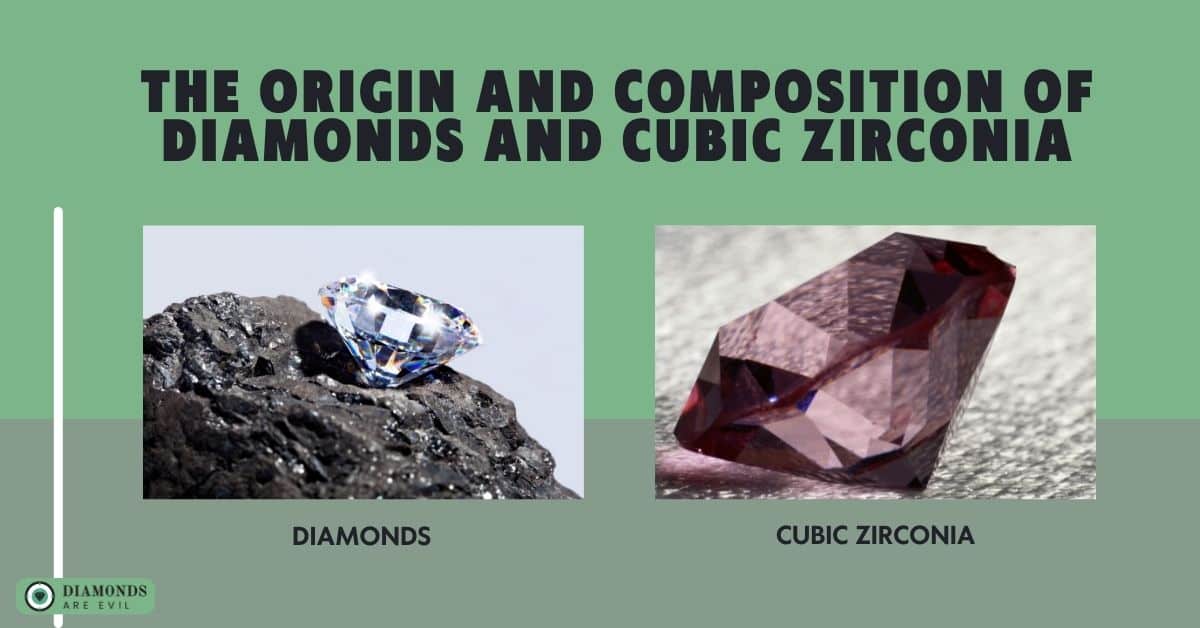
Diamonds are formed deep within the Earth’s crust under high pressure and high-temperature conditions. They are composed of pure carbon and are the hardest known natural substance. Their unique crystal structure makes them highly refractive, which is why they sparkle so brightly. They can come in various colors depending on the presence of trace elements during their formation.
Cubic zirconia is a lab-created gemstone that is made by heating the elements zirconium and oxygen together at extremely high temperatures. This process creates a crystal that is similar in appearance to a diamond but is composed of zirconium oxide instead of carbon. While cubic zirconia is not as hard as a diamond, it is still a durable stone that can withstand daily wear and tear.
The Physical Properties and Characteristics of Diamonds and Cubic Zirconia
Diamonds and cubic zirconia are both extremely popular and visually appealing gemstones, but they differ in several physical properties and characteristics.
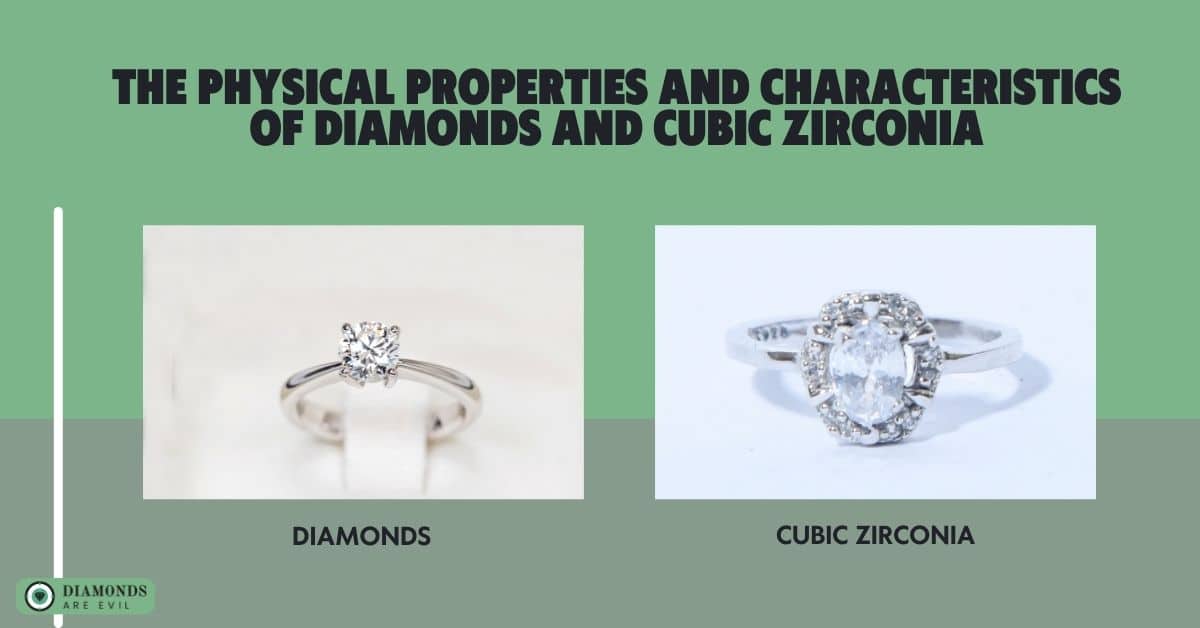
Physical Properties of Diamonds:
- Hardness: The hardest known natural mineral on earth, scoring a perfect 10 on the Mohs Scale of Mineral Hardness.
- Refractive Index: With a high refractive index, diamonds bend and reflect light, creating their characteristic sparkle and brilliance.
- Color: Diamonds can be found in various colors ranging from colorless to fancy hues such as pink, blue, and yellow.
- Durability: Due to their hardness, diamonds are very durable, and can resist scratches and chips better than most other gemstones.
- Rarity: Natural diamonds are rare, and can sometimes be expensive due to their limited supply.
Physical Properties of Cubic Zirconia:
- Hardness: Although harder than most gemstones, cubic zirconia scores 8.5 on the Mohs scale of mineral hardness, making it softer than diamonds.
- Refractive Index: It has a lower refractive index than a diamond, meaning it doesn’t bend and reflect light in the same manner.
- Color: Cubic zirconia is typically colorless and transparent but can also come in shades by adding trace elements during manufacturing.
- Durability: As it is softer than a diamond, it might be prone to scratches and chips.
- Affordability: Cubic zirconia is a laboratory-made industrial material, so it is much more affordable than diamonds.
While both diamonds and cubic zirconia have their own unique physical properties and characteristics, deciding between them ultimately comes down to personal preference, budget, and other factors such as ethically and environmentally conscious choices.
The Economic and Social Impact of Diamonds and Cubic Zirconia
Diamonds and cubic zirconia have had considerable economic and social impacts worldwide.
| Economic Impacts | Social Impacts | |
|---|---|---|
| Diamonds | Creates jobs and economic growth | Symbol of love and wealth |
| Influences the development and trade of jewelry | Human rights violations, funding conflicts, labor violations | |
| Raises the standard of living in some countries | ||
| Cubic Zirconia | Provides affordable alternative to diamonds | Alternative for those who cannot afford diamonds |
| Creates employment opportunities in jewelry industry | Provides access to similar-looking jewelry at an affordable price |
While both diamonds and cubic zirconia have had significant economic and social impacts, there have been concerns surrounding environmental impact, ethics, and sustainability. Initiatives that promote fair labor practices, ethical sourcing, and sustainable mining practices can help minimize social and environmental challenges.
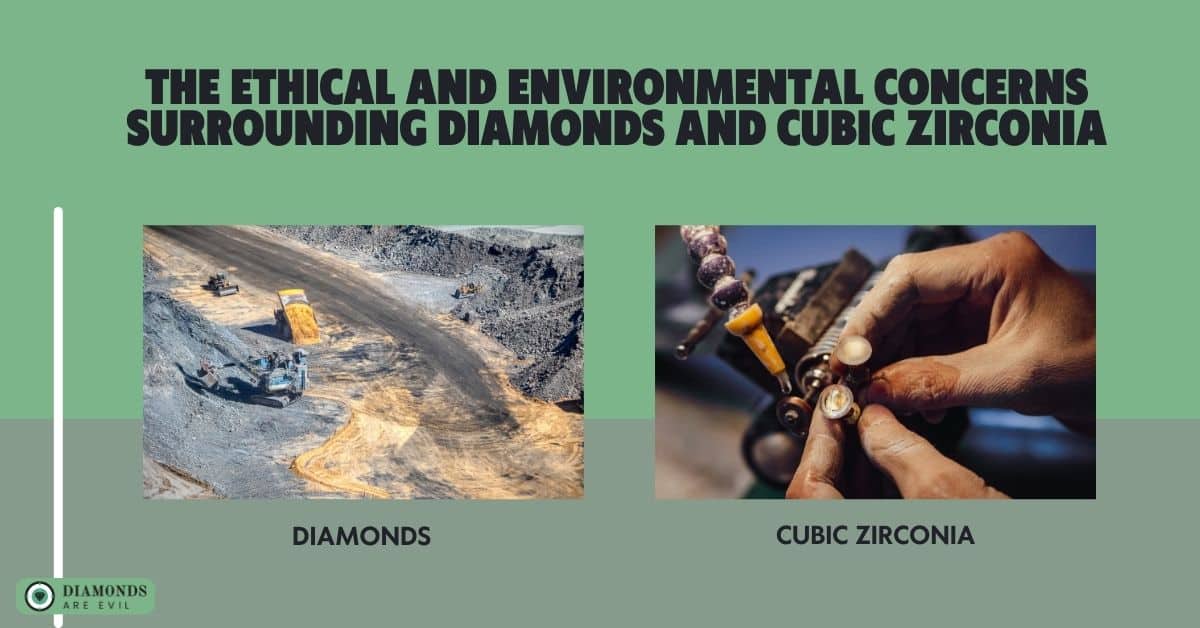
The Ethical and Environmental Concerns Surrounding Diamonds and Cubic Zirconia
Diamonds and cubic zirconia have ethical and environmental concerns associated with their production and use.
| Ethical Concerns | Environmental Concerns | |
| Diamonds | Human rights violations, funding conflicts, labor violations | Deforestation, soil erosion, contamination of soil/water |
| Use of natural diamonds to fund unethical activities | Requires significant energy and water resources | |
| Criticism for opaque supply chains and lack of transparency | ||
| Cubic Zirconia | Use of non-renewable energy sources in manufacturing process | Requires significant energy from fossil fuel sources |
| Concerns of devaluation of diamonds due to lower cost | Contributes to the environmental footprint of industrial/lab-made materials |
Both diamonds and cubic zirconia have ethical and environmental concerns that need to be addressed. Sustainable and ethical jewelry initiatives that promote fair labor practices, responsible sourcing, and renewable energy production processes can improve social and environmental challenges with both gemstones.
The Choice Between Diamonds and Cubic Zirconia: Factors to Consider
When choosing between diamonds and cubic zirconia, several factors must be considered. While diamonds are the more traditional and luxurious option, cubic zirconia offers an affordable alternative to those on a budget. Below are some factors to consider when deciding between the two stones:
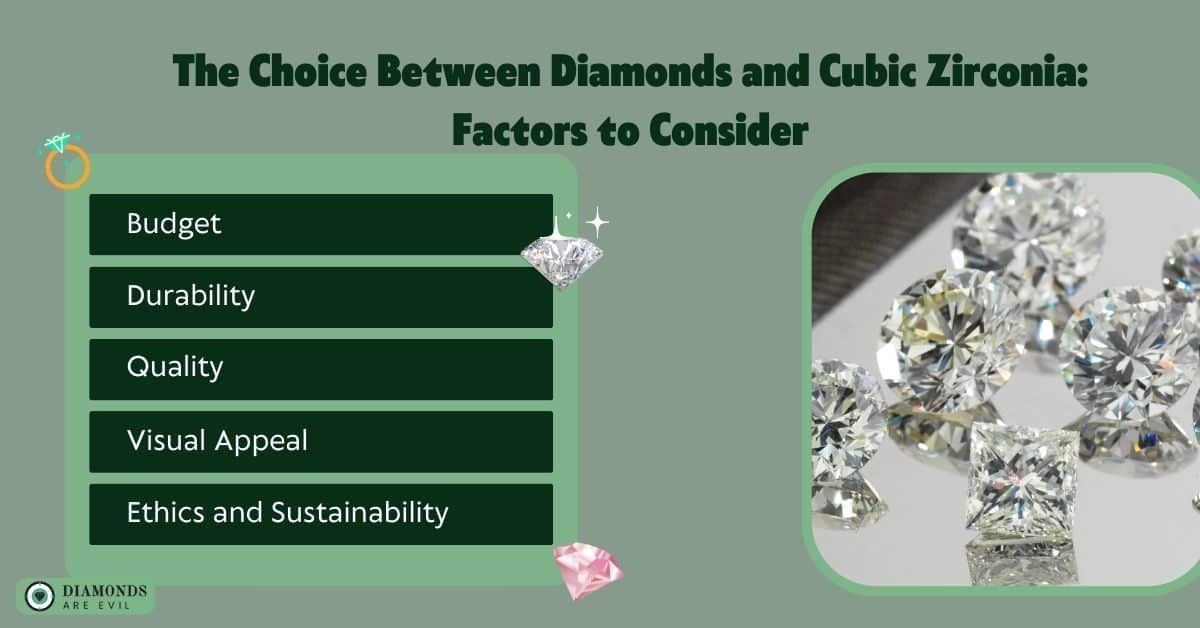
Budget
Cubic zirconia is significantly cheaper than diamonds, which can make it more appealing to those on a budget.
Durability
While both diamonds and cubic zirconia are durable stones, diamonds are the hardest natural mineral on earth and can withstand daily wear and tear without scratching. Cubic zirconia, on the other hand, is less durable and will scratch or chip more easily.
Quality
Diamonds are known for their high quality, rarity, and natural beauty. Cubic zirconia, while similar in appearance, is a man-made stone produced in a lab.
Visual Appeal
Diamonds are renowned for their brilliance and sparkle, while cubic zirconia, while still shiny, doesn’t have the same level of fire and glimmer.
Ethics and Sustainability
Natural diamonds have ethical and environmental concerns surrounding their mining and production. Cubic zirconia, while less environmentally destructive, requires the use of non-renewable energy sources during its production.
Ultimately, the choice between diamonds and cubic zirconia comes down to personal preference, budget, and ethical considerations. While diamonds remain a status symbol, cubic zirconia offers an affordable option that can still deliver a similar visual appeal for those on a budget.
In conclusion
When it comes to choosing between diamonds and cubic zirconia for jewelry or other special occasions, there are many factors to consider. Both stones have their own unique physical properties and characteristics, as well as important ethical and environmental considerations.
Ultimately, the choice depends on personal preference, budget, and sustainability considerations. With careful consideration, it is possible to make an informed decision that delivers the desired results while maintaining ethical and environmental standards.