
The Best Ways to Care For Your Diamond Jewelry
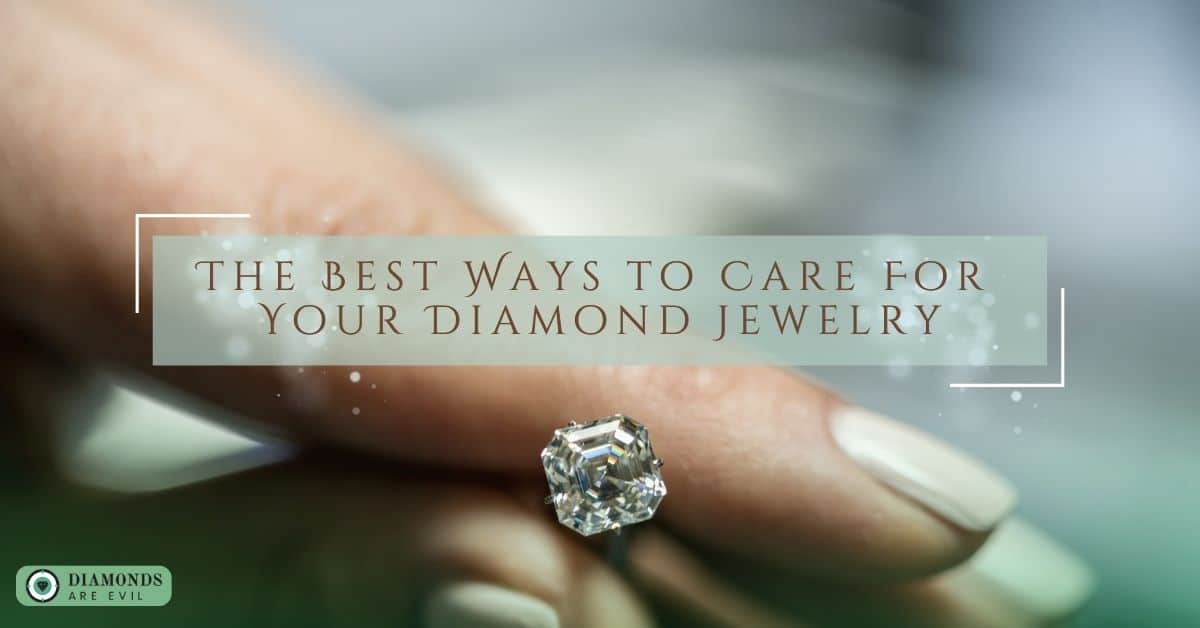
Diamond jewelry is a timeless and elegant adornment that can be passed down through generations. The best ways to care for your diamond jewelry are cleaning and maintenance, safe storage, and handling, avoiding damage and exposure to harmful elements, and many more. Caring for your diamond jewelry will help maintain its brilliance and preserve its worth.
With these tips in mind, you can be sure that your diamond jewelry will remain beautiful and cherished for years to come.
Cleaning and Maintenance
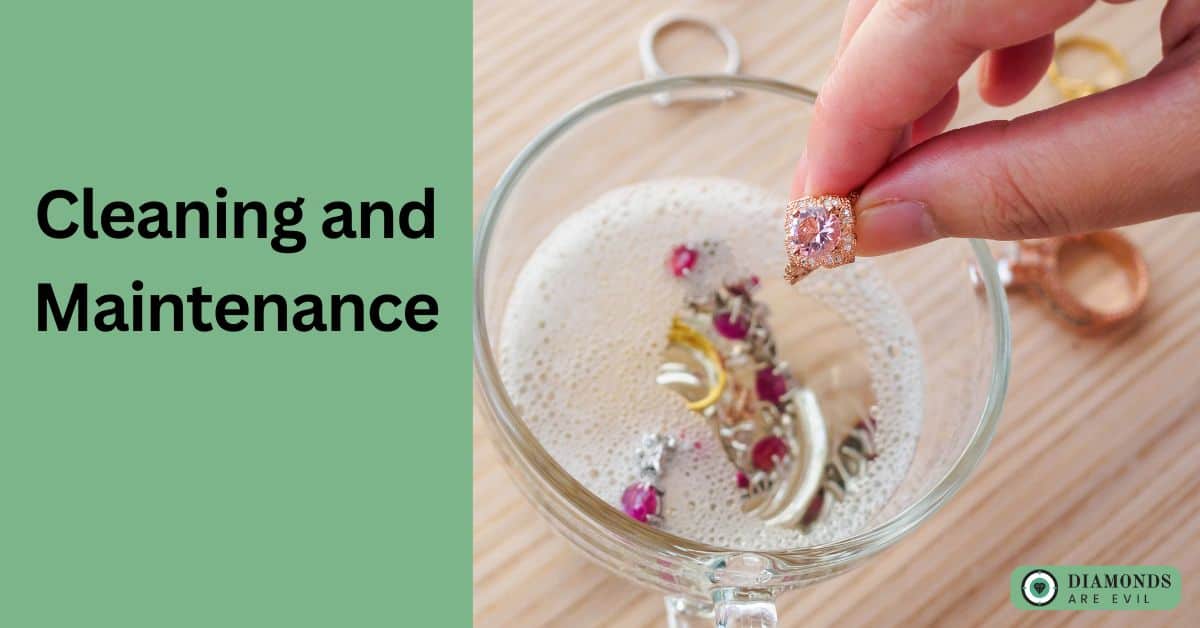
Cleaning and maintenance are essential aspects of caring for your diamond jewelry. Regular cleaning not only keeps your diamonds sparkling and looking their best, but it also helps to remove dirt, grime, and another buildup that can damage the metal and the setting of the jewelry.
• Clean your diamond jewelry with a soft bristled brush and warm, soapy water.
• Dry the jewelry thoroughly before storing it in an airtight container or fabric-lined jewelry box.
• Check for loose settings and prongs at least twice a year to make sure the stones remain secure.
• Bring your diamond jewelry to a professional jeweler every few years for a thorough cleaning and inspection.
Safe Storage and Handling
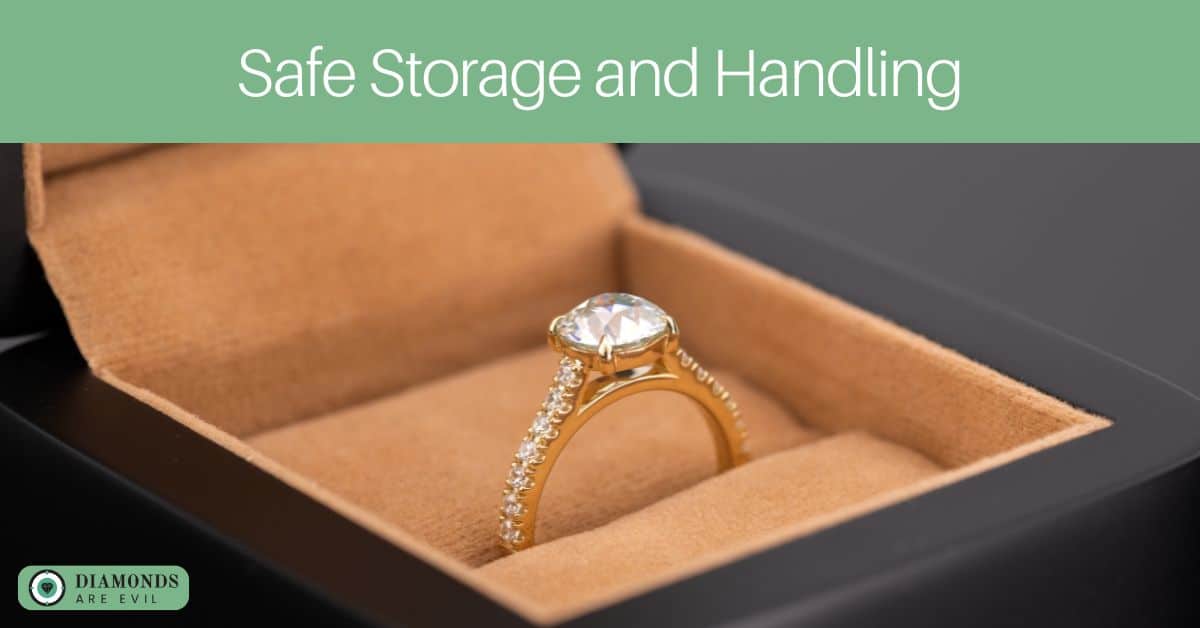
Safe storage and handling are crucial for protecting your diamond jewelry from damage and loss. When not in use, your diamond jewelry should be stored in a safe place, such as a jewelry box or a safe deposit box. This will keep it away from potential hazards such as moisture, extreme temperatures, and curious children or pets.
• Store your diamond jewelry separately from other pieces in an airtight container or fabric-lined jewelry box.
• Avoid contact with chemicals, such as chlorine and bleach, which can damage the metal of your jewelry.
• Take off diamond jewelry before engaging in sports or strenuous activities to avoid damaging the stones or settings.
• When traveling, store diamond jewelry in a protective pouch or case to prevent scratching and damage.
• Do not leave your diamond jewelry exposed to extreme temperatures or humidity, which can cause it to discolor or weaken the metal.
By following this safe storage and handling tips, you can ensure that your diamond jewelry stays in good condition and is protected against potential damage or loss.
Avoiding Damage and Exposure to Harmful Elements
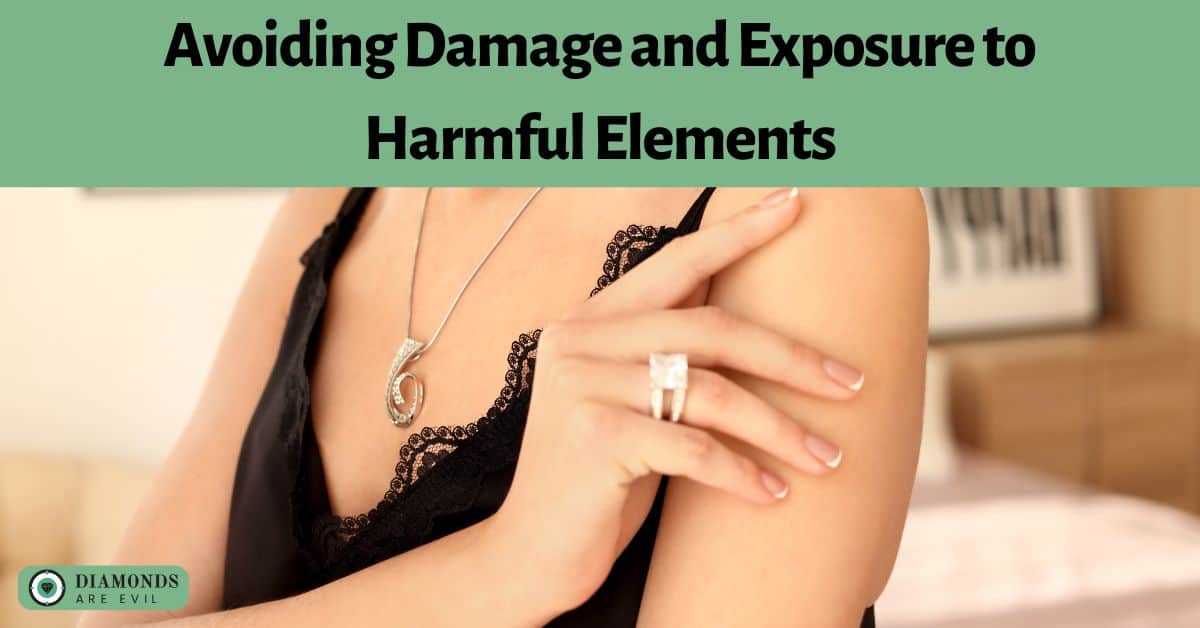
Avoiding damage and exposure to harmful elements is an important aspect of caring for your diamond jewelry. Diamonds are durable, but they can still be damaged if they are exposed to harsh chemicals, extreme temperatures, or excessive moisture.
• Do not wear your diamond jewelry when swimming or showering.
• Remove your diamond jewelry before applying lotions, creams, and perfumes as these can cause damage to the stones.
• Keep away from acidic substances such as vinegar and lemon juice, which can etch the surface of diamonds and weaken the metal of your jewelry.
• Avoid wearing diamond jewelry regularly in a hostile environment. This includes exposure to dust, dirt, or extreme heat and humidity.
• Do not use abrasive materials when cleaning your diamond jewelry as this can cause scratches on the stones or damage the setting of the jewelry.
• Have your diamond jewelry professionally inspected every two years by a certified jeweler.
Professional Care and Inspection
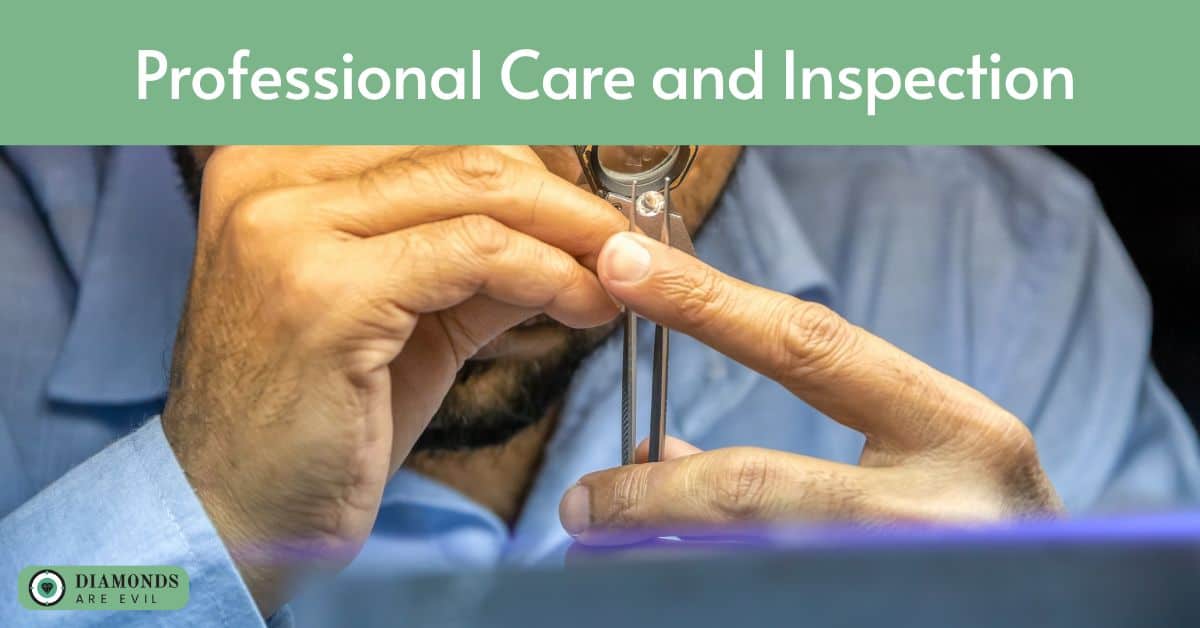
Professional care and inspection are essential aspects of caring for your diamond jewelry. While you can clean and maintain your diamond jewelry at home, it’s important to have it inspected and serviced by a professional jeweler on a regular basis.
During a professional inspection, a jeweler will examine your diamond jewelry for any signs of damage or wear, such as loose prongs, worn-out settings, or scratches on the diamonds. They will also check for any other issues that could cause damage to your jewelry over time. If they find any problems, they will be able to repair or replace them before they become bigger issues.
In addition to inspecting your diamond jewelry, professional jewelers can also clean and polish your jewelry to restore its original sparkle. They have specialized equipment and solutions that can remove dirt, grime, and another buildup that can’t be cleaned with household methods.
Professional jewelers can also check the security of the settings and the tightness of the diamonds, which is crucial to prevent losing a diamond. They can also resize, re-tip, or replace worn-out or broken parts of your jewelry.
It is recommended to have your diamond jewelry inspected and cleaned professionally every 6 months or a year. By having regular professional care and inspection, you can ensure that your diamond jewelry stays in top condition and is protected against potential damage or loss.
Daily Wear and Care Tips
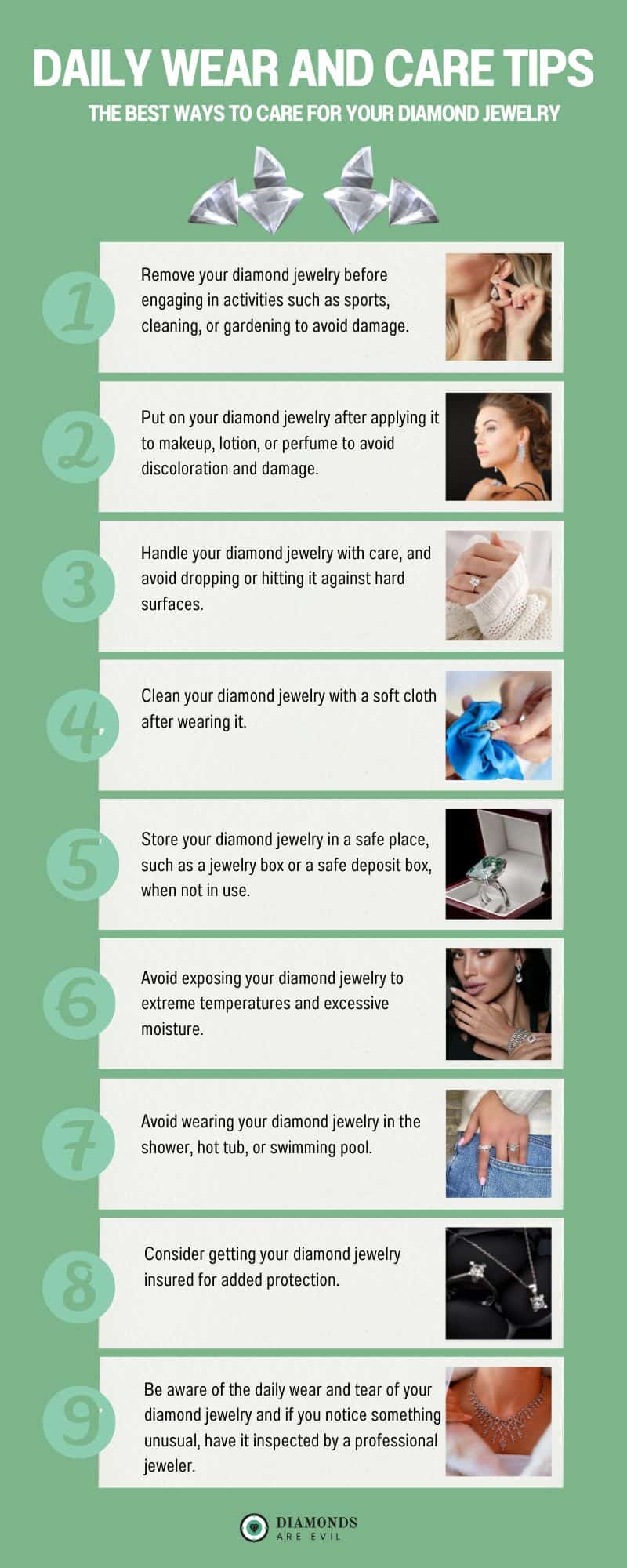
Caring for your diamond jewelry on a daily basis is essential in keeping it looking beautiful and maintaining its value. Here are some daily wear and care tips to help keep your diamond jewelry in top condition:
In conclusion
Diamond jewelry is a timeless and elegant adornment that requires special care to ensure its longevity, sparkle, and shine. With proper cleaning and maintenance, avoiding damage and exposure to harmful elements, and professional care and inspection, you can be sure that your diamond jewelry will remain beautiful and cherished for years to come. Following these tips and best practices will help to keep your diamond jewelry looking its best and maintaining its value.