
The Cost of Diamond Engagement Rings and Budget-Friendly Options
Diamond engagement rings are a symbol of eternal love, commitment, and devotion between two people. A diamond engagement ring is often the most expensive piece of jewelry that an individual will purchase in their lifetime.
The cost of diamond engagement rings can range from hundreds to thousands or even more depending on the quality and design of the ring. Therefore, it’s important to understand the factors that determine the cost of diamond engagement rings and some budget-friendly options available in order to find a ring that is perfect for you or your partner.
In this article, we will explore what are diamond engagement rings, the high cost of diamond engagement rings, factors that determine the cost of these rings, and budget-friendly options for diamond engagement rings. We’ll also look into alternatives to diamonds such as moissanite, cubic zirconia, and second-hand rings.
What are Diamond Engagement Rings
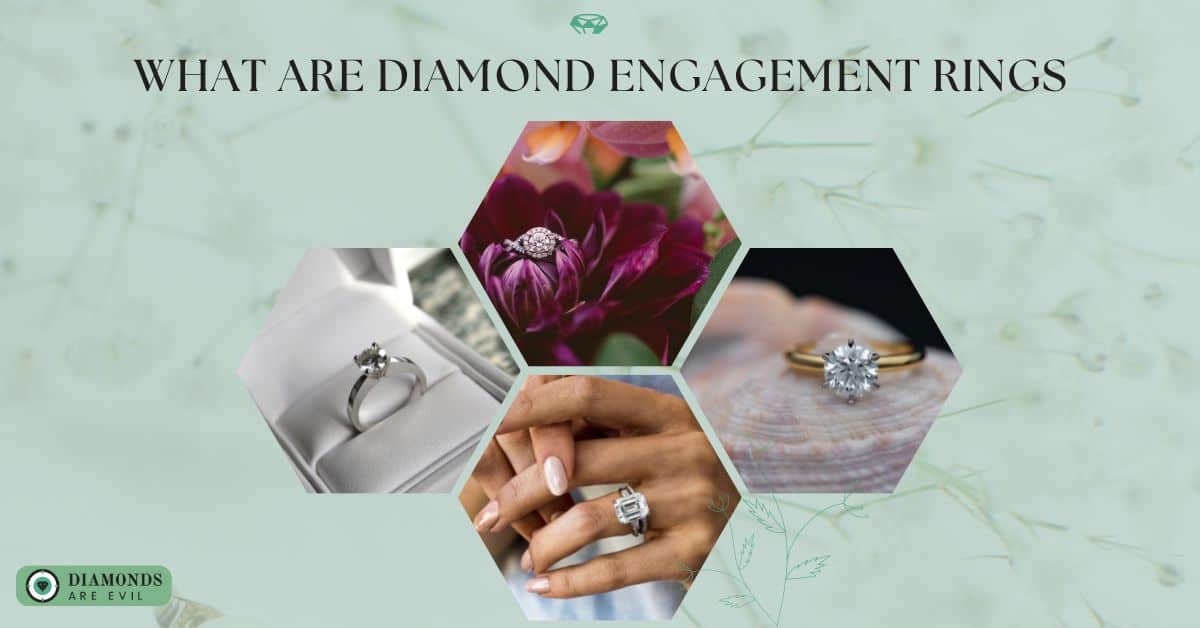
Diamond engagement rings are a symbol of love and commitment between two people, signifying their intention to get married. They are traditionally made of a diamond set in a metal band, but can also feature other precious gems or unique designs. The value of the ring is determined by factors such as the quality of the diamond, the design of the ring, the brand, and the current market trends.
A diamond engagement ring can range from a simple, classic solitaire to an intricate and elaborate design. Diamond engagement rings have become a popular choice for couples around the world, but with the high cost of diamonds, many are looking for alternative options such as lab-grown diamonds or diamond alternatives.
Factors that Determine the Cost of Diamond Engagement Rings
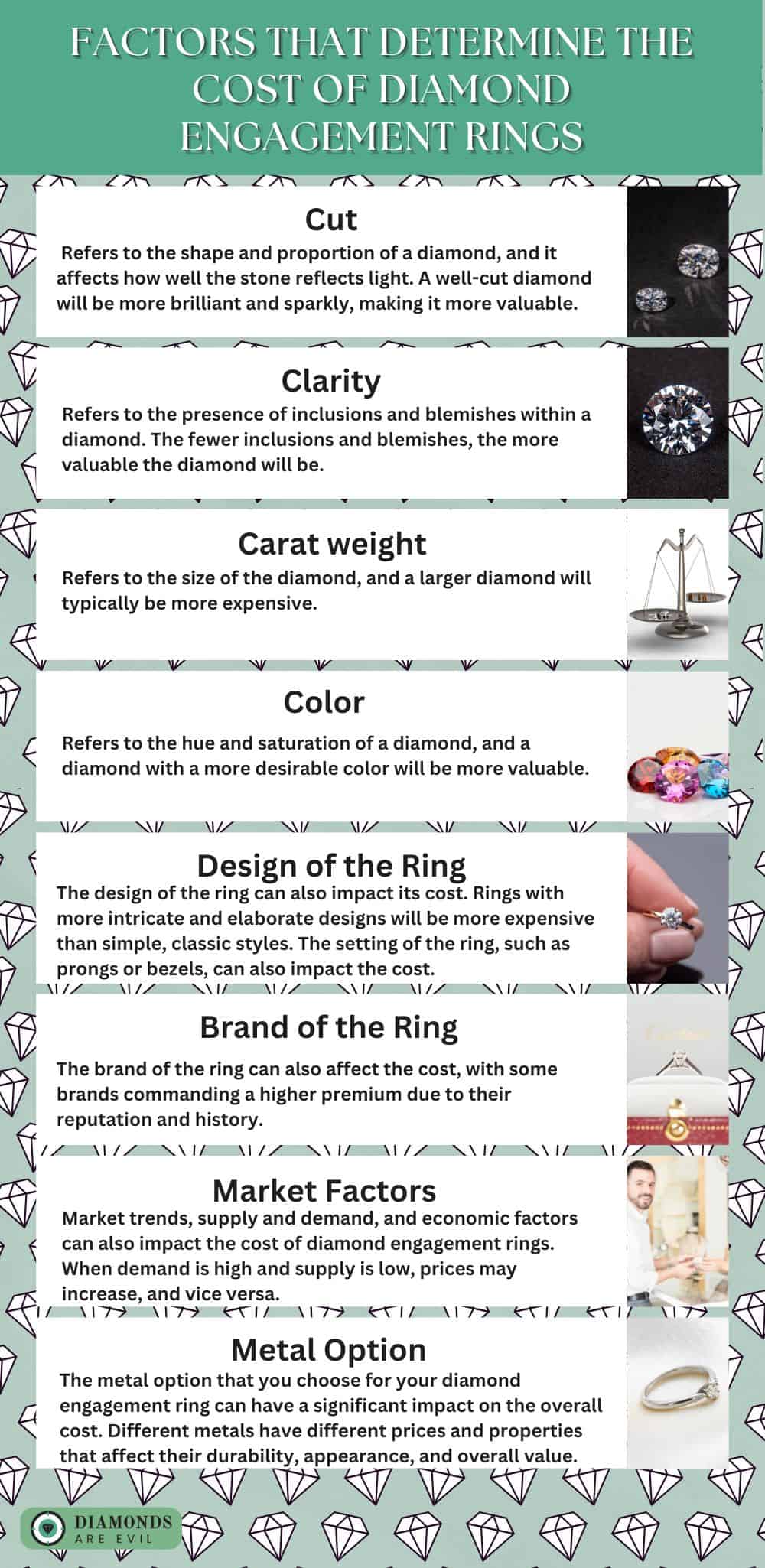
Diamond engagement rings are a symbol of love and commitment, and for many people, they represent one of the biggest purchases they will ever make. The cost of a diamond engagement ring is influenced by several factors, all of which contribute to its overall value. In this article, we will examine the main factors that determine the cost of diamond engagement rings, including the quality of the diamond, the cut, clarity, carat weight, and color.
The quality of the diamond is one of the most significant factors in determining the cost of an engagement ring. A diamond’s quality is determined by the Four Cs, which are cut, clarity, carat weight, and color.
Here are some of the most common metal options for diamond engagement rings and their approximate price range:
| Metal Option | Price Range |
| Platinum | $1,500 – $3,500 |
| White Gold | $1,000 – $2,500 |
| Yellow Gold | 1,000 – $2,500 |
| Rose Gold | $1,000 – $2,500 |
| Palladium | $1,000 – $2,500 |
| Silver | $500 – $1,000 |
Please note that these are rough estimates and the prices can vary greatly based on the specific metal and market conditions. Additionally, the prices listed above are subject to change and may not reflect current market prices.
The High Cost of Diamond Engagement Rings
The cost of diamond engagement rings can vary greatly based on a number of factors, including the diamond’s carat weight, cut, clarity, and color. Here’s a rough estimate of the price range for diamond engagement rings based on the diamond’s carat weight:
| Diamond Carat Weight | Price Range |
| 0.5 carat | $1,000 – $3,000 |
| 1.0 carat | $3,000 – $8,000 |
| 1.5 carats | $6,000 – $15,000 |
| 2.0 carats | $12,000 – $25,000 |
| 2.5 carats | $20,000 – $35,000 |
| 3.0 carats | $30,000 – $50,000 |
Please note that these are rough estimates and the prices can vary greatly based on the specific diamond, market conditions, and other factors such as the metal choice and design of the ring. Additionally, the prices listed above are subject to change and may not reflect current market prices.
Budget-Friendly Options for Diamond Engagement Rings
Diamond engagement rings have been a symbol of love and commitment for generations, but the cost of a traditional diamond ring can be a significant financial burden. For those looking for budget-friendly options, lab-grown diamonds, and diamond alternatives are becoming increasingly popular choices.
Lab-Grown Diamonds
Lab-grown diamonds are diamonds that are created in a laboratory setting, using advanced technology to replicate the conditions that occur in nature. This process results in diamonds that are chemically, physically, and optically identical to naturally mined diamonds, but at a fraction of the cost.
Benefits of Lab-Grown Diamonds
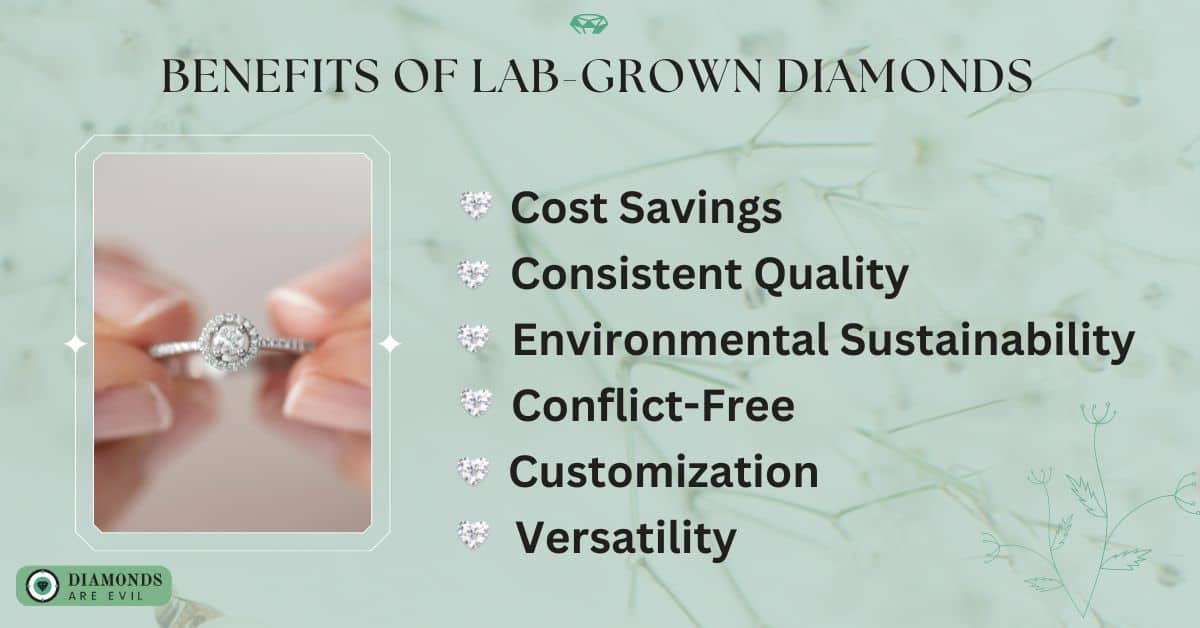
Cost Savings: One of the primary benefits of lab-grown diamonds is cost savings. This makes it possible to get a larger or higher quality diamond for a fraction of the cost of a mined diamond.
Consistent Quality: Lab-grown diamonds are often more consistent in terms of quality than natural diamonds. Because the growing process can be controlled for color, clarity, and other factors, lab-grown diamonds are often of higher quality than many natural diamonds.
Environmental Sustainability: The process of creating lab-grown diamonds is much more environmentally friendly than traditional diamond mining. The process generates significantly less waste and has a lower impact on the environment.
Conflict-Free: Lab-grown diamonds are considered conflict-free because they are not associated with the human rights abuses and environmental degradation that can occur with traditional diamond mining.
Customization: Lab-grown diamonds offer greater customization options than natural diamonds. They can be created in a variety of colors, including pink, blue, and yellow, and can be cut to specific shapes and sizes.
Versatility: Lab-grown diamonds can be used in a variety of jewelry applications, including engagement rings, wedding bands, and earrings. They are virtually indistinguishable from natural diamonds, making them a versatile and attractive option for a wide range of jewelry needs.
Cost Comparison with Natural Diamonds
Here’s a price comparison table between Lab-Grown Diamonds and Natural Diamonds:
| Carat Weight | Lab-Grown Diamonds | Natural Diamonds |
| 0.5 Carats | $500 – $1000 | $1,500 – $3,000 |
| 1 Carat | $1,000 – $2,000 | $5,000 – $10,000 |
| 1.5 Carats | $2,000 – $3,500 | $10,000 – $20,000 |
| 2 Carats | $3,500 – $6,000 | $20,000 – $40,000 |
Please note that these are rough estimates and the prices of diamonds can vary greatly based on factors such as cut, clarity, color, and more. Additionally, the prices listed above are subject to change and may not reflect current market prices.
As you can see from the table, lab-grown diamonds are generally significantly less expensive than natural diamonds, with the price difference becoming more pronounced as the carat weight increases. This makes lab-grown diamonds an attractive option for those looking for a budget-friendly alternative to natural diamonds.
Diamond Alternatives
For those looking for a more budget-friendly option, there are several alternatives available that offer similar beauty and brilliance at a fraction of the cost. Here, we will explore some of the most popular diamond alternatives, including moissanite, and cubic zirconia. Whether you’re looking for a classic diamond look or something more unique, there is a diamond alternative that can meet your needs and budget.
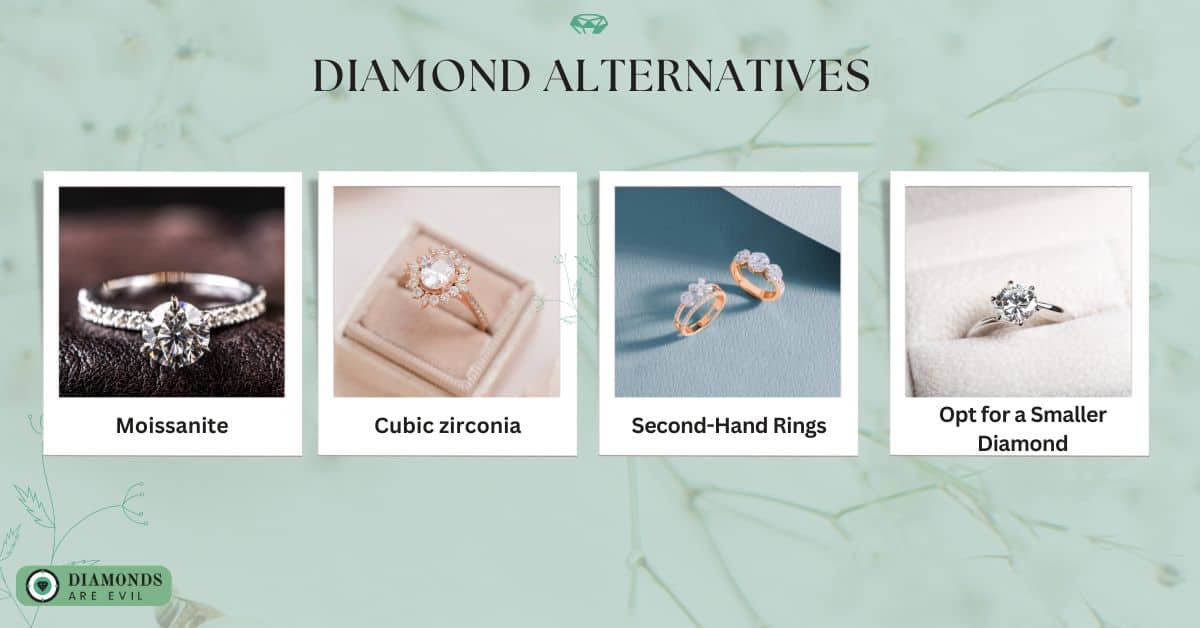
Moissanite: A naturally occurring mineral that is found in very small quantities in meteorites and is also created in a laboratory setting. This diamond alternative offers stunning brilliance and fire, and is often indistinguishable from a diamond to the naked eye. Moissanite is also extremely durable and resistant to scratching and chipping, making it a practical choice for everyday wear.
Cubic zirconia: A synthetic crystal that is created in a laboratory setting. It is a popular alternative to diamonds due to its affordability, durability, and ability to mimic the appearance of a diamond. Cubic zirconia is available in a variety of colors, making it a versatile option for those looking to create a unique engagement ring.
Both options offer stunning brilliance and durability, making them a smart choice for those who want a beautiful and practical engagement ring without breaking the bank.
Here’s a price comparison table between Moissanite and Cubic Zirconia:
| Carat Weight | Moissanite | Cubic Zirconia |
| 0.5 Carats | $200 – $400 | $20 – $50 |
| 1 Carat | $400 – $800 | $50 – $100 |
| 1.5 Carats | $800 – $1,200 | $100 – $150 |
| 2 Carats | $1,200 – $1,800 | $150 – $200 |
Please note that these are rough estimates and the prices of diamond alternatives can vary greatly based on factors such as cut, clarity, color, and more. Additionally, the prices listed above are subject to change and may not reflect current market prices.
Second-Hand Rings
Another budget-friendly option for those in the market for a diamond engagement ring is to opt for a second-hand ring. Second-hand rings can be found at estate sales, pawn shops, and online marketplaces such as eBay or Etsy. By purchasing a second-hand ring, you can save money and still get a beautiful diamond ring that may even have a unique history or story behind it.
It is difficult to provide a specific price range for second-hand diamond engagement rings as the cost will depend on several factors, including the diamond’s quality, the setting, the age and condition of the ring, and the market demand.
Here is a rough estimate based on various factors that could affect the price:
| Diamond Quality | Price Range |
| Low Quality | $500 – $1,000 |
| Medium Quality | $1,000 – $2,000 |
| High Quality | $2,000 – $5,000 |
It’s important to keep in mind that this is just a rough estimate and the prices can vary greatly depending on the individual ring and market conditions.
Opt for a Smaller Diamond
For those who are still set on purchasing a new diamond engagement ring, opting for a smaller diamond is another way to save money. A smaller diamond will cost less than a larger one, but it can still have the same brilliance and sparkle. Additionally, a smaller diamond can be set in a simple and elegant setting, which will accentuate its beauty and allow it to shine. By choosing a smaller diamond, you can get the look you want without sacrificing quality or style.
In conclusion
There are a variety of factors that can affect the cost of diamond engagement rings, including the size and quality of the diamond, design of the ring, metal option, brand, and market conditions. Additionally, there are several budget-friendly options available such as lab-grown diamonds, diamond alternatives, second-hand rings and opting for a smaller diamond. By understanding these factors and exploring all the available options, you can find a beautiful and budget-friendly diamond engagement ring to suit your needs and preferences.