
The Diamond Mining Process and Responsible Sourcing Practices
Diamonds are a symbol of love, luxury, and eternal beauty. But what is the process behind producing these sparkling stones? Mining diamonds is a complex process that requires skillful planning and responsible sourcing practices to ensure the safety of workers and communities.
In this blog post, we’ll take a look at the diamond mining process, as well as responsible sourcing practices designed to keep both the environment and miners safe. So read on to learn more about this remarkable process!
Overview of Diamond Mining
Diamond mining is the process of extracting diamonds from the earth. There are two main types of diamond mining: underground mining and surface mining.
| Type of Mining | Description |
| Underground mining |
Involves digging tunnels and shafts into the earth to reach diamond-bearing rocks. This method is typically used in areas with a lot of hard rock and is more expensive and dangerous than surface mining.
|
| Surface mining |
Involves removing the top layer of soil and rock to access diamond-bearing gravels. This method is typically used in areas with a lot of alluvial deposits and is less expensive and dangerous than underground mining.
|
Diamond mining can have a significant environmental impact, including habitat destruction and soil erosion. In addition, diamond mining can also be a source of human rights abuses, including forced labor and child labor. To address these issues, the diamond industry has established certification programs, such as the Kimberley Process Certification Scheme, which aims to ensure that diamonds are mined and traded responsibly and ethically.
Overall, diamond mining is a complex process that requires a wide range of skills and equipment. The mining process begins with the exploration of diamond-bearing ore, followed by the extraction of the diamonds, and finally the processing and sale of the diamonds.

Responsible Sourcing Practices
Responsible sourcing practices for diamond mining refer to the efforts made by the diamond industry to ensure that diamonds are mined, processed, and traded ethically and sustainably. These practices aim to address issues such as human rights abuses, environmental degradation, and corruption in the diamond industry
.
Kimberley Process Certification Scheme
One of the most widely recognized responsible sourcing initiatives in the diamond industry is the Kimberley Process Certification Scheme (KPCS). The KPCS is an international certification program that aims to prevent the trade in conflict diamonds, which are diamonds mined in war zones and sold to finance armed conflict against governments. The KPCS requires that diamonds be certified as conflict-free before they can be traded.
Responsible Jewellery Council
Another important initiative is the Responsible Jewellery Council (RJC). The RJC is a not-for-profit organization that promotes responsible ethical, human rights, social and environmental practices throughout the diamond, gold, and platinum group metals jewelry supply chain. They develop a Code of Practices and certify members who comply with it.
In addition, many diamond mining companies have implemented responsible sourcing policies and practices. These can include measures such as implementing strict environmental standards, ensuring fair labor practices, and supporting local communities through community development programs.
Responsible sourcing practices for diamond mining involve a combination of industry initiatives, government regulations, and voluntary measures taken by diamond mining companies to ensure that diamonds are mined and traded ethically and sustainably. These practices aim to address issues such as human rights abuses, environmental degradation, and corruption in the diamond industry.

Steps in the Diamond Mining Process
The diamond mining process involves several steps, from exploration to processing and sale. Here are the main steps in the diamond mining process:
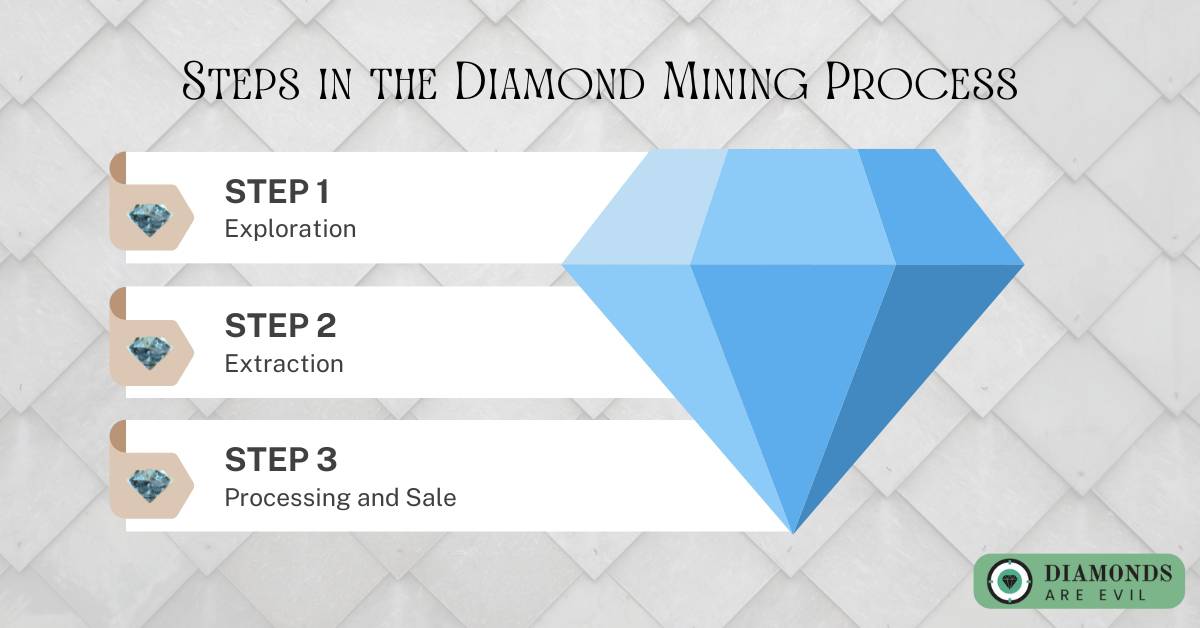
Step 1: Exploration
The first step in the diamond mining process is exploration. This involves searching for diamond-bearing ore using various methods such as geophysics, geochemistry, and drilling. The exploration process can take several years and may require the use of advanced technology and equipment.
Step 2: Extraction
Once diamond-bearing ore is located, the next step is to extract the diamonds. This can be done using various methods such as underground mining, surface mining, and marine mining. Underground mining involves digging tunnels and shafts into the earth to reach diamond-bearing rocks, while surface mining involves removing the top layer of soil and rock to access diamond-bearing gravel. Marine mining involves extracting diamonds from the seabed.
Step 3: Processing and Sale
After the diamonds are extracted, they are transported to a processing facility where they are cleaned, sorted, and evaluated. The diamonds are then sold to diamond manufacturers, wholesalers, or retailers. The sale of diamonds can take place through various channels such as auctions, tenders, or direct sales.
Overall, the diamond mining process is a complex and multi-step process that requires a wide range of skills and equipment. The process begins with the exploration of diamond-bearing ore, followed by the extraction of the diamonds, and finally the processing and sale of the diamonds.
Challenges Faced by Miners
Diamond mining can be a difficult and dangerous task, as miners must navigate harsh climates and deep underground tunnels to find their treasure. Diamond mining is the process of extracting diamonds from the earth. It can be done through open-pit mining, underground mining, or alluvial mining. However, the process is not without its challenges. Here are some of the challenges faced by miners in diamond mining:
Finding diamond deposits: Diamonds are rare and can be difficult to find. Miners may have to explore large areas of land before finding a diamond deposit.
Accessing diamonds: Once a deposit is found, miners must then find a way to extract the diamonds. This can be difficult if the deposit is located in a remote area or is buried deep underground.
Dealing with harsh environments: Diamond mining often takes place in remote and inhospitable locations, such as the Arctic or the desert. Miners must deal with extreme temperatures, rugged terrain, and limited resources.
Managing costs: Diamond mining is a costly endeavor. Miners must invest large sums of money in equipment and personnel to extract diamonds. Additionally, they must also deal with fluctuating diamond prices, which can make it difficult to turn a profit.
Environmental impact: Diamond mining can have a significant impact on the environment. Open-pit mining can cause deforestation, loss of biodiversity, and soil erosion. Underground mining can lead to groundwater contamination and the loss of natural habitats.
Social Impact: Diamond mining can also hurt local communities. Miners may displace residents and disrupt traditional ways of life. Additionally, there are concerns about the use of child labor and human rights abuses in diamond mining.
Security: Diamond mining is often targeted by thieves and other criminal groups, which can make it dangerous for miners to work.
Dealing with regulations: Diamond mining is heavily regulated and miners must comply with a wide range of laws and regulations, which can be difficult and costly to navigate.
In conclusion
Diamond mining is a complex and multi-step process that requires a wide range of skills and equipment. The process begins with the exploration of diamond-bearing ore, followed by the extraction of diamonds, and finally the processing and sale of the diamonds.
Responsible sourcing practices aim to address issues such as human rights abuses, environmental degradation, and corruption in the diamond industry. These practices include initiatives like the Kimberley Process Certification Scheme and the Responsible Jewellery Council, as well as voluntary measures taken by diamond mining companies.
Diamond mining can be a difficult task, with miners facing several challenges, from finding diamond deposits to dealing with harsh environments and unstable prices. Despite the difficulties, responsible sourcing practices ensure that diamonds are mined, processed, and sold ethically and sustainably.