
The Difference in Appreciation Between Natural and Synthetic Diamonds
Natural diamonds formed deep within the Earth over millions of years. Are considered rare and valuable due to their unique formation process. On the other hand, synthetic diamonds, are created in a laboratory setting. Have a different process of formation and as a result, may not hold the same level of appreciation as their natural counterparts.
Welcome to our blog about the appreciation of natural and synthetic diamonds. Here, we will explore the differences between these two popular diamond types and how their value is determined. We’ll look at factors that affect market demand, such as rarity, quality, durability, and consumer perception. Finally, we’ll compare these two stones in terms of cost, appreciation potential, and durability. Join us as we delve into the world of diamonds to learn how they are valued!
Definition of Natural and Synthetic Diamonds
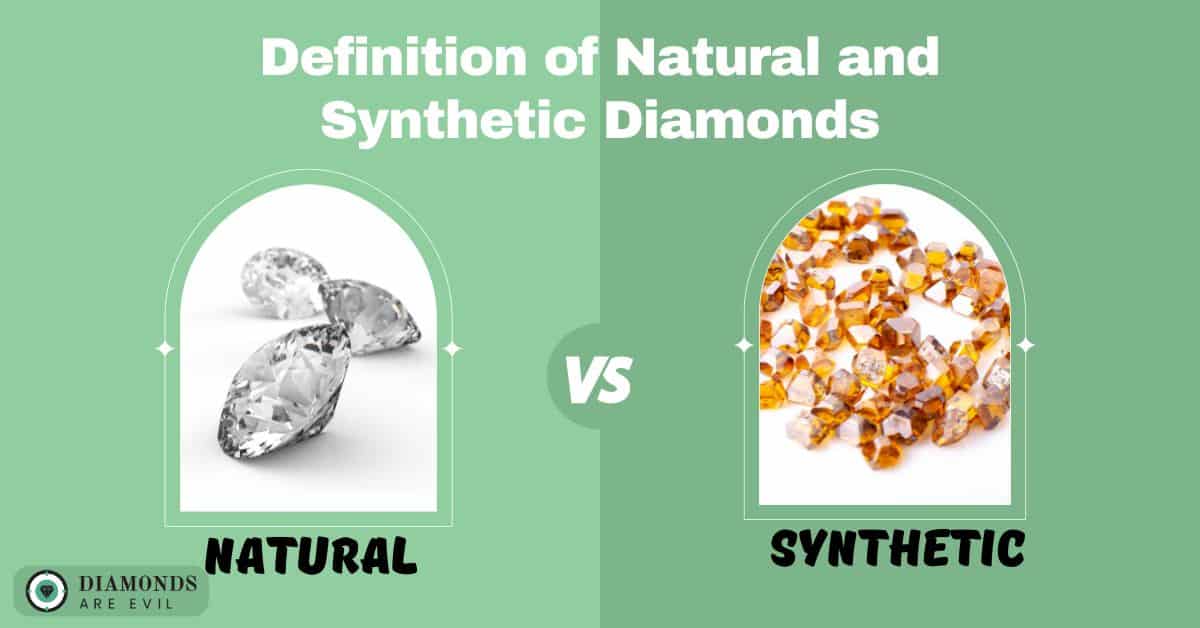
Natural diamonds are gemstones that are formed over millions of years. Deep within the Earth’s mantle under high pressure and temperature conditions. They are composed of pure carbon and are considered to be the hardest substance on Earth.
Synthetic diamonds, on the other hand, are artificially created diamonds that have similar physical and chemical properties to natural diamonds. They are made in a laboratory setting using advanced technology and are designed to replicate the properties of natural diamonds.
Synthetic diamonds can be made to mimic the characteristics of natural diamonds, including color, clarity, and size. However, they lack the rarity and unique formation process of natural diamonds.
Origins and Formation of Natural and Synthetic Diamonds
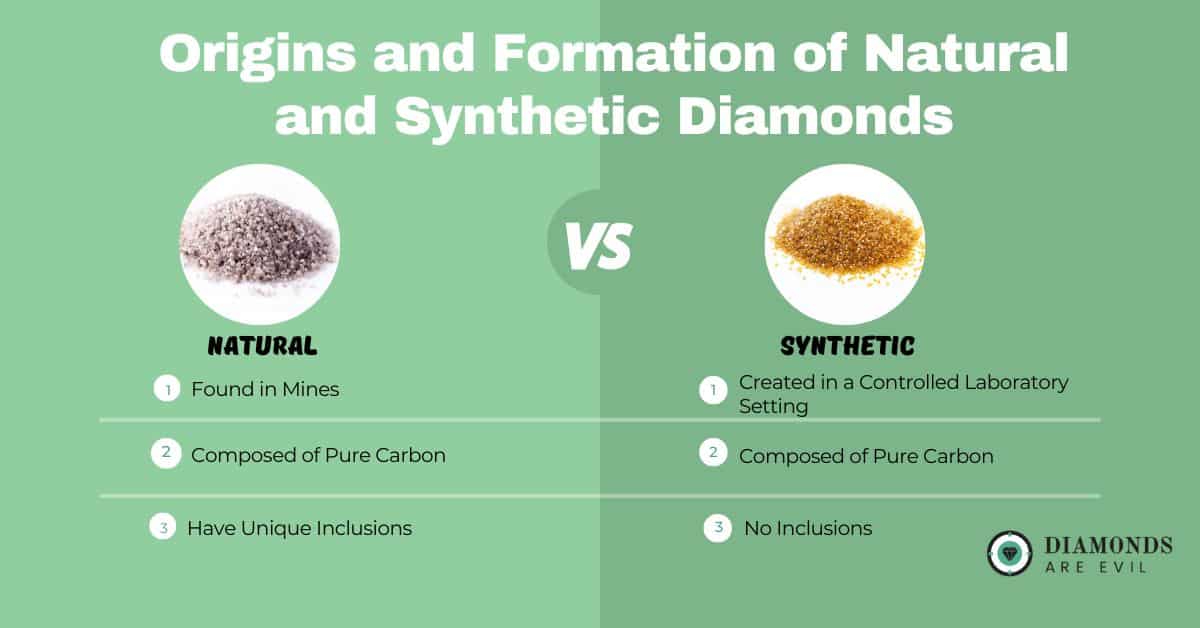
The origin and formation of natural diamonds can be traced back to the Earth’s mantle. Where carbon atoms are subjected to extreme pressure and heat over millions of years. This process forms diamond crystals which are eventually brought to the Earth’s surface through volcanic activity. Natural diamonds are found in mines and are extracted through a complex process.
Synthetic diamonds, on the other hand, are created in a controlled laboratory setting through processes such as High-Pressure High Temperature (HPHT) and Chemical Vapor Deposition (CVD). In HPHT, carbon is subjected to high pressure and temperature, similar to the conditions found in the Earth’s mantle.
In CVD, a carbon-rich gas is decomposed into a diamond crystal on a substrate. The synthetic diamonds are then cut and polished to produce a finished gemstone.
Physical Characteristics of Natural and Synthetic Diamonds
Natural diamonds and synthetic diamonds share many physical characteristics, as both are composed of pure carbon. However, there are subtle differences between the two.
Natural diamonds often have unique inclusions, imperfections, and distinctive crystal structures, as they have been formed over millions of years under unique conditions. These unique characteristics serve as a distinguishing factor for natural diamonds and add to their value as a rare and unique gemstones.
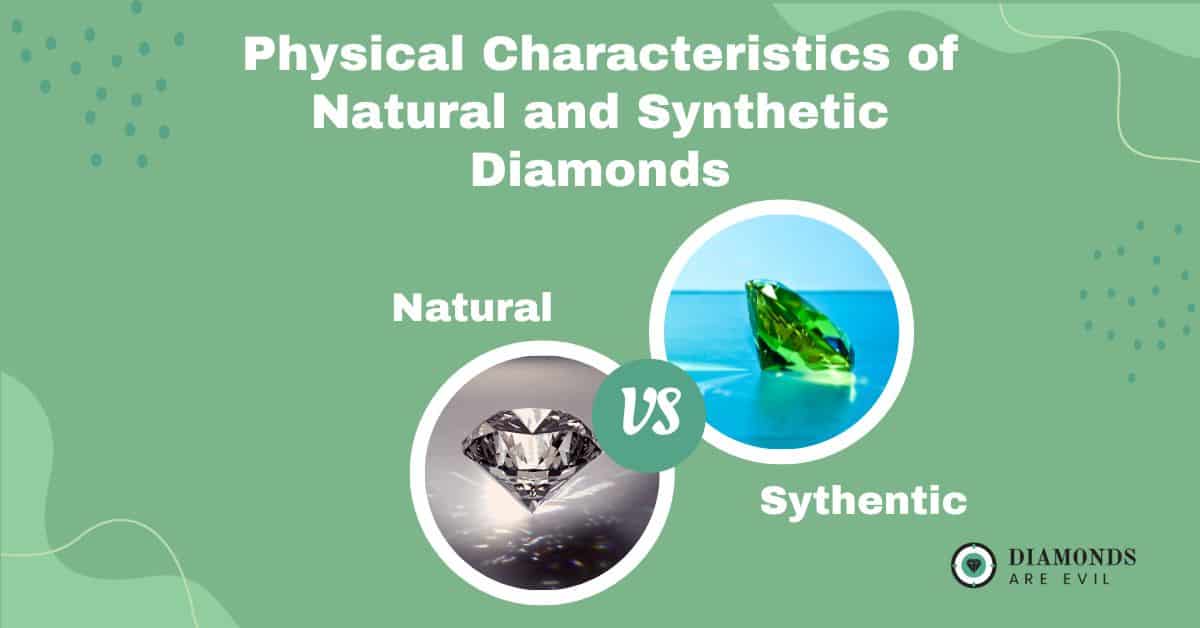
Synthetic diamonds, on the other hand, are engineered in a laboratory setting and can have fewer or no inclusions. They can also have a more uniform crystal structure, as they are created under controlled conditions. The uniformity of synthetic diamonds can make them appear more flawless, but it also takes away the unique and individual characteristics that are present in natural diamonds.
Both natural and synthetic diamonds have the same physical and chemical properties, such as hardness, refractive index, and density, but natural diamonds are still considered more valuable due to their rarity and unique origin.
Market Value and Pricing of Natural and Synthetic Diamonds
The market value and pricing of natural and synthetic diamonds can vary greatly.
Natural diamonds are considered a valuable and rare commodity, as they are formed over millions of years and only found in certain parts of the world. This scarcity contributes to the high market value of natural diamonds, making them a sought-after gemstone for investment and personal adornment. The value of natural diamonds is also determined by factors such as color, clarity, and carat weight, among others.
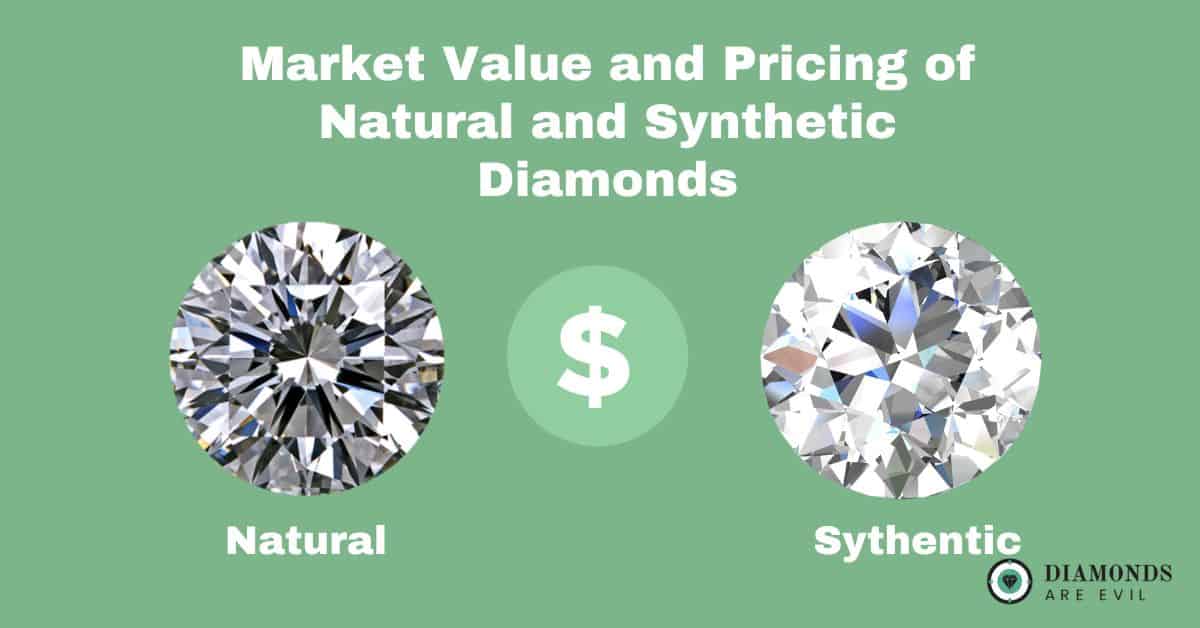
Synthetic diamonds, on the other hand, are much more readily available, as they can be produced in a laboratory setting. As a result, they are typically priced lower than natural diamonds, making them more accessible to a wider range of consumers. However, the price of synthetic diamonds can still vary greatly depending on factors such as quality and size.
It is important to note that synthetic diamonds are not considered a good investment, as they do not hold the same level of appreciation as natural diamonds, and their value does not increase over time.”
The Ethical Considerations of Natural and Synthetic Diamonds
The ethical considerations surrounding natural and synthetic diamonds can be complex and multifaceted.
Natural diamonds have long been associated with unethical practices such as conflict diamonds, also known as blood diamonds. Which are diamonds that are mined in war zones and sold to finance armed conflict against governments. This has led to increased concerns about human rights violations and environmental damage that can occur in the diamond mining process.
Synthetic diamonds, on the other hand, are often seen as a more ethical alternative. As they are not associated with the same human rights and environmental concerns as natural diamonds. The laboratory conditions used to produce synthetic diamonds are often more controlled and regulated, reducing the risk of exploitation and environmental damage.
However, it is important to note that the production of synthetic diamonds also requires significant amounts of energy and resources. And there may be ethical concerns surrounding the labor practices used in the production process.
Consumers who are concerned about the ethical considerations surrounding diamonds have the option to choose diamonds. That is certified by organizations such as the Kimberley Process, which aims to prevent the trade in conflict diamonds. Or to opt for synthetic diamonds as a more sustainable and socially responsible option.
Consumer Awareness and Perception of Natural and Synthetic Diamonds
Historically, natural diamonds have been viewed as the more prestigious and valuable option. Due to their rarity and unique origin. However, in recent years, there has been an increased awareness of the ethical and environmental concerns surrounding the diamond mining industry. Leading some consumers to seek out more sustainable and socially responsible alternatives.
Synthetic diamonds, on the other hand, are often viewed as a more affordable and accessible option for consumers. Who are looking for a diamond look-alike without the associated social and environmental impact. However, some consumers may still view synthetic diamonds as less valuable or less prestigious than natural diamonds and may be hesitant to purchase them as a result.
In conclusion
Natural and Synthetic diamonds are both beautiful and valuable materials that offer unique benefits to consumers. Natural diamonds are a rare and sought-after commodity due to their unique origin.
While synthetic diamonds provide an accessible and sustainable alternative. It is important for consumers to be aware of the differences between the two in order to make informed decisions about which type of diamond is right for them.