
The Difference in Price Between Natural and Lab-Grown Diamonds in Jewelry
Natural diamonds and lab-grown diamonds are becoming increasingly popular choices for engagement rings, necklaces, earrings, and other jewelry. Both have unique benefits that make them attractive to consumers.
Lab-grown diamonds are typically priced between 60% and 80% less than natural diamonds of similar size, quality, and color, as they are made using advanced technology. It doesn’t require the time, energy, and other resources required to extract them from the earth. This makes lab-grown diamonds an affordable alternative for those who want the beauty and durability of diamonds in their jewelry.
This article will explore the cost of natural versus lab-grown diamonds and the factors that affect the price difference.
Natural vs Lab-Grown Diamonds
Natural diamonds are those that have been formed naturally in the earth over many years. They come from crystals of carbon that were exposed to extreme heat and pressure deep within the ground. Natural diamonds require extensive mining and other resources to be extracted, which results in higher prices for these precious gems.
Natural Diamonds
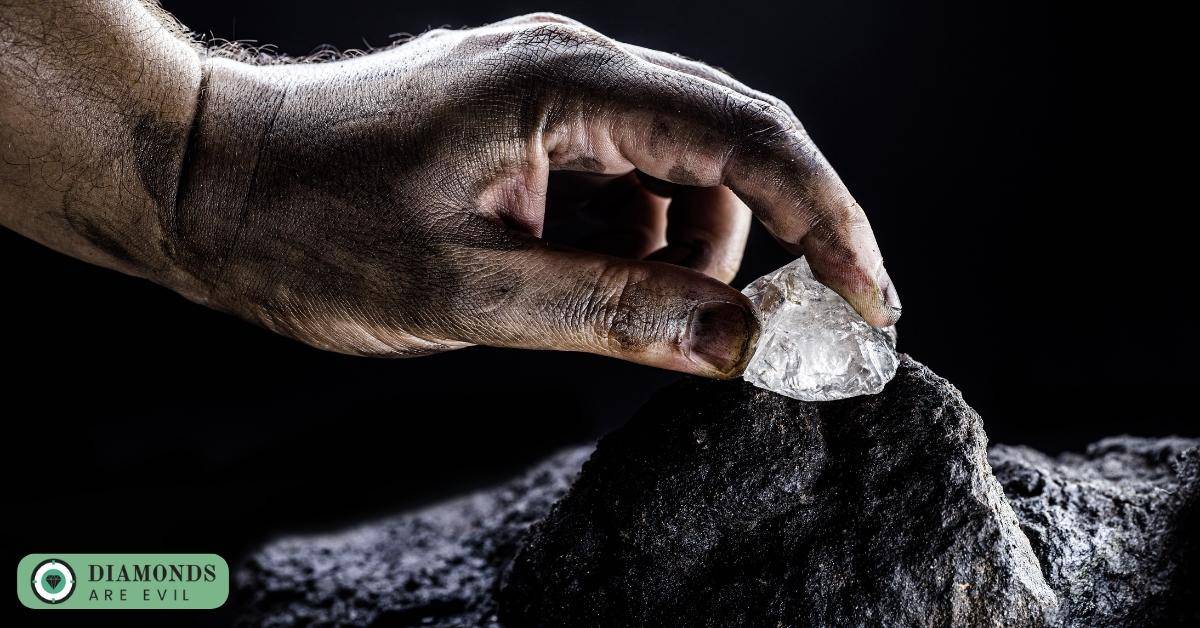
Natural diamonds are formed naturally, deep beneath the Earth’s surface. On average, they take billions of years to form in the mantle of the planet and are pushed up to the surface through volcanic eruptions. Natural diamonds are made of carbon atoms that have been arranged into a cubic crystal structure and compressed together by extreme temperatures, pressures, and time.
Lab-Grown Diamonds
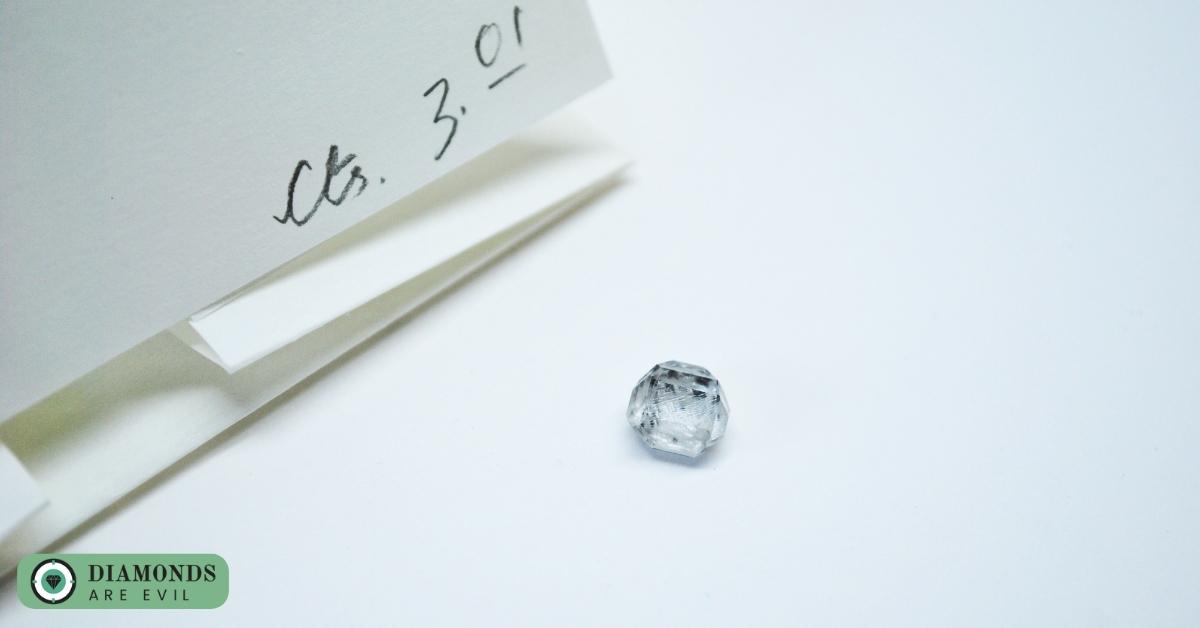
Lab-grown diamonds are created in a laboratory setting that recreates the environment found beneath the Earth’s surface. Using advanced technology called chemical vapor deposition (CVD), scientists can create diamond crystals from carbon within a few days or even hours.
These lab-grown gems are visually similar to natural diamonds – they feature an identical atomic composition, optical properties, and hardness – but lack impurities and flaws characteristic of mined stones. Lab-grown diamonds offer value advantages such as larger carat weight options than those found in nature, as well as more affordable prices.
Benefits of Both Types of Diamonds in Jewelry
Diamonds are a popular choice for jewelry due to their exceptional hardness, brilliance, and fire. They are available in two forms – natural and lab-grown diamonds. Natural diamonds are formed in the Earth’s mantle over billions of years, while lab-grown diamonds are created in a controlled environment using advanced technology.
Both types of diamonds have their unique benefits and drawbacks. In this article, we will compare the benefits of natural and lab-grown diamonds in jewelry and present a table to summarize the key differences between the two.
Benefits of Natural Diamonds
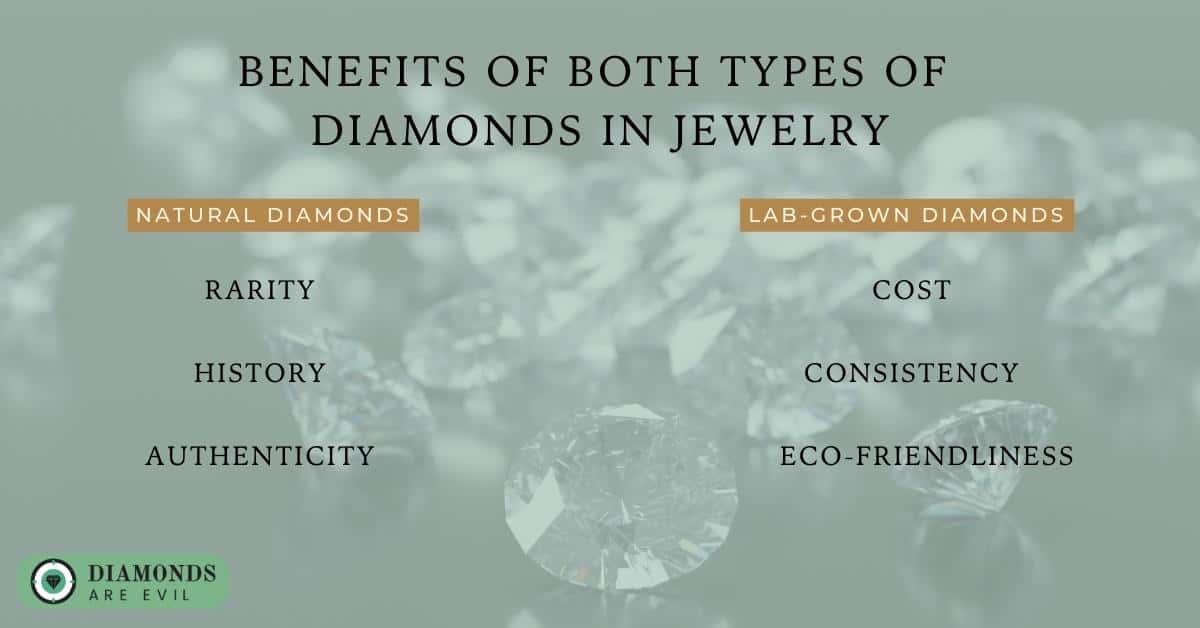
Rarity: Natural diamonds are unique and rare, making them valuable gemstones. The scarcity of natural diamonds makes them highly sought after and drives up the price, making them an excellent investment option.
History: Natural diamonds have a rich history, and many are millions of years old. Some diamonds have been passed down through generations, making them an emotionally valuable family heirloom.
Authenticity: Natural diamonds are the real thing, and there is no doubt about their authenticity. They are not man-made or engineered in any way, making them the true expression of nature’s beauty.
Benefits of Lab-Grown Diamonds
Cost: Lab-grown diamonds are more affordable than natural diamonds, making them an attractive option for those who want a diamond engagement ring or other diamond jewelry but are on a budget.
Consistency: Lab-grown diamonds have a consistent quality and size, making them easier to match and create matching sets.
Eco-Friendliness: Lab-grown diamonds are created in a controlled environment, making them a more sustainable and environmentally friendly option than natural diamonds. The process of mining natural diamonds can have a significant impact on the environment, and lab-grown diamonds are a more responsible and eco-friendly alternative.
Table: Benefits of Natural and Lab-Grown Diamonds
| Category | Natural Diamonds | Lab-Grown Diamonds |
| Rarity | Unique and rare, making them a valuable gemstone |
Consistent quality and size, making them easier to match and create matching sets
|
| History | Rich history, many are millions of years old | Man-made, with no history or emotional connection |
| Authenticity | The real thing, not man-made or engineered in any way | Man-made, some may question the authenticity |
| Cost | More expensive than lab-grown diamonds | More affordable than natural diamonds |
| Eco-Friendliness | The process of mining natural diamonds can have a significant impact on the environment |
Created in a controlled environment, making them a more sustainable and environmentally friendly option
|
Both natural and lab-grown diamonds have their unique benefits and drawbacks when it comes to jewelry. Natural diamonds are rare and authentic, with a rich history, but are more expensive.
Lab-grown diamonds are more affordable and environmentally friendly but may lack the emotional connection and history of natural diamonds. Ultimately, the choice between natural and lab-grown diamonds comes down to personal preference and budget.
Cost Comparison: Natural and Lab-Grown Diamonds
Natural and lab-grown diamonds are two types of diamonds that are popular in the jewelry industry. Both types of diamonds look alike and have the same physical and chemical properties, but there are some differences between them, including cost.
The cost of natural diamonds is determined by several factors, including the size, color, clarity, and cut of the diamond.
Natural diamonds can be very expensive, with prices ranging from several hundred dollars to several hundred thousand dollars. On the other hand, lab-grown diamonds are created in a controlled environment using advanced technology, which makes them less expensive than natural diamonds.
Here’s a comparison of the prices of natural and lab-grown diamonds:
| Diamond Carat | Natural Diamond (F, VS2, XXX) | Lab Diamond (F, VS2, XXX) |
| 0.3 | $1,774.87 | $1,462.29 |
| 0.35 | $1,823.00 | $1,546.54 |
| 0.45 | $2,382.53 | $1,751.14 |
| 0.5 | $2,960.12 | $2,046.00 |
| 0.6 | $3,627.95 | $2,244.58 |
| 0.7 | $4,572.54 | $2,671.84 |
| 0.8 | $5,432.90 | $2,894.49 |
| 0.9 | $6,955.07 | $3,484.22 |
| 1 | $9,728.68 | $4,386.87 |
| 1.2 | $10,649.21 | $5,127.04 |
As seen in the table above, the cost of lab-grown diamonds is significantly lower than the cost of natural diamonds. This is because the cost of producing lab-grown diamonds is much lower than the cost of mining and processing natural diamonds.
Additionally, lab-grown diamonds do not have the same scarcity factor as natural diamonds, which allows for more flexible pricing.
Factors that Affect the Price Difference
When it comes to buying a diamond, several factors can contribute to the price of both natural and lab-grown diamonds. Knowing these factors can help buyers make an informed decision when selecting their ideal piece of jewelry.
So what are some of the primary factors that affect the price difference between natural and lab-grown diamonds? Here we will explore five key points that can help any buyer understand why these two gems vary so much in price:
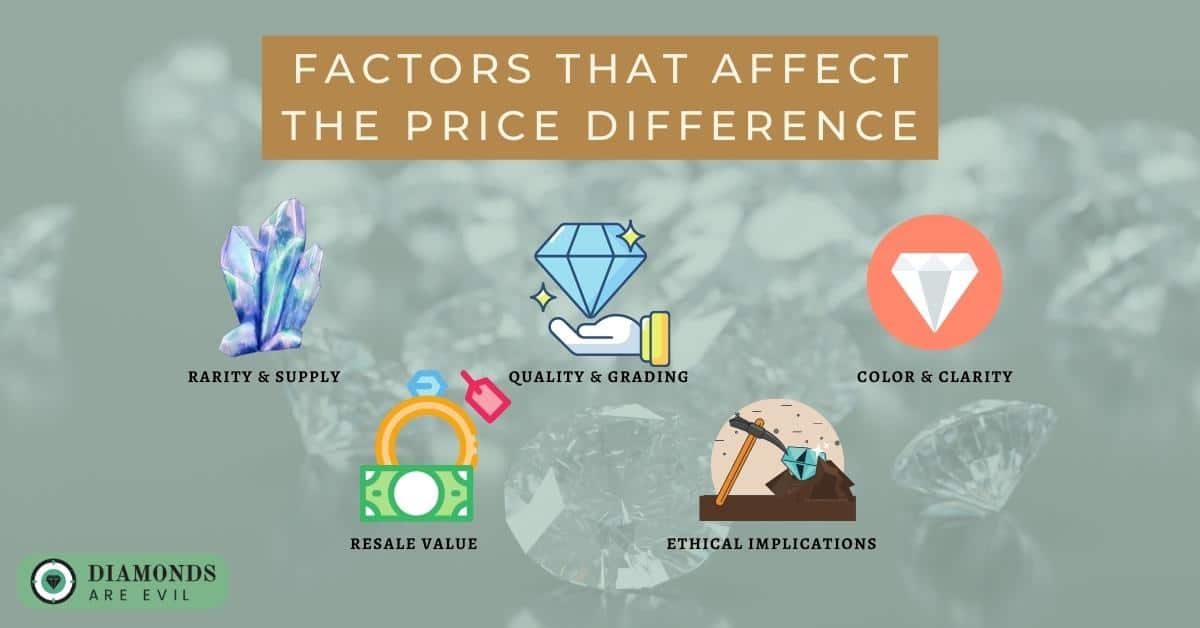
Rarity & Supply
Natural diamonds come from deep within the Earth’s mantle and billions of years ago were released onto the surface through volcanic activity. This means that supply is extremely limited; each diamond is essentially one-of-a-kind and scarcity drives up prices significantly.
On the other hand, lab-grown diamonds are synthesized in a laboratory, meaning they can be produced quickly with no limit on availability in sight – reducing costs significantly.
Quality & Grading
Quality and grading are among the most important factors when shopping for diamonds, whether natural or lab-grown. Grading laboratories have developed sophisticated evaluation systems that assess a diamond’s size, shape, color, and clarity to give it a grade. Generally, diamonds with higher grades will fetch higher prices than those with lower grades as flaws can significantly reduce their value.
Lab-grown diamonds tend to have fewer inclusions due to the controlled environment in which they are grown; however, natural diamonds may contain visible imperfections which can affect their grade — and therefore their price — drastically.
Color & Clarity
When considering the price difference between natural and lab-grown diamonds, color and clarity are two major factors. Natural diamonds tend to be more varied in terms of color, ranging from pure white to faint yellow or even brown, depending on their origin. Lab-grown diamonds, however, will typically have a more consistent coloring as they are grown in laboratories that maintain the same temperature and pressure throughout the process.
Clarity is also an important factor when it comes to diamond pricing. Natural stones may contain visible inclusions which can affect their value significantly whereas lab-grown stones tend to have fewer inclusions due to the controlled environment in which they are created.
While both types of diamonds offer unique qualities which can influence their price, buyers need to consider all of these factors when making their decision, as this can help ensure they get the most bang for their buck.
Ethical Implications
Ethical implications are an important factor when comparing the prices of natural versus lab-grown diamonds. Natural diamonds require mining, a process that can have wide-ranging impacts on the environment and those near such operations. From deforestation to water and air pollution, the collateral damage from diamond extraction may be severe and have lasting effects on local communities and ecosystems.
Lab-created diamonds, on the other hand, are made using advanced technology in controlled environments with far fewer environmental concerns. This means buyers may be able to purchase lab-grown diamonds without worrying about potential ethical considerations associated with purchasing natural stones mined from more distant locations.
Resale Value
One other factor that affects the price difference between natural diamonds and those grown in a lab is resale value. Natural diamonds tend to have a higher resale value than their lab-grown counterparts as they are less abundant and therefore more sought after by buyers. Natural stones also tend to retain their value better over time, while some lab-grown pieces may experience significant drops in price due to commonality or lack of demand.
The cost associated with recutting is another factor when considering resale value. Recutting a natural diamond can be expensive compared to its laboratory counterpart which can be re-cut much faster and at a lower cost. This, combined with the fact that some jewelers only accept natural stones for resale purposes, can add up quickly for buyers looking for better deals on quality diamonds.
Ultimately whether you choose to buy a pre-mined diamond or lab-grown alternative will entirely depend on personal preferences whilst being mindful that money spent towards either path taken results in being enjoyably recouped at the end day realizing the full benefit pleasure derived way initially intended!
Percentage Difference in Pricing
When it comes to diamond shopping, knowing the difference between natural and lab-grown diamonds can be a vital step in finding your ideal piece. Many factors contribute to the cost of both types of diamonds, but one key area to consider is the price per carat. This metric can help buyers understand the substantial differences between these two types of gems, and determine which one is right for them.
As seen in the table below, natural diamonds generally command a higher price than their lab-grown counterparts. On average, natural diamonds tend to be 10 – 15% higher than their lab-grown equivalents. This discrepancy is due to a variety of factors such as rarity and quality estimation, as well as ethical implications associated with each type of gemstone
| Item | Natural Diamonds | Lab-Grown Diamonds |
| Price Per Carat | 10 – 15% higher than lab-grown diamonds | 10 – 15% lower than natural diamonds |
The primary cause behind these differences lies in rarity. Natural diamonds begin their journey deep within the Earth’s mantle before making an appearance on its surface through volcanic activity billions of years ago. Each specimen is essentially unique due to its formation process, which adds prestige and luxury to this gemstone class. On the other hand, lab-grown diamonds are synthesized using high-tech equipment in laboratories and, as such, have far greater availability which keeps costs low for buyers who prefer this class of stones.
Moreover, grading standards also play a role when it comes to pricing disparity between natural and lab-grown gems because there are stricter criteria involved when assessing the value of natural diamond pieces compared to those manufactured artificially under controlled conditions – again aiming to reduce overall costs while still providing aesthetically pleasing items capable creating desired ‘wow factor’ amongst potential buyers interested field!
In conclusion
Natural and lab-grown diamonds are two popular choices in the jewelry market, but they differ significantly in terms of cost. Natural diamonds tend to be more expensive due to their rarity and unique formation process while lab-grown diamonds are more affordable due to their availability and ease of production.
While there may be a larger price difference between the two, both types of diamonds offer their unique benefits and drawbacks that should be considered when making a purchase. Ultimately, the decision between natural and lab-grown diamonds comes down to personal preference and budget. No matter which type you choose, diamond jewelry is an investment that will last a lifetime.