
The Effect of Certification and Grading on the Price of Diamond Jewelry

Diamond certification and grading are essential processes for ensuring the quality and authenticity of diamond jewelry. By understanding the purpose and importance of certification and grading, the role of gemological laboratories, and knowing the four Cs. With these measures and their impact on price, buyers can make an informed decision when shopping for diamond jewelry.
This article will explore the importance of certification and grading for diamonds, as well as its effects on the price. With a better-informed purchase, buyers can confidently invest in diamonds that will retain or increase in value over time.
What are Diamond Certification and Grading
Diamond certification and grading are processes used to evaluate the quality and authenticity of diamonds. Certification involves evaluating a diamond’s characteristics and issuing a certificate documenting the diamond’s unique attributes, such as carat weight, cut, clarity, and color.
Grading, on the other hand, involves assigning a numerical or alphabetical value to each of these attributes based on industry-accepted standards. These certifications and grades help establish the value and authenticity of a diamond and provide buyers with the peace of mind that their purchase is of a certain quality.
Purpose of Certification and Grading
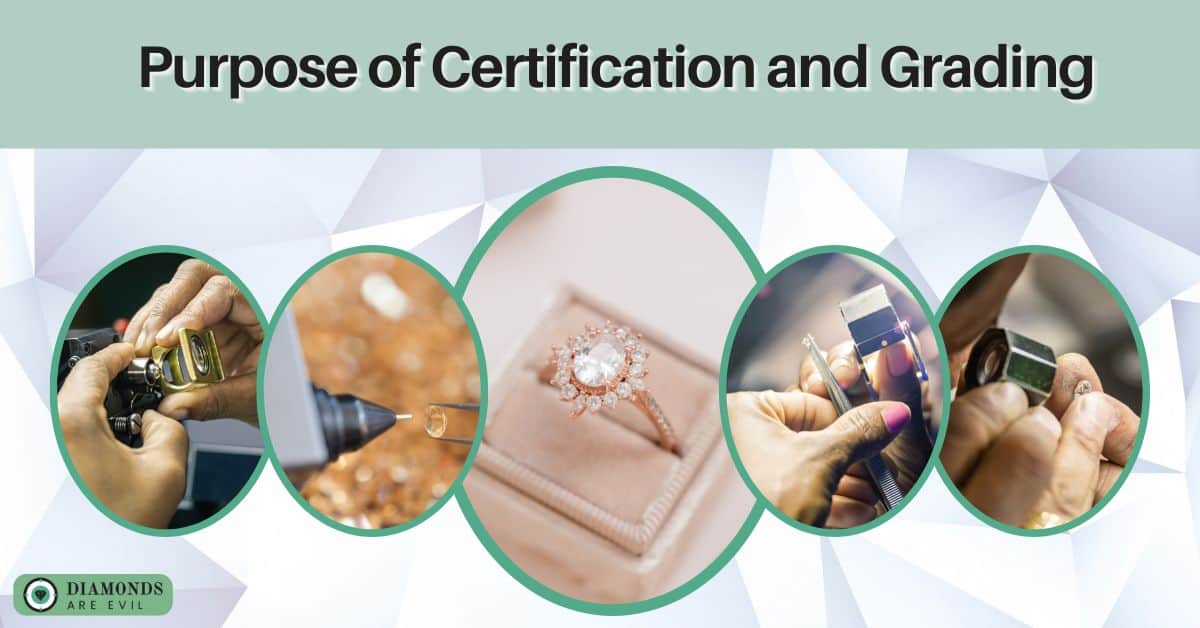
The purpose of certification and grading in the diamond industry is to provide a standardized evaluation of the quality and authenticity of diamonds. The certification process assigns a certificate to a diamond that documents its unique characteristics, such as carat weight, cut, clarity, and color. The grading process assigns a numerical or alphabetical value to each of these attributes based on industry-accepted standards.
This helps buyers make informed decisions by providing them with a clear understanding of the diamond’s quality and value. The certification and grading process also protects buyers from purchasing diamonds that may be lower quality or even counterfeit. By providing a uniform evaluation, the diamond industry helps ensure the fair trade of diamonds and protects the reputation of the industry.
Importance of Diamond Certification and Grading
Certification and grading play a critical role in ensuring the authenticity and quality of diamonds, which makes them a crucial factor in the buying and selling of diamonds. Here, we will explore the importance of diamond certification and grading.
Certification and grading confirm the authenticity and quality of a diamond: The process of certification assigns a certificate to a diamond documenting its unique attributes, such as carat weight, cut, clarity, and color. Grading assigns a numerical or alphabetical value to each of these attributes based on industry-accepted standards. This helps establish the value and authenticity of a diamond, and buyers can be confident in their purchase.
Increases the value of the diamond: Diamonds with high grades in cut, clarity, and color are more valuable, and a certification from a reputable gemological lab can increase the diamond’s worth. The enhanced value of a diamond with certification and grading makes it a more attractive purchase for buyers.
Enhances buyer confidence: By providing a clear understanding of the diamond’s quality and value. By knowing the attributes of a diamond and its grades, buyers can feel confident in their purchase and trust that they are getting a high-quality diamond. The certification and grading process also protects buyers from purchasing diamonds that may be lower quality or even counterfeit.
The Role of Gemological Laboratories
Gemological Laboratories are responsible for evaluating the quality and authenticity of diamonds, and their findings have a significant impact on the price and value of a diamond. Here, we will explore the role of gemological laboratories in the diamond industry, including the most widely recognized labs, the processes involved in certification and grading, and the impact of lab reputation on diamond prices.
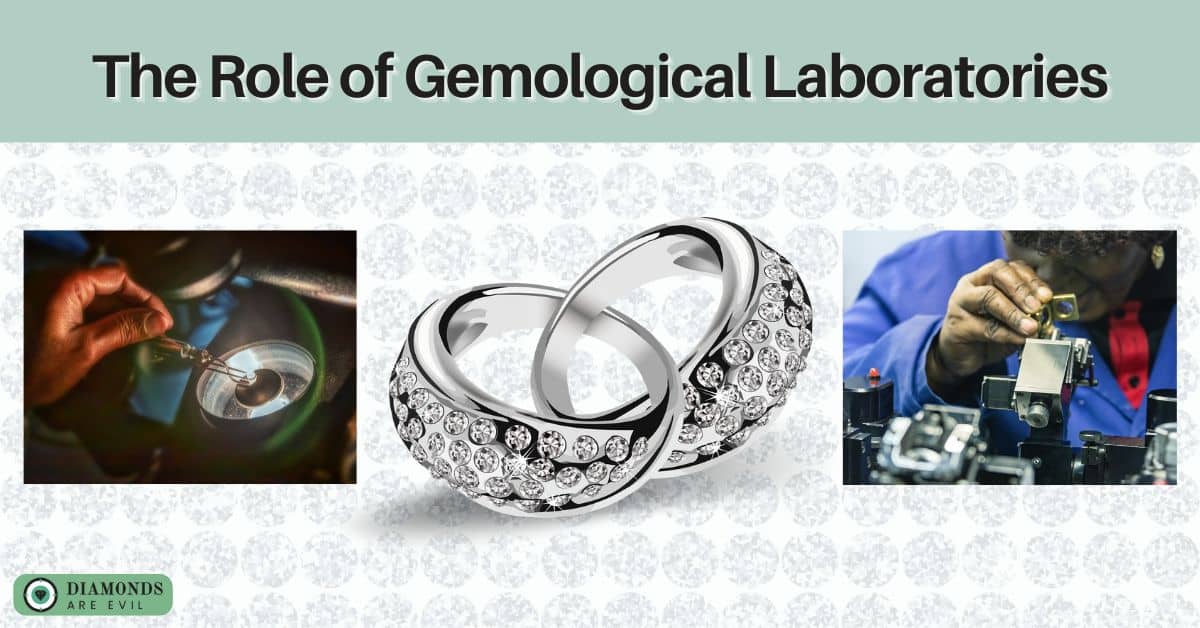
The most widely recognized gemological labs: Include the Gemological Institute of America (GIA) and the European Gemological Laboratory (EGL).
The processes involved in certification and grading: A thorough evaluation of a diamond’s unique attributes, such as carat weight, cut, clarity, and color. The certification and grading process is rigorous and ensures the authenticity and quality of a diamond.
The impact of lab reputation on diamond prices: A diamond with a certification from a highly regarded lab such as GIA or EGL is often more valuable than a diamond with a certification from a lesser-known lab. Buyers and sellers alike trust the expertise of these labs, which increases the value and appeal of diamonds that have been certified and graded by them.
The Four Cs of Diamond Grading
Here, we will explore the Four Cs and how they impact the price of a diamond.
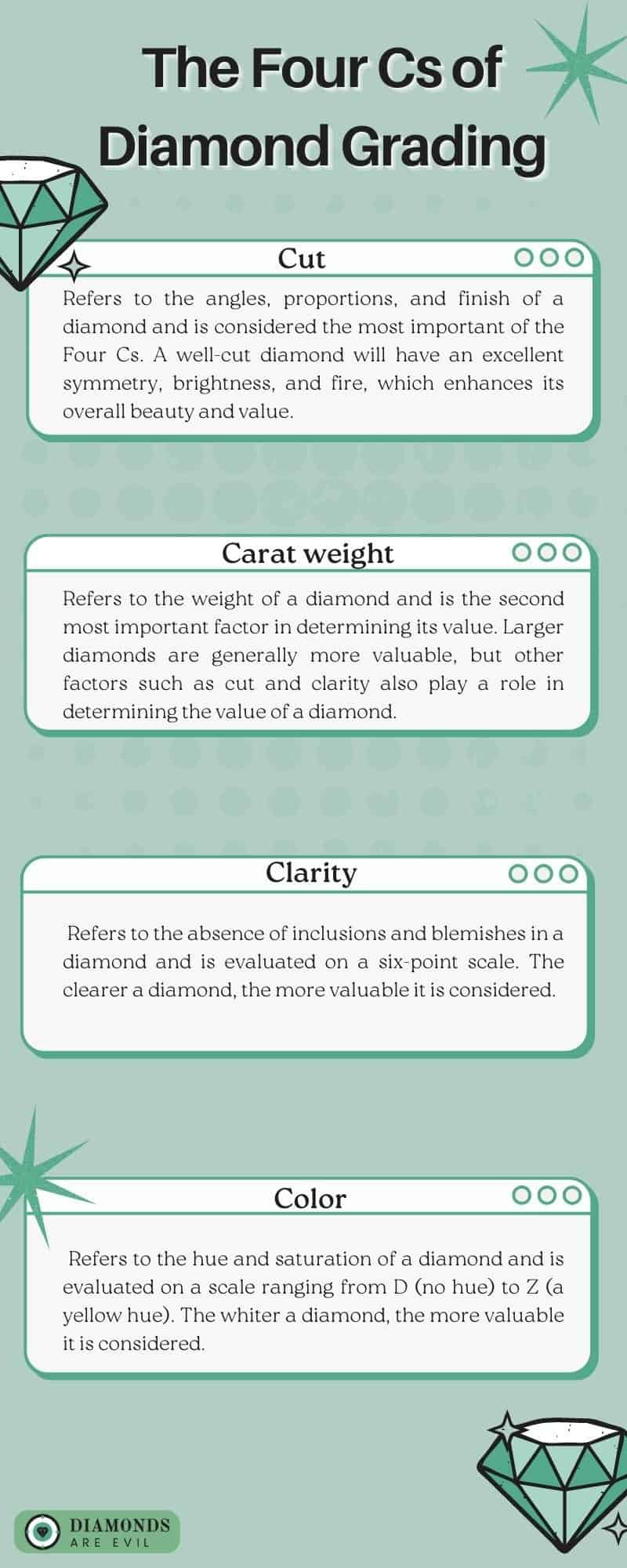
The Four Cs of diamond grading has a significant impact on the price of a diamond. A diamond with high grades in cut, clarity, and color will be more valuable than a diamond with lower grades in these attributes.
Diamond Certification and its Impact on Price
A certificate provides detailed information about a diamond’s unique attributes, including its carat weight, cut, clarity, and color. Here, we will explore the impact of diamond certification on price and the importance of verifying its authenticity.
The influence of the certificate on the diamond price: The information provided in the certificate can help buyers make informed decisions about the value of a diamond and can impact the price a seller is able to command for the diamond.
The impact of the issuing organization on the price: The reputation of the organization and its expertise in grading diamonds can impact the trust buyers have in the certificate and, as a result, the price of the diamond.
The importance of verifying the authenticity of the certificate: It is important to verify the authenticity of the certificate with the issuing organization to ensure that the diamond and certificate match.

In conclusion
Certification and grading play a critical role in the diamond industry. By understanding the purpose and importance of certification and grading, the role of gemological laboratories, and knowing the four Cs of diamond grading, buyers can make an informed decision when shopping for diamond jewelry. Certification and grading confirm the authenticity and quality of a diamond, increase its value, and enhance buyer confidence.
A diamond with certification and grading from a reputable organization is more valuable and can fetch a higher price for the seller. It is important to verify the authenticity of the certificate with the issuing organization to ensure that the diamond and certificate match. By understanding these measures and their impact on prices, buyers can make an informed purchase when investing in diamonds.