
The Environmental Impact of Lab-Grown Diamonds

Lab-grown diamonds have a significantly lower environmental impact than natural diamonds due to sustainable production methods that require no land or water use and generate no waste or emissions. While some energy is required, renewable sources are increasingly used.
Although lab-grown diamonds have been praised for their ethical and sustainable features. There are still questions regarding their environmental impact. In this blog post, we’ll explore the environmental effects of lab-grown diamonds and whether or not they’re truly a sustainable option.
Lab-Grown Diamonds
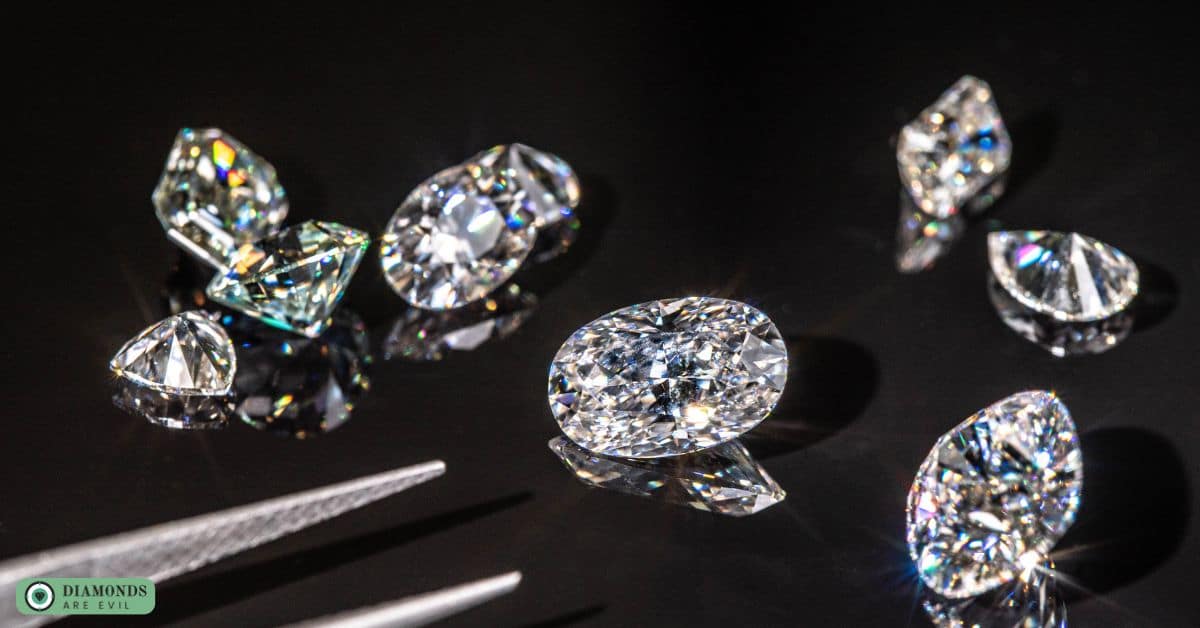
Lab-grown are diamonds that are grown in a laboratory. They are opposed to being mined from the Earth. They’re created by replicating the high-pressure, high-temperature conditions. This occurs naturally when diamonds form in the Earth’s crust. The result is an identical physical and chemical composition of a natural diamond.
Lab-Grown Diamonds have many of the same qualities that natural diamonds do. They are cut, polished and graded in exactly the same way as a mined diamond. They possess all the same brilliance, sparkle and fire. What sets them apart is their origin – they are grown in a laboratory rather than formed deep within the Earth.
Lab-Grown Diamonds have several advantages when compared to mined diamonds. They are typically more affordable, weigh the same as natural diamonds, and are ecologically friendly. As they do not take millions of years to form and require fewer resources to produce. Lab-Grown Diamonds can be a great option for those looking for a diamond with less environmental impact.
Environmental Impacts
Lab-Grown Diamonds are created in a laboratory. This means there is no environmental damage associated with the production process. Unlike natural diamonds that must be mined from the earth, Lab-Grown Diamonds do not require large scale digging or drilling.
They have a much lower carbon footprint than natural diamonds. They do not require the energy intensive mining of ore and subsequent transportation.
Energy usage and carbon emissions
Lab-Grown Diamonds require significantly less energy and resources to create than mined diamonds. Lab-grown diamonds are created in a controlled environment, which eliminates the need for expensive mining operations. This means that the production process is much more efficient and does not generate emissions or waste products.
The manufacturing process for lab-grown diamonds is powered by electricity. This energy can come from a variety of sources including solar, wind, or hydroelectric. This means that Lab-Grown Diamonds have a much lower carbon footprint than traditional diamonds.

Water usage and pollution
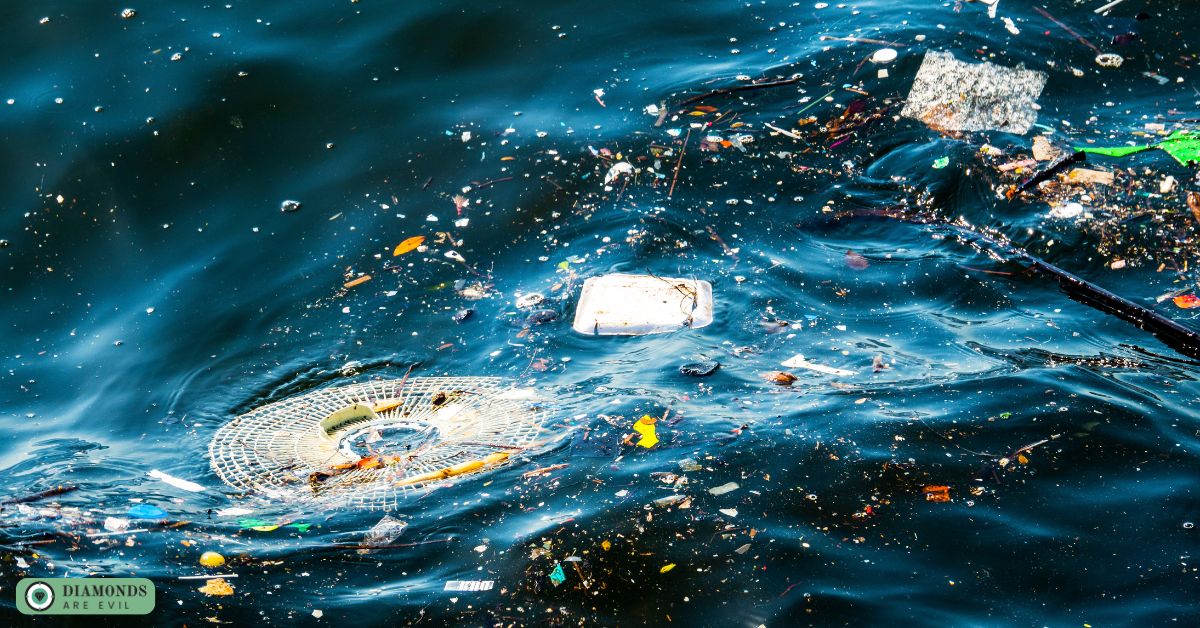
Lab-Grown Diamonds do not require the use of large amounts of water. Water is used to cool the laboratory equipment when diamonds are grown. This amount is significantly lower than what is needed for ore extraction and processing. No wastewater or chemical byproducts are generated during the production process, meaning there is no risk of water pollution.
Lab-Grown Diamonds present an ecologically friendly alternative to mined diamonds. It can help reduce water usage and carbon emissions while providing a beautiful and ethical diamond option. They are an excellent choice for those looking for a sustainable jewelry option with lower environmental impacts.
Land disturbance and ecosystem destruction
Lab-Grown Diamonds do not require any land disturbance, as they are grown in a laboratory rather than mined from the Earth. This means that no ecosystems or habitats are disturbed during the production process and there is no risk of soil erosion or deforestation.
In contrast, natural diamond mining can have serious environmental impacts caused by land disturbance. Mining operations cause disruption to the land, as well as air and water pollution, which can have a negative impact on local wildlife and ecosystems.

Comparison to Mined Diamonds
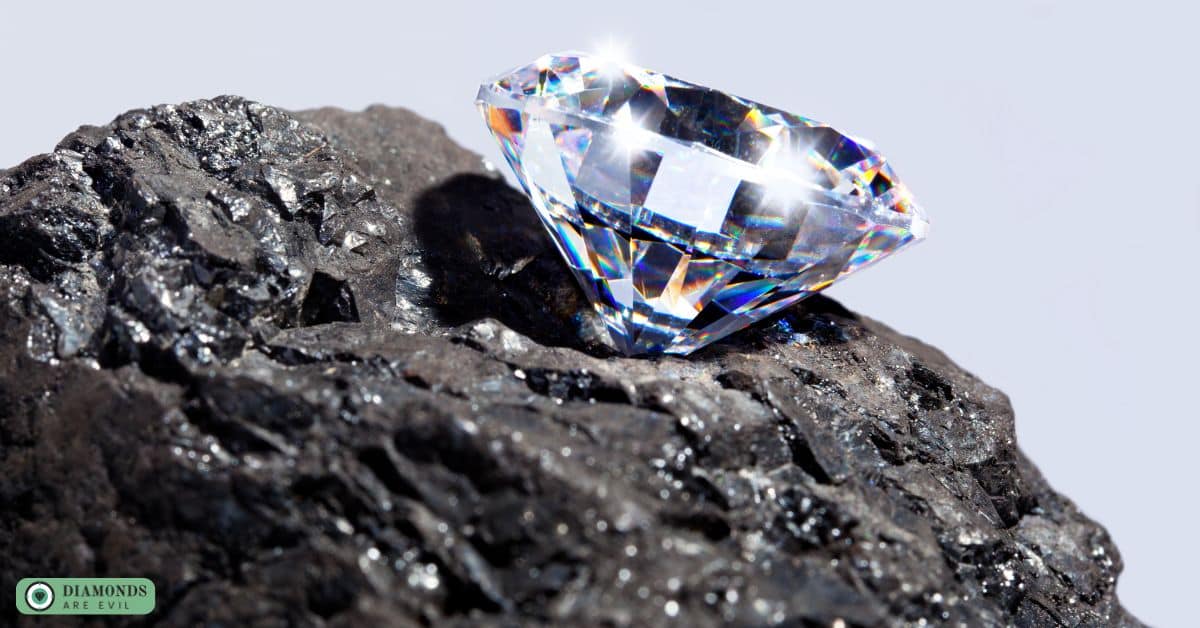
Lab-Grown Diamonds are identical to natural diamonds in both appearance and composition. They can be cut, polished, and graded in the same way as a mined diamond and possess all the same brilliance, sparkle, and fire. The only difference between Lab-Grown Diamonds and mined diamonds is their origin—they are grown in a laboratory rather than formed deep within the earth.
Environmental impacts of mining
Diamonds are a precious and highly sought-after commodity, but the process of mining them can have significant environmental impacts. Here are five ways that diamond mining can harm the environment:
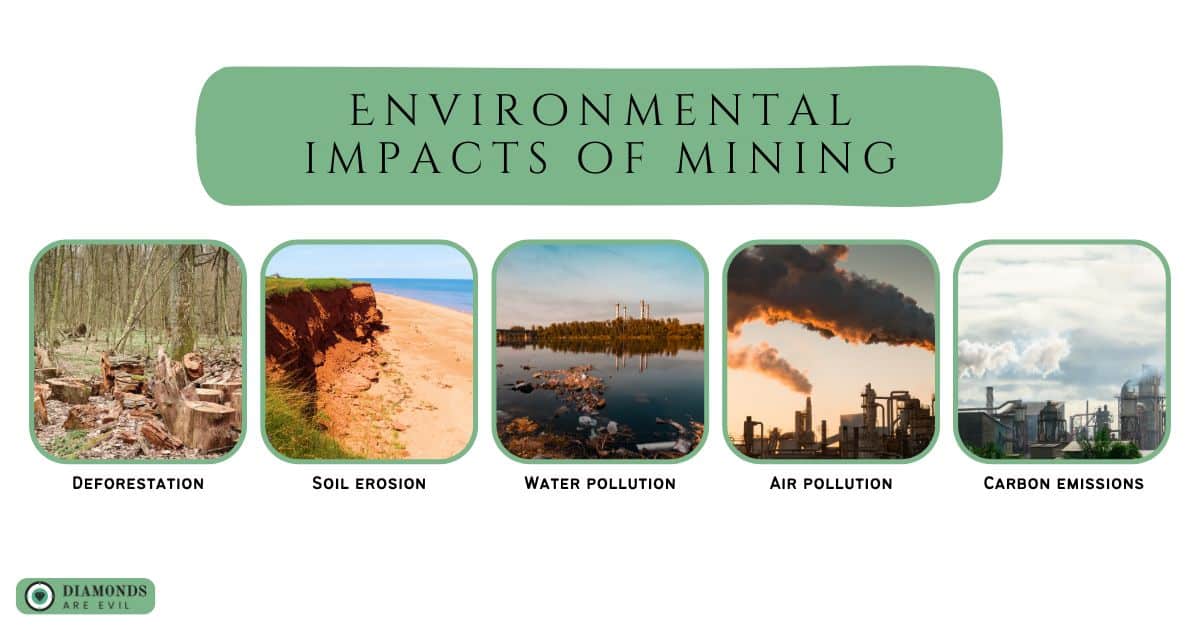
- Deforestation: To access diamond deposits, mining companies often clear large areas of land, which can result in deforestation and habitat destruction.
- Soil erosion: Diamond mining can lead to soil erosion and the loss of topsoil, which can affect soil fertility and increase the risk of landslides and other natural disasters.
- Water pollution: Mining operations can contaminate local water sources with toxic chemicals and heavy metals, which can harm aquatic life and make water unsafe for human consumption.
- Air pollution: Mining operations can generate dust, particulate matter, and other airborne pollutants, which can harm the respiratory health of nearby communities and contribute to climate change.
- Carbon emissions: Diamond mining is energy-intensive and can result in significant greenhouse gas emissions, contributing to climate change and global warming.
Human rights concerns in diamond mining
Diamond mining can also have a negative impact on the human rights of workers and local communities. Many mining operations are located in areas with weak labor laws, inadequate safety regulations, and limited access to healthcare.
This can result in dangerous working conditions for miners, as well as exploitation of workers by employers or unscrupulous middlemen. Local communities near diamond mines can also be negatively impacted, as they may lose access to traditional lands and resources due to mining operations. This can lead to poverty, displacement, and other human rights abuses.

Economic benefits and drawbacks of lab-grown diamond
Lab-Grown Diamonds offer many economic benefits when compared to mined diamonds. They are typically more affordable, require fewer resources and energy to produce, and have a lower carbon footprint. This makes them a great option for those looking for an ethical diamond with less environmental impact and cost savings.
However, Lab-Grown Diamonds do have some drawbacks. They may be harder to sell in the secondary market as they are not yet widely accepted. Additionally, natural diamonds still retain a higher value than Lab-Grown Diamonds, so it’s important to consider this when making your purchase decision.
Certification and labeling initiatives
Lab-Grown Diamonds have become increasingly popular in the jewelry market, and there are now several certification bodies that certify Lab-Grown Diamonds. These organizations are dedicated to ensuring that Lab-Grown Diamonds meet a certain quality standard when it comes to clarity, color and cut. They also provide independent verification of origin for Lab-Grown Diamonds.
The main certification bodies for Lab-Grown Diamonds are International Gemological Laboratory (IGL), Hoge Raad voor Diamant (HRD) and GIA, who have all developed their own labeling systems to help consumers identify genuine lab-grown diamonds. By using these certifications, customers can be assured that the diamond they are buying is of high quality and has been ethically sourced.

Consumer demand for eco-friendly products
As environmental awareness grows, consumers have become increasingly concerned about the impact their purchases have on the planet. As a result, there is a growing demand for eco-friendly products such as Lab-Grown Diamonds that are produced with fewer resources and less environmental impact.
Lab-Grown Diamonds offer customers an ethical option for buying diamonds that are more affordable and have a lower environmental impact. This makes them an attractive choice for those looking for a sustainable jewelry option with less environmental impacts. Furthermore, certification and labeling initiatives provide customers with the assurance that their diamond is of high quality and has been ethically sourced.
In Conclusion
Lab-Grown Diamonds provide a sustainable option for those looking for an ethical and eco-friendly diamond. They are produced with fewer resources and have a lower carbon footprint than mined diamonds, as well as being more affordable. Furthermore, certification bodies ensure that Lab-Grown Diamonds meet a certain quality standard when it comes to clarity, color and cut.
This makes them an attractive choice for those looking for a beautiful diamond with less environmental impacts. By choosing Lab-Grown Diamonds, customers can help reduce water usage and carbon emissions while also supporting responsible jewelry production.