
The History of Diamond Engagement Rings and How They Became a Tradition
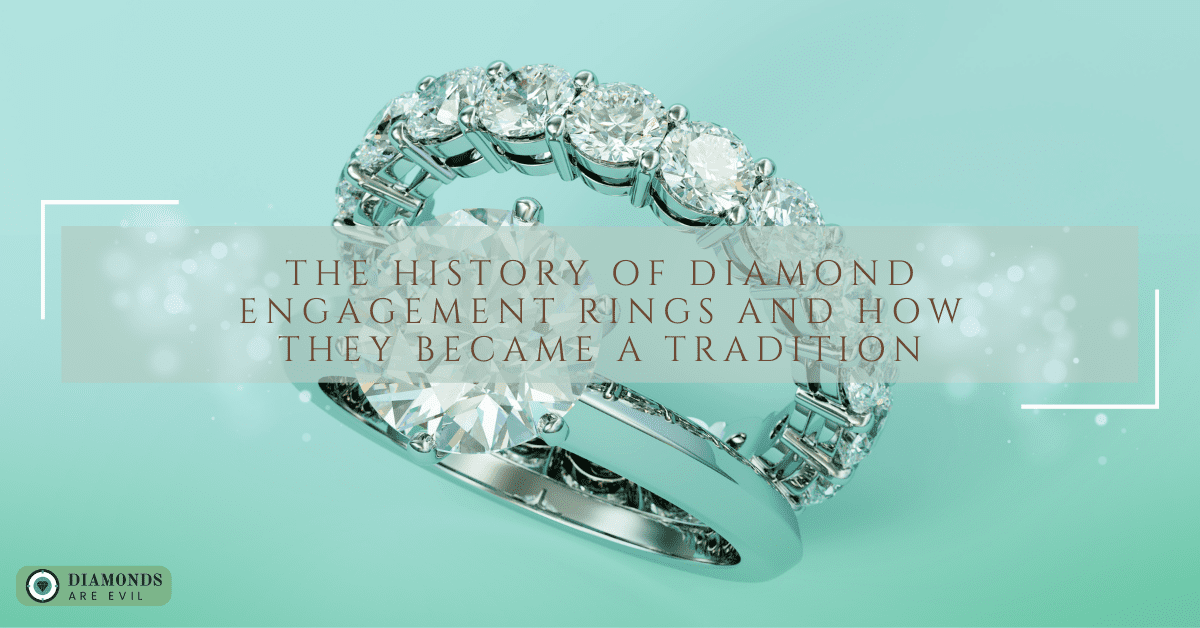
Diamond engagement rings have become a ubiquitous symbol of love and commitment in modern society. However, the tradition of giving a diamond ring as a symbol of engagement is a relatively recent phenomenon.
Diamond engagement rings date back to the 15th century, although they weren’t fashionable until the late 19th century. De Beers’ 1930s advertising campaign was responsible. Almost 80% of Western engagement rings have diamonds.
In this article, we’ll trace and learn more about the history of diamond engagement rings and explore how this tradition became so widespread in our society.
The Origins of Diamond Engagement Rings
The tradition of engagement rings dates back to ancient times, with evidence of the exchange of rings between couples in various cultures.
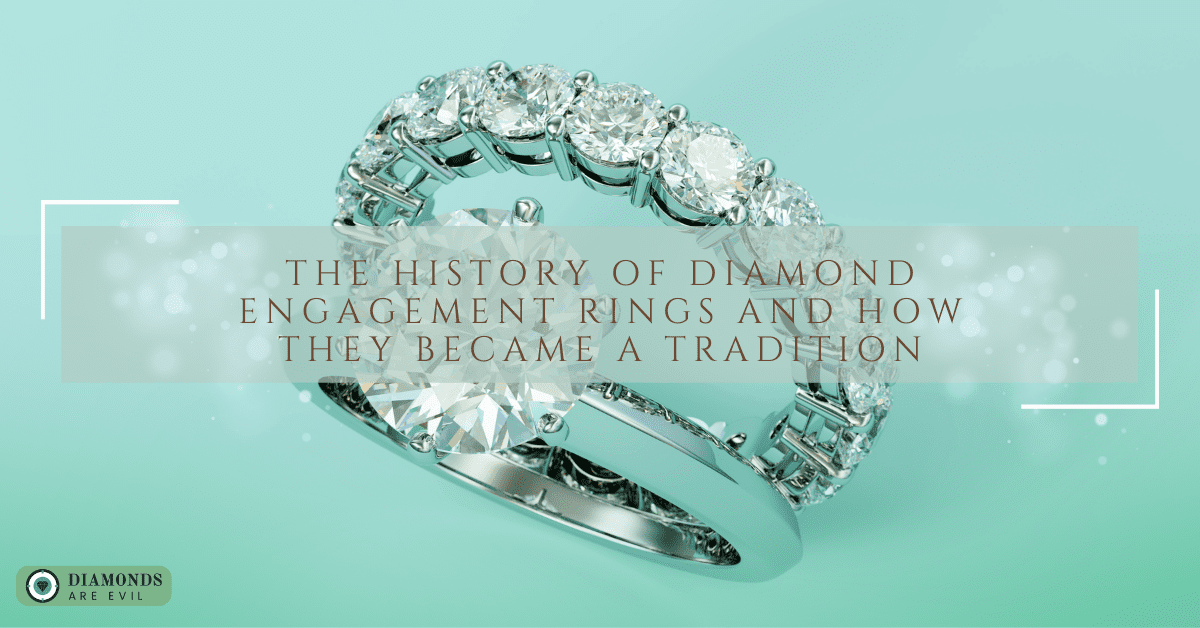
However, the use of diamond engagement rings became popular in the late Middle Ages, after Archduke Maximillian of Austria commissioned the first recorded diamond engagement ring in 1477 for his beloved, Mary of Burgundy. Prior to this, engagement rings were typically simple bands made of gold, silver, or iron.
Anthropologists believe that the tradition of engagement rings likely originated from the Roman custom of wives wearing rings attached to small keys as a symbol of their husbands’ ownership.
Today, engagement rings are a cherished symbol of love and commitment and have evolved to include a wide range of styles and designs.
Symbolism and Meaning
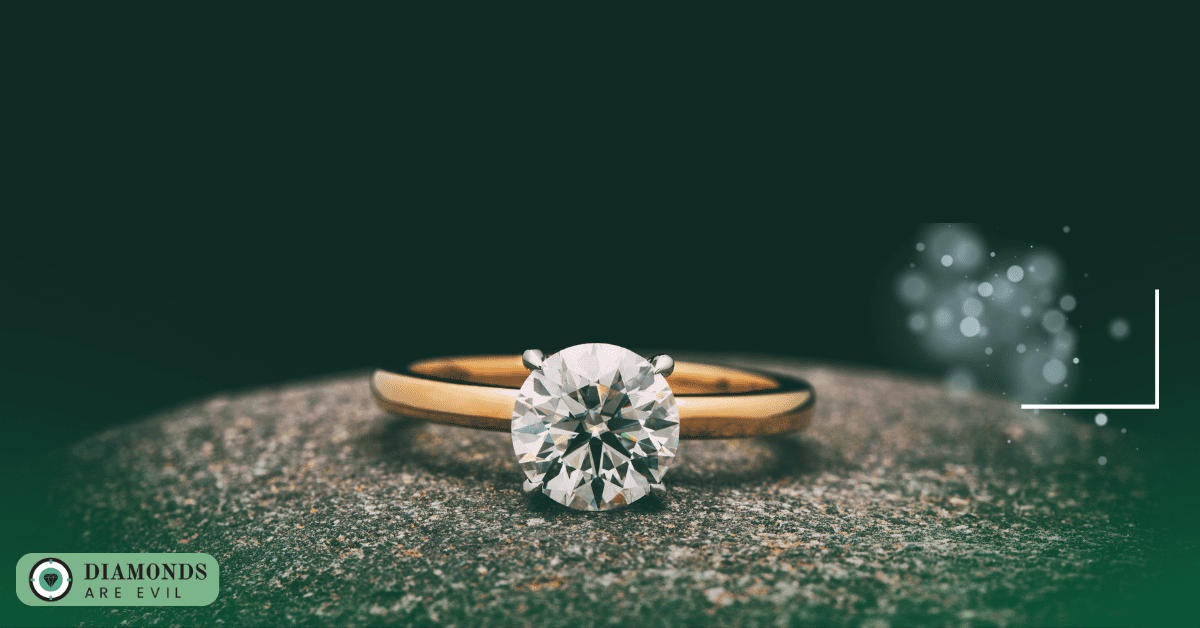
Diamond engagement rings are more than just pieces of jewelry; they hold significant symbolism and meaning for the couples who wear them.
Some of the key symbolic meanings of diamond engagement rings include:
- A symbol of commitment: Engagement rings serve as a visible symbol of a couple’s commitment to each other and their intention to marry.
- A representation of love: The ring’s circular shape represents eternal love and the idea that love has no beginning or end.
- A sign of fidelity: By wearing the engagement ring, both partners show that they are committed to remaining faithful to each other.
- A reflection of personality and style: Many couples choose unique and personalized engagement rings that reflect their personalities and individual styles.
- A family heirloom: Some engagement rings are passed down through generations and hold sentimental value as family heirlooms.
Ultimately, diamond engagement rings hold deep symbolism and meaning for couples, and they are cherished as physical representations of love, commitment, and unity.
Early Diamond Use
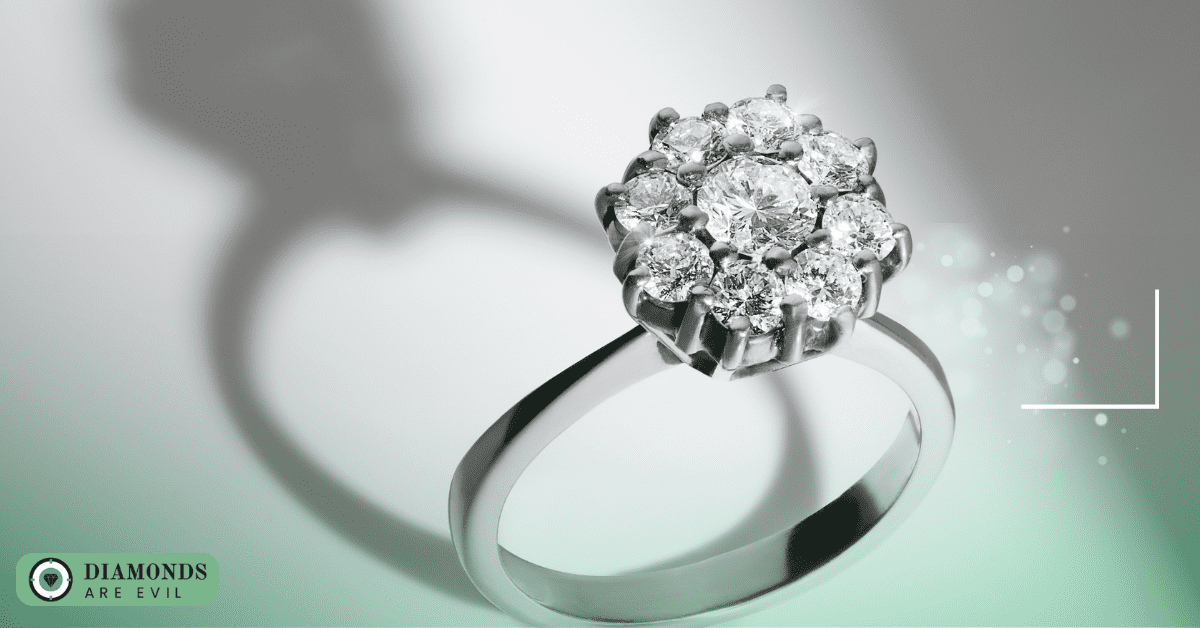
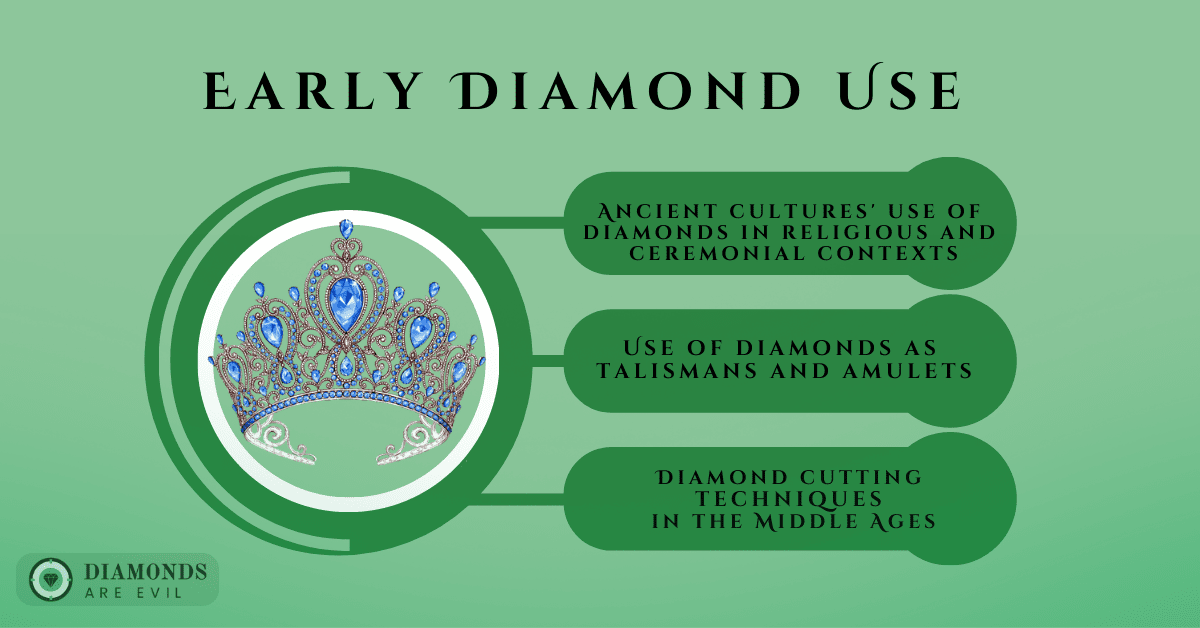
Diamonds have been used by various cultures throughout history, both for their beauty and for their perceived mystical and healing properties. Here are some examples:
Ancient cultures’ use of diamonds in religious and ceremonial contexts: In ancient India, diamonds were believed to possess healing properties and were used in Ayurvedic medicine to treat various ailments. Diamonds were also considered to be symbols of spiritual purity and were used in Hindu and Buddhist rituals. Similarly, in ancient Greece, diamonds were associated with the gods and were believed to have protective powers.
Use of diamonds as talismans and amulets: Diamonds were often worn as protective talismans and amulets. In medieval Europe, for example, diamonds were believed to protect the wearer from evil spirits and were often worn as pendants or set into rings.
Diamond cutting techniques in the Middle Ages: The art of diamond cutting began to develop in the Middle Ages, with diamond cutters experimenting with different techniques to enhance the beauty and brilliance of the stones. One of the earliest and most important cutting styles was the point cut, which involved shaping the diamond into a pointed, pyramidal form.
Diamonds have been valued and prized for their beauty and perceived mystical properties for thousands of years, and this fascination with diamonds helped pave the way for the diamond engagement ring’s popularity in modern times.
First Recorded Use of Diamond Engagement Rings
The tradition of giving diamond engagement rings as a symbol of love and commitment can be traced back to the late Middle Ages and Renaissance periods. Here are some key moments in the history of diamond engagement rings:
Archduke Maximilian of Austria and his diamond engagement ring to Mary of Burgundy in 1477: This is considered the first recorded instance of a diamond engagement ring being given. Maximilian gave Mary a ring set with diamonds in the shape of an “M”, which stood for both their names. The ring was intended as a symbol of their love and commitment to each other.
Diamond engagement rings became a popular trend among European nobility :
In the centuries that followed, diamond engagement rings became increasingly popular among European nobility, particularly in France and England. Diamonds were seen as a luxurious and prestigious gift, and the act of giving a diamond engagement ring became a way for men to demonstrate their wealth and status.
The symbolism of the diamond engagement ring as a sign of love and commitment:
Over time, the diamond engagement ring became more than just a symbol of wealth and status. It came to represent love, commitment, and fidelity. The tradition of giving a diamond engagement ring as a precursor to marriage became more widespread, particularly in the United States in the early 20th century.
Today, the diamond engagement ring is a deeply ingrained tradition in many cultures around the world and is often seen as a must-have item when getting engaged. The diamond itself has become a symbol of enduring love and commitment and is a testament to the enduring power of this tradition.
Rise of the Diamond Industry
The rise of the diamond industry in the late 19th and early 20th centuries had a profound impact on the availability and popularity of diamond engagement rings.
Diamond Discoveries
Diamond discoveries played a key role in the rise of the diamond industry. Here are some of the most significant discoveries:
Discovery of diamonds in Brazil in the early 18th century: The first diamond discoveries in Brazil were made in the early 18th century, leading to a period of diamond mining that lasted several decades. The Brazilian diamond trade was dominated by the Portuguese and later the British, who established trading posts and controlled the supply of diamonds to Europe.
Discovery of diamonds in South Africa in the late 19th century: The discovery of diamonds in South Africa in 1867 by Erasmus Jacobs sparked a diamond rush, with thousands of people flocking to the area in search of diamonds. This led to the establishment of the Kimberley diamond mines and the development of the South African diamond industry.
How These Discoveries Changed the Diamond Industry
The discoveries of diamonds in Brazil and South Africa had a transformative impact on the diamond industry. Prior to these discoveries, diamonds were relatively rare and expensive, and only available to the wealthy. However, the opening of new diamond mines led to a significant increase in the supply of diamonds, making them more accessible to the general public.
This in turn led to an increase in demand for diamonds, as they became more affordable and more people were able to purchase them. The diamond industry also became a major contributor to the economies of Brazil and South Africa, creating jobs and driving economic growth.
However, the diamond industry has also been associated with negative impacts such as environmental degradation, exploitation of workers, and conflict diamonds, highlighting the need for responsible and sustainable practices in the industry.
Pop Culture and the Engagement Ring
Pop culture has played a significant role in popularizing diamond engagement rings, using advertisements, movies, TV shows, and celebrity endorsements to promote diamonds as the ultimate symbol of love and commitment. Social media has further amplified this message, allowing couples to seek inspiration from the latest trends.
Despite criticism of the diamond industry’s practices, the appeal of the diamond engagement ring remains strong, thanks to its association with love, luxury, and the power of pop culture.
The Role of Pop Culture in Popularizing Diamond Engagement Rings
Pop culture has played a significant role in popularizing diamond engagement rings. In the early 20th century, advertisements featuring movie stars and other celebrities helped to promote the idea that diamonds were the ultimate symbol of love and commitment.
This was further reinforced by popular songs, movies, and TV shows that portrayed diamond engagement rings as a necessary part of a romantic relationship.
The Future of Engagement Rings
The future of engagement rings is trending towards alternative stones and materials, personalization, and customization. Lab-grown diamonds and eco-friendly gemstones are gaining popularity, and couples are opting for unique designs, meaningful engravings, and birthstone incorporation.
Engagement rings are evolving towards individual style and gender neutrality, with some couples choosing non-traditional rings or skipping the ring altogether.
Importance of Diamond Engagement Rings in Society
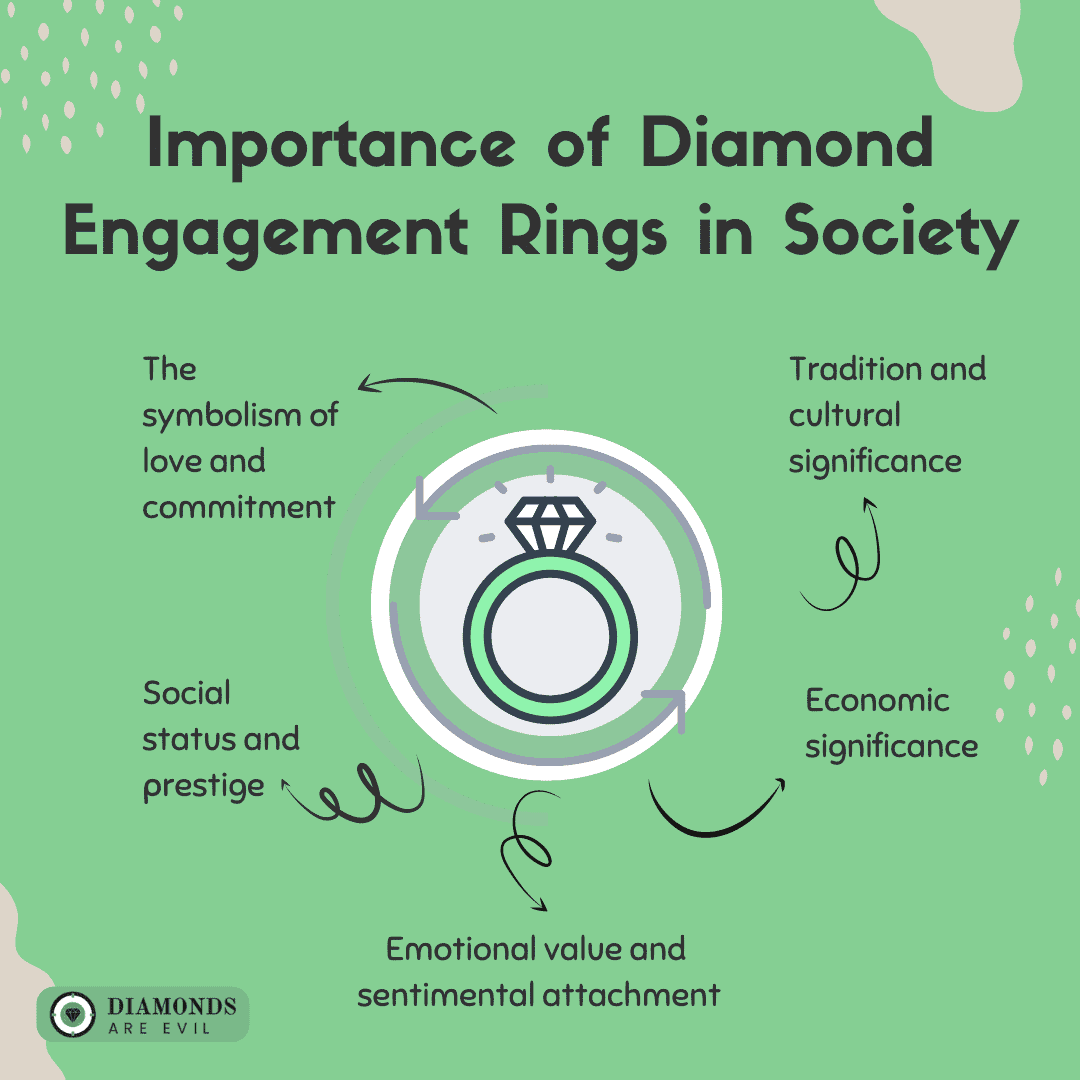
Diamond engagement rings have played a significant role in marriage and proposal customs for many years, and their significance in society has only increased.
Here are some explanations of why diamond engagement rings are so important:
The symbolism of love and commitment:
The ring represents the couple’s emotional connection and their commitment to creating a future together in a practical way.
Tradition and cultural significance:
Presenting an engagement ring is a deeply rooted tradition in many cultures, and there are often particular customs and rituals connected with the action.
Social status and prestige:
Diamonds have been linked to money and position for a long time, and the diamond engagement ring has come to represent social standing and prominence.
Economic significance:
The diamond engagement ring has evolved into a representation of stability and growth in the economy in addition to love.
Emotional value and sentimental attachment:
Engagement rings frequently have a great deal of sentimental value and emotional significance for both the giver and the recipient. The ring may be used.
Trends and the Future of Diamond Engagement Rings
As the twenty-first century begins, the diamond engagement ring industry is still developing and changing. These are a few recent developments and the industry’s upcoming trends:
Customization and personalization of diamond rings: In recent years, there has been a growing trend towards personalized and unique diamond engagement rings.
Alternative gemstones and non-traditional engagement rings: There is a growing interest in alternative stones and non-traditional ring designs. Gemstones such as sapphires, emeralds, and rubies are increasingly being used in engagement rings, while unique settings and styles are also gaining popularity.
The impact of sustainability and ethical concerns on the diamond industry: In recent years, there has been increasing attention paid to the social and environmental impact of the diamond industry.
In conclusion
Diamond engagement rings have been a traditional symbol of love and commitment for hundreds of years. Today they are deeply entrenched in our society as a sign of eternal love, commitment, and unity between two people. While the classic style of diamond engagement ring remains popular, contemporary couples are also exploring unique and personalized options to reflect their individual personalities and styles. The diamond engagement ring remains an iconic symbol of love and commitment that will continue to be cherished for generations to come.