
The Impact of Diamond Quality on the Price of an Engagement Ring
The quality of a diamond has a significant impact on the price of an engagement ring. The Four Cs of diamond quality, Cut, Carat weight, Clarity, and Color, determine the value and appearance of a diamond. Therefore have a direct impact on the price of an engagement ring.
When it comes to choosing an engagement ring, it’s important to consider not only the design and style but also the quality of the diamond. Whether you’re looking for a stunning, sparkling diamond or a timeless, classic design, understanding the impact of diamond quality can help you make a wise investment that you and your partner will treasure for a lifetime.
The Four Cs of Diamond Quality: Cut, Carat, Clarity, and Color
The Four Cs of Diamond Quality is the standard criteria used to evaluate the quality of a diamond. These criteria are Cut, Carat, Clarity, and Color, and each play a crucial role in determining the overall value and beauty of a diamond.
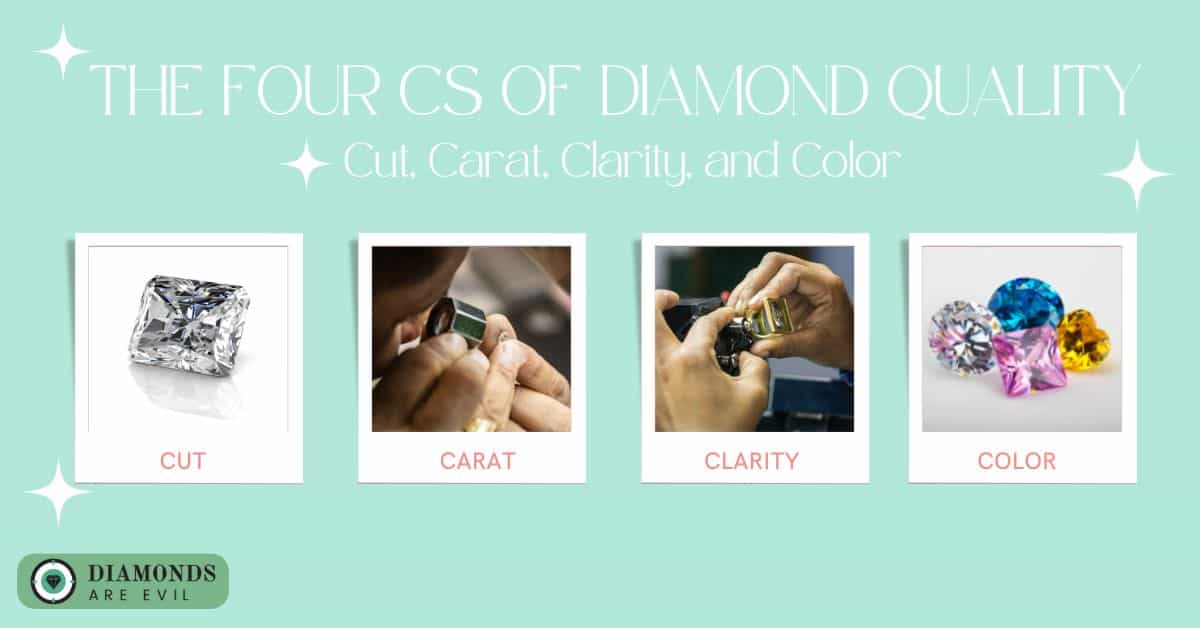
Cut
Refers to the way a diamond has been shaped and polished, and it is considered one of the most important factors in determining a diamond’s sparkle and brilliance. A well-cut diamond will reflect light in an optimal way, creating a brilliant and sparkling appearance. On the other hand, a poorly cut diamond will look dull and lackluster.
Carat
Refers to the weight of a diamond, and it is the easiest of the Four Cs to understand. One carat is equivalent to 200 milligrams or 0.2 grams. The larger the diamond, the more rare and valuable it is.
Clarity
Refers to the presence of natural blemishes and inclusions within a diamond. The fewer and smaller these inclusions are, the higher the clarity grade and the more valuable the diamond is.
Color
Refers to the presence of any hue other than white in a diamond. The more colorless a diamond, the higher its value. The Gemological Institute of America (GIA) has established a color grading scale that ranges from D (completely colorless) to Z (light yellow or brown).
The Four Cs of Diamond Quality are crucial in determining the value and beauty of a diamond. And it is important to consider each of these factors when making a purchase.
A diamond with excellent cut, high-carat weight, high clarity, and little to no color will generally be the most expensive, but also the most beautiful.
How Cut Affects the Sparkle and Price of a Diamond
The Cut of a diamond is one of the most important factors in determining its sparkle and brilliance, as well as its value. A well-cut diamond will reflect light in an optimal way. Creating a brilliant and sparkling appearance, while a poorly cut diamond will look dull and lackluster.
The Cut of a diamond refers to the way it has been shaped and polished, and it is one of the Four Cs of Diamond Quality. The Cut is not to be confused with the shape of a diamond, which refers to its physical appearance (round, princess, oval, etc.).
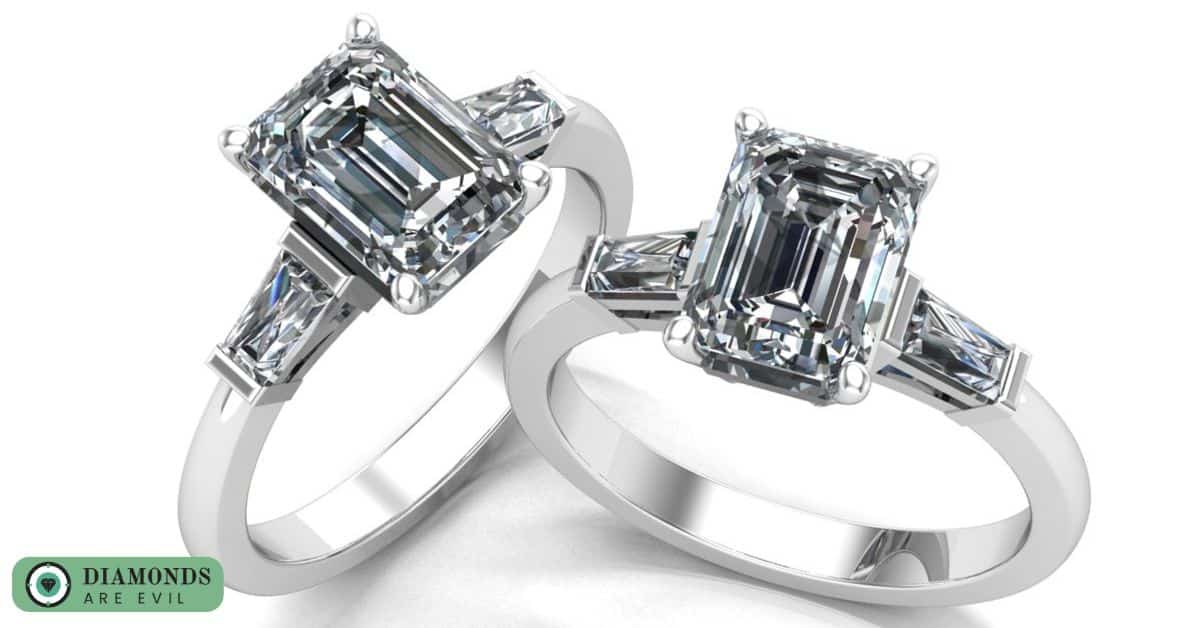
When a diamond is cut well, light enters through the top (table) and is reflected from one facet to another. Before eventually being reflected back out through the top of the diamond. If the Cut is too shallow or too deep, some light will escape through the sides or bottom of the diamond, reducing its sparkle and brilliance.
The Cut also affects the perceived size of a diamond. A well-cut diamond will appear larger than a poorly cut diamond of the same weight, making it a more desirable and valuable choice.
A diamond with an excellent Cut will generally command a higher price than a diamond with a poor Cut. It is important to consider the Cut of a diamond when making a purchase, as it will have a significant impact on its overall appearance and value.
The Importance of Carat Weight in Determining Diamond Value
Carat weight is a crucial factor in determining the value of a diamond. It refers to the weight of a diamond and is the easiest of the Four Cs of Diamond Quality to understand. One carat is equivalent to 200 milligrams or 0.2 grams.
In general, the larger the diamond, the more rare and valuable it is. This is because larger diamonds are more difficult to find and extract from mines, and they are also more desirable to consumers. As a result, a diamond with a higher carat weight will generally command a higher price than a diamond with a lower carat weight.
It is important to note, however, that the value of a diamond is determined by more than just its carat weight. The Cut, Clarity, and Color of a diamond are also important factors in determining its value, and a diamond with a high carat weight may not be as valuable as a diamond with a lower carat weight if it has a poor Cut, low Clarity, or significant Color.
When considering the carat weight of a diamond, it is important to take into account the other Three Cs as well, in order to determine its overall value. A diamond with a high-carat weight and excellent Cut, Clarity, and Color will generally be the most valuable and desirable.
Clarity Grading and its Impact on Diamond Price
Is a system used to evaluate the presence of natural blemishes and inclusions within a diamond. It is an important factor in determining the value of a diamond, as the fewer and smaller these inclusions are, the higher the clarity grade and the more valuable the diamond is.
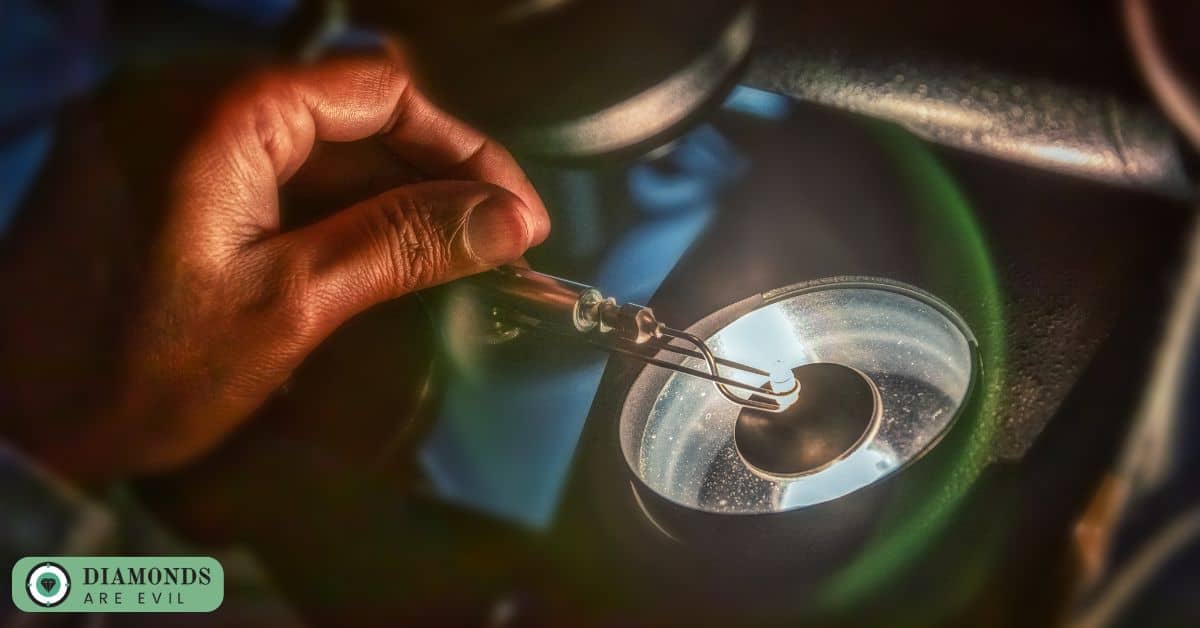
Clarity grading is performed by trained gemologists using a 10x magnification loupe. The Gemological Institute of America (GIA) has established a clarity grading scale that ranges from Flawless (no inclusions or blemishes visible under 10x magnification) to Included (inclusions and blemishes are visible to the naked eye).
 `
`
The clarity grading scale includes the following grades:
- Flawless (FL)
- Internally Flawless (IF)
- Very, Very Slightly Included (VVS1 and VVS2)
- Very Slightly Included (VS1 and VS2)
- Slightly Included (SI1 and SI2)
- Included (I1, I2, and I3)
Diamonds with higher clarity grades will generally command higher prices, as they are considered to be rare and more valuable. A diamond with no visible inclusions or blemishes will be more desirable and valuable than a diamond with visible inclusions.
However, it is important to note that some inclusions may not affect the appearance of a diamond, and may not be noticeable to the naked eye, even if the diamond has a lower clarity grade.
The Role of Color in Diamond Pricing and its Effect on Appearance
Color is an important factor in determining the value of a diamond, as well as its appearance. The Gemological Institute of America (GIA) has established a color grading scale that ranges from D (no hue) to Z (a noticeable yellow or brown hue).
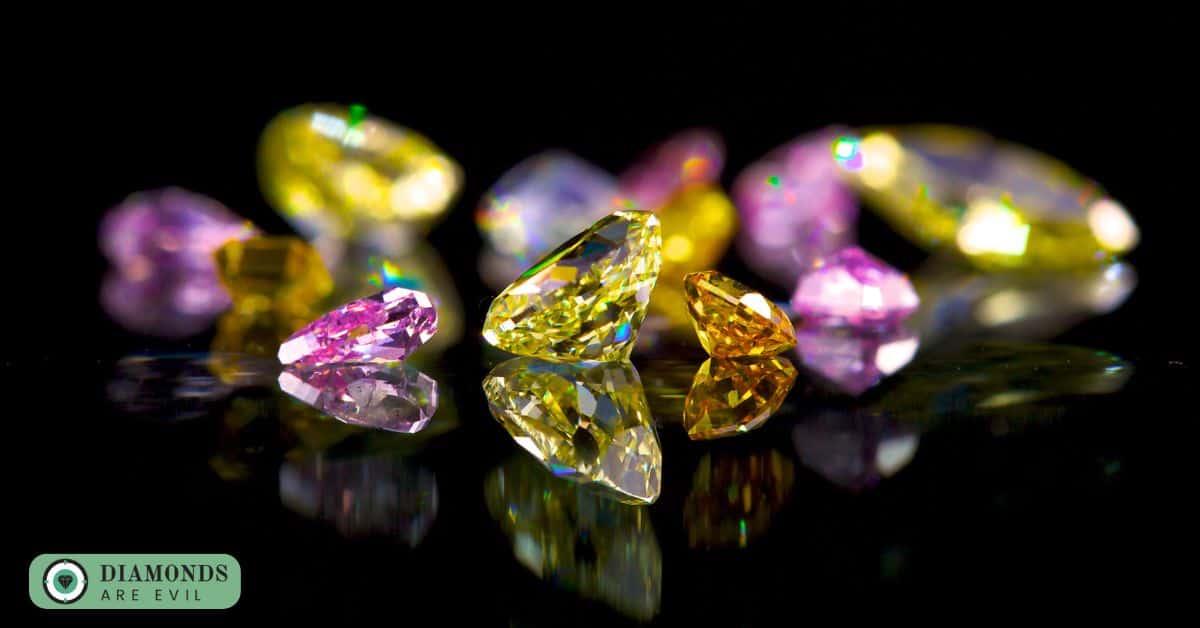
The color grading scale includes the following grades:
- D, E, F (no hue, exceptional white)
- G, H, I, J (near colorless)
- K, L, M (faint yellow)
- N, O, P, Q, R (very light yellow)
- S, T, U, V, W, X, Y, Z (light yellow or brown)
Diamonds that are closer to being colorless (D-J) are more valuable and rare, while diamonds that have a noticeable yellow or brown hue (K and beyond) are less valuable. This is because colorless diamonds are considered more desirable and aesthetically pleasing to the majority of consumers.
It is important to note that color is not just about the presence of yellow or brown hues, but can also include other tints such as pink, blue, green, and others.
The color of a diamond can affect its appearance, and a diamond with a high color grade will generally have a brighter, more sparkling appearance than a diamond with a lower color grade.
In conclusion
Remember, an engagement ring is a symbol of love and commitment, and choosing the right diamond can make it even more special. With the right knowledge and guidance, you can find the perfect diamond that fits your style, your budget, and your love story.
So, take the time to do your research, and you’ll find the perfect engagement ring that you and your partner will cherish for a lifetime.