
The Process of Creating a Diamond in a Lab
Diamonds can be created in a lab using the High Pressure High Temperature (HPHT) or Chemical Vapor Deposition (CVD) processes. In the HPHT process, a small diamond seed is placed in a chamber with a carbon source and metal catalyst, while in the CVD process, a carbon-rich gas is introduced to a heated diamond seed in a vacuum chamber. Both methods create high-quality diamonds with identical properties to natural diamonds, and can be cut and polished just like natural diamonds.
In this blog, we will delve into the fascinating process of creating a diamond in a lab, from the initial stages of selecting the materials to the final polishing and finishing touches. Whether you’re a diamond enthusiast or simply curious about the science behind creating a precious gem, this blog is for you. So, let’s get started and explore the process of creating a diamond in a lab.
Lab-Grown Diamonds
Lab-grown diamonds have become increasingly popular in recent years due to their cost effectiveness and ethical production processes. As the name suggests, Lab-Grown Diamonds are diamonds that are grown in a laboratory rather than mined from the earth.
They’re characterized by their chemical and physical properties being identical to those of mined diamonds. These synthetic gems can be cut, set, and polished into jewelry pieces just like mined diamonds.
Despite the fact that Lab-Grown Diamonds are created in a lab environment, they possess all of the same physical properties as diamonds formed under natural conditions. They’re graded the same way mined diamonds are, creating uniformity across both types of stones when it comes to quality and value. As a result, it can be difficult to tell the difference between Lab-Grown Diamonds and mined diamonds without further testing.
Diamond Formation
The technology used to create Lab-Grown Diamonds has only been around for a few decades, and the quality of diamonds created through this process continues to improve as technology advances. As with most types of gemstones, Lab-Grown Diamonds come in a variety of colors, sizes, and shapes. These diamonds can also be cut into desirable shapes to fit any type of jewelry.
Lab-grown diamond formation process
The formation process starts with carbon. The carbon is heated to extremely high temperatures, and then placed under extreme pressure in order to form a diamond crystal lattice structure. This process can take up to three weeks and results in the creation of a single diamond.
Using advanced technology, scientists are now able to grow multiple diamonds at once in laboratory settings. By placing several tiny diamond seeds inside a chamber and exposing them to the same high temperature and pressure, multiple diamonds can be grown simultaneously.
Many Lab-Grown Diamonds are cut from the same crystal lattice, creating larger stones with fewer inclusions than what is typically found in mined diamonds.
Types of Lab-grown Diamonds
Lab-grown diamonds are a rapidly growing industry, with a variety of diamond types and qualities available to consumers. In addition to their ethical and sustainable production methods, lab-grown diamonds offer the advantage of customization, allowing for a wider range of shapes, sizes, and colors.
There are three main types of lab-grown diamonds: High-Pressure High-Temperature (HPHT) diamonds, Chemical Vapor Deposition (CVD) diamonds and Comparison of HPHT and CVD diamonds.
High-Pressure High-Temperature (HPHT) diamonds
These diamonds are considered the highest quality type of lab-grown diamond. In this process, diamonds are grown in a controlled environment where extreme temperatures and pressure are applied to mimic the conditions found deep within the earth.
The result is a diamond with very few inclusions or blemishes and excellent clarity. HPHT diamonds have become increasingly popular due to their ability to produce larger carat diamonds and excellent color and clarity.
Chemical Vapor Deposition (CVD) diamonds
CVD diamonds are created when a lab environment is filled with carbon-rich gas and exposed to high temperatures. This process produces a variety of colors, ranging from clear to yellow, blue, pink, or even green.
CVD diamonds tend to be more affordable than other types of lab-grown diamonds due to their lower cost of production. They’re often characterized by their excellent color and clarity, making them popular for jewelry applications.
Comparison of HPHT and CVD diamonds
When it comes to lab-grown diamonds, there are two primary methods of production: High-Pressure High-Temperature (HPHT) and Chemical Vapor Deposition (CVD). Both methods create diamonds that are identical to their natural counterparts in terms of chemical and physical properties.
However, the production process and resulting diamond characteristics differ between the two methods.
| High-Pressure High-Temperature (HPHT) Diamonds | Chemical Vapor Deposition (CVD) Diamonds | |
|---|---|---|
| Production | Uses extreme pressure and heat to replicate natural diamond formation | Utilizes a chemical process to grow diamonds on a substrate |
| Production Time | Faster production time compared to CVD | Slower production time compared to HPHT |
| Diamond Quality | May have more inclusions and impurities | High purity, may have fewer inclusions |
| Color Options | Limited color options | Wide range of color options |
| Size Options | Limited size options | Large size options available |
| Cost | Generally less expensive than CVD | Generally more expensive than HPHT |
| Energy Use | High energy consumption | Lower energy consumption |
HPHT Diamond Creation Process
High-Pressure High-Temperature (HPHT) is one of the two primary methods of creating lab-grown diamonds. The HPHT process involves the use of extreme pressure and heat to replicate the natural diamond formation process.
The equipment and materials used in the HPHT diamond creation process are specialized and essential to ensure the formation of high-quality diamonds. In this article, we will list the necessary equipment and materials needed for the HPHT diamond creation process.
Equipment and materials needed
The HPHT diamond creation process requires precise control over temperature, pressure, and other variables to ensure the formation of high-quality diamonds. The specialized equipment and materials listed above play a crucial role in achieving this.
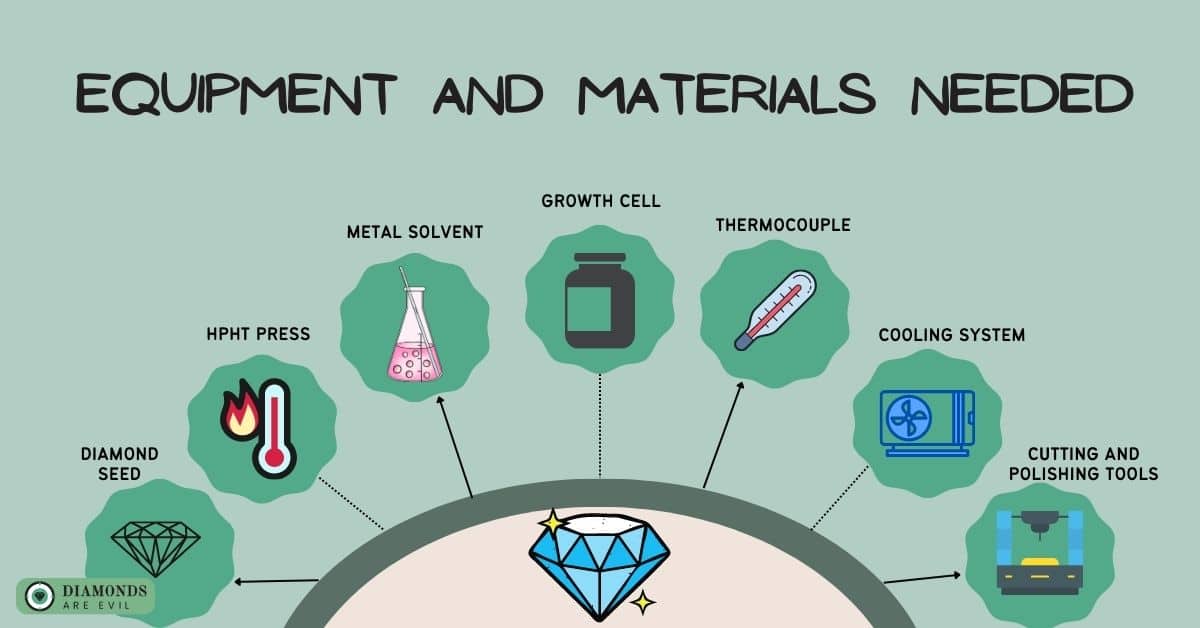
Diamond seed – a tiny piece of natural or lab-grown diamond used as a starting point for the creation of a larger diamond.
HPHT press – a machine that can apply high pressure and temperature to the diamond seed.
Metal solvent – a metal alloy that is used to dissolve the diamond seed at high temperatures.
Growth cell – a container that houses the diamond seed and the metal solvent during the creation process.
Thermocouple – a device used to measure temperature accurately.
Cooling system – a system used to cool down the diamond after it is formed.
Cutting and polishing tools – specialized tools used to shape and polish the diamond into a finished product.
Steps in the process
The HPHT diamond creation process typically consists of the following steps:
1. Prepare the diamond seed by cleaning it and placing it in the growth cell.
2. Place the growth cell in the HPHT press and apply heat and pressure to replicate natural diamond formation conditions.
3. Monitor temperatures using a thermocouple to ensure accuracy.
4. Allow the diamond to grow for a predetermined amount of time, depending on the desired size.
5. Remove the diamond from the HPHT press and cool it down using a cooling system.
6. Shape and polish the diamond using specialized tools to create a finished product.
7. Inspect and grade the diamond to ensure its quality and value.
CVD Diamond Creation Process
Chemical Vapor Deposition (CVD) is the other primary method of creating lab-grown diamonds. The CVD process involves the use of a chemical reaction to grow diamonds on a substrate.
The equipment and materials used in the CVD diamond creation process are different from those used in the HPHT process. In this article, we will list the necessary equipment and materials needed for the CVD diamond creation process.
Equipment and materials needed
The CVD diamond creation process also requires precise control over temperature, pressure, and gas mixture composition to ensure the formation of high-quality diamonds. The specialized equipment and materials listed above play a crucial role in achieving this.
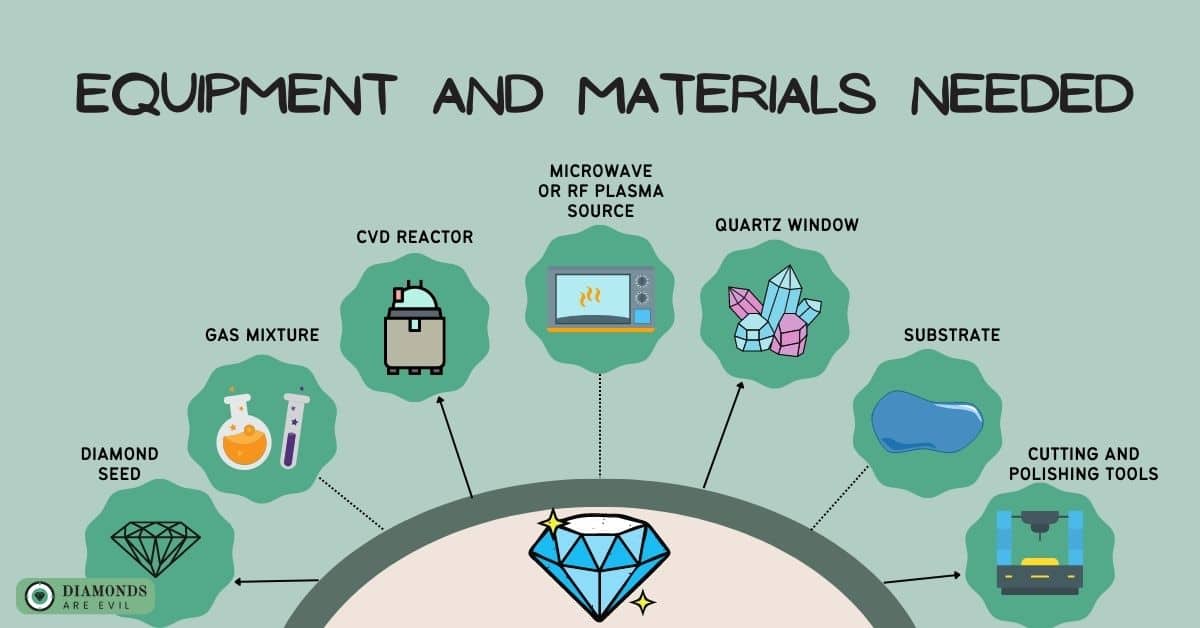
Diamond seed – a tiny piece of natural or lab-grown diamond used as a starting point for the creation of a larger diamond.
Gas mixture – a mixture of gases, usually including hydrogen and methane, used in the diamond formation process.
CVD reactor – a vacuum chamber used to house the diamond seed and gas mixture during the creation process.
Microwave or RF plasma source – a device used to create a plasma of the gas mixture.
Quartz window – a window made of quartz that allows microwaves or RF radiation to pass through.
Substrate – a material, usually made of silicon or diamond, on which the diamond will be grown.
Cutting and polishing tools – specialized tools used to shape and polish the diamond into a finished product.
Steps in the process
The CVD diamond creation process typically consists of the following steps:
1. Prepare the diamond seed and substrate by cleaning them and placing them in the CVD reactor.
2. Create a plasma of the gas mixture using a microwave or RF source and allow it to flow over the diamond seed and substrate.
3. Monitor temperatures to ensure accuracy.
4. Allow the diamond to grow on the substrate for a predetermined amount of time, depending on the desired size.
5. Remove the diamond and cool it down using a cooling system.
6. Shape and polish the diamond using specialized tools to create a finished product, if necessary.
Advantages of Lab-grown Diamonds
Lab-grown diamonds have become increasingly popular over the years as a sustainable and ethical alternative to mined diamonds. These diamonds are created in a laboratory using advanced technology and are virtually identical to natural diamonds in terms of physical and chemical properties. However, lab-grown diamonds offer several advantages over mined diamonds, which make them an attractive option for consumers.
Cost-effective
Lab-grown diamonds are more cost-effective than their mined counterparts, as they are created in a controlled environment and require fewer resources to produce. The production process for lab-grown diamonds is also much faster than that of mined diamonds.
As a result, consumers can purchase larger carats for less money with lab-grown diamonds. In addition, lab-grown diamonds may be available in rarer colors than mined diamonds at a fraction of the price.
Ethical
Lab-grown diamonds are free from the ethical and environmental issues associated with mining. Since they’re not harvested from the earth, lab-grown diamonds do not contribute to any human rights abuses or damage to ecosystems caused by mining. Additionally, they are traceable, so consumers can rest assured that the diamonds they purchase were not mined using unethical labor practices.
Customizable
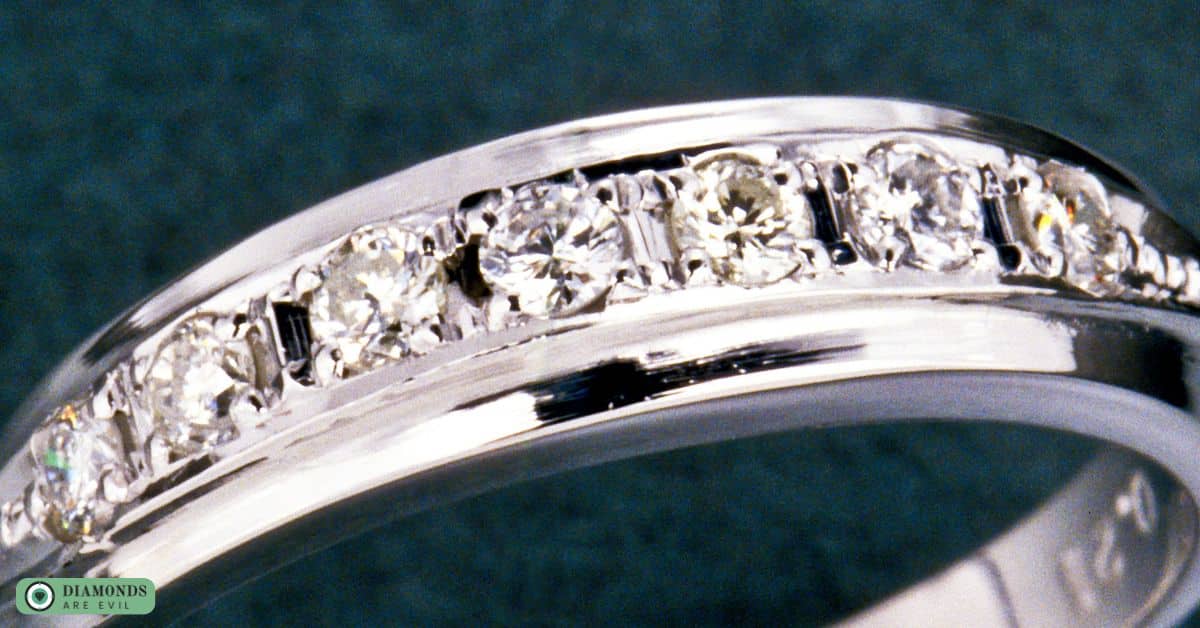
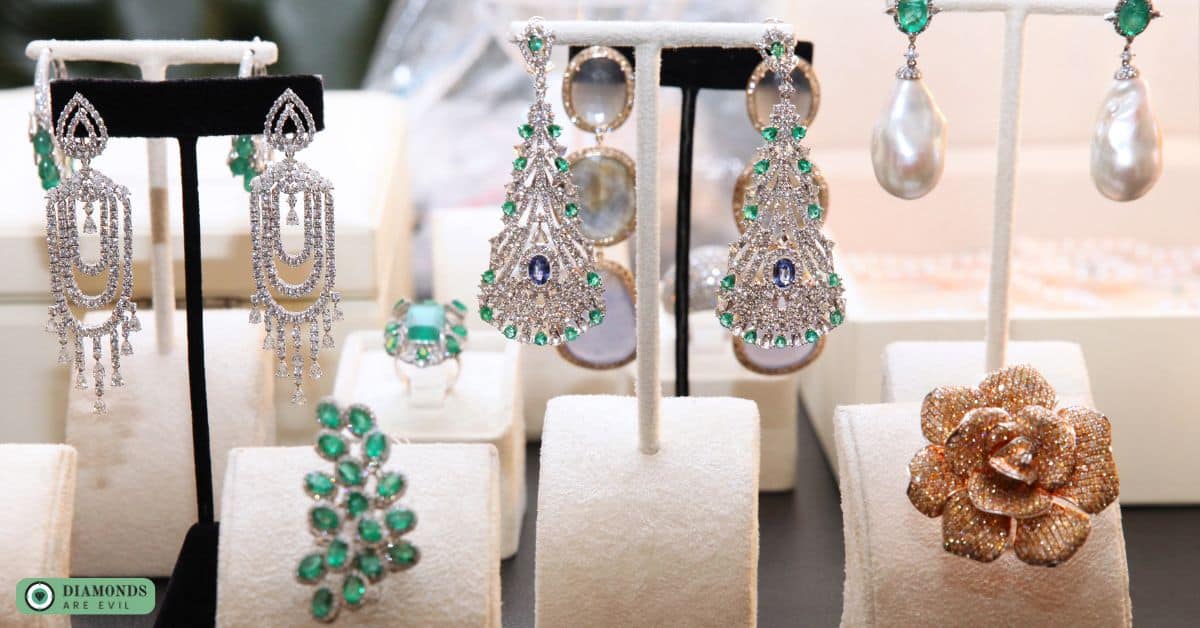
Lab-grown diamonds offer greater customization options than mined diamonds, as they can be grown in a variety of sizes, shapes, and colors. This means that consumers can choose a stone that is perfectly suited to their needs, without the limitations of mined diamonds. In addition, lab-grown diamonds can be cut into a variety of shapes and sizes in order to create unique pieces of jewelry.
Disadvantages of Lab-grown Diamonds
While lab-grown diamonds offer several advantages over mined diamonds, they also have some disadvantages that consumers should be aware of before making a purchase. Despite these disadvantages, it is essential to note that lab-grown diamonds remain a sustainable and ethical alternative to mined diamonds, and their popularity continues to grow.
Perception and social stigma
Despite the fact that Lab-grown diamonds possess all of the same physical properties as mined diamonds and are graded in the same way, there is still a perception among some consumers that lab-grown diamonds are inferior. This is due to a lack of understanding about this process, as well as a continued reliance on mined diamonds for luxury items such as engagement rings.
Limited size and color options
As the technology used to create Lab-Grown Diamonds is still relatively new, there is currently a limited selection of sizes and colors available. For example, while it is possible to purchase lab-grown diamonds in a variety of shapes and carats, larger stones are generally limited to a few select sizes.
Additionally, many laboratories can only produce limited colors due to the fact that some of the rarer colors require more specialized equipment and techniques. This means that consumers may not be able to find exactly what they are looking for in a lab-grown diamond.
In Conclusion
Lab-Grown Diamonds are an excellent alternative to mined diamonds. They offer a sustainable and ethical production process that results in diamonds that are virtually identical to their mined counterparts in terms of physical and chemical properties. These diamonds offer greater customization options than mined diamonds, as they can be grown in a variety of sizes, shapes, and colors.
However, there is still a perception among some consumers that lab-grown diamonds are inferior to mined diamonds, as well as limited size and color options available due to the relatively new technology used in their production process. Therefore, it is important for consumers to consider all of these factors when making a decision about whether or not to purchase a lab-grown diamond.