
The Use of Diamond Simulants and Diamond Alternatives
Diamond simulants and alternatives are an excellent choice for those looking to add a touch of sparkle without breaking the bank. With their dazzling look and unique characteristics, these materials can provide the same beauty as diamonds without the hefty price tag.
In this blog post, we’ll explore the definition and characteristics of diamond simulants, different types of diamond simulants and alternatives, the advantages and disadvantages of using them instead of real diamonds, how to spot a diamond simulant, and the ethical and environmental implications. So if you’re looking for an affordable alternative to diamonds, read on!
Definition and Characteristics of Diamond Simulants
Diamond simulants are materials that are made to resemble the appearance of a diamond, but are not actually made of diamond. They are often used as a less expensive alternative to natural diamonds. Some common types of diamond simulants include cubic zirconia, moissanite, and white sapphire.
One of the key characteristics of diamond simulants is that they are not as hard as natural diamonds. Diamonds have a Mohs hardness rating of 10, while most diamond simulants have a rating of around 8-9. This means that simulants may be more prone to scratches and other types of damage.
Another characteristic of diamond simulants is that they often have a different refractive index than natural diamonds. This can affect the way light is dispersed within the simulant, and can make it look different from a natural diamond.
Diamond simulants are also often less expensive than natural diamonds. They can be an attractive option for those who want the look of a diamond, but don’t want to spend a lot of money. However, it is important to be aware that there are many different qualities of simulants, and the price can vary widely.
Types of Diamond Simulants and Alternatives
There are several types of diamond simulants and alternatives that are commonly used in the jewelry industry. Some of the most popular include:
Cubic Zirconia: This is one of the most well-known diamond simulants. It is made of zirconium dioxide and is known for its high level of brilliance and fire. It is also relatively hard, with a Mohs hardness rating of 8.5.
Moissanite: This is a relatively new diamond simulant that has become increasingly popular in recent years. It is made of silicon carbide and is known for its high level of brilliance and fire, as well as its durability. Moissanite has a higher refractive index than cubic zirconia and diamond and a Mohs hardness rating of 9.25
White Sapphire: This is a natural gemstone that is often used as a diamond simulant. It is known for its high level of brilliance and fire and is relatively hard, with a Mohs hardness rating of 9.
White Topaz: This is another natural gemstone that is sometimes used as a diamond simulant. It is known for its high level of brilliance and fire and is relatively hard, with a Mohs hardness rating of 8.
Glass and Acrylic: These are man-made materials that are sometimes used as diamond simulants. They are relatively inexpensive and are known for their high level of brilliance and fire. However, they are not as durable as other diamond simulants and alternatives.
Synthetic Diamond: This is a man-made diamond that is created in a laboratory and is identical to a natural diamond. They are relatively new in the market but are becoming more and more popular.
Advantages and Disadvantages of Diamond Simulants and Alternatives
Diamond simulants and alternatives can have both advantages and disadvantages when compared to natural diamonds.
Advantages:
Cost: One of the main advantages of diamond simulants and alternatives is that they are often less expensive than natural diamonds. This can make them an attractive option for those who want the look of a diamond, but don’t want to spend a lot of money.
Durability: Some diamond simulants such as moissanite and synthetic diamonds have a higher Mohs hardness rating than natural diamonds, which means they are more durable and resistant to scratches and other types of damage.
Ethical considerations: Diamond simulants and alternatives are not associated with the environmental and ethical issues that can be found in the diamond mining industry.
Variety: Diamond simulants and alternatives come in a wide range of colors and styles, providing more options for the consumer.
Disadvantages:
Quality: While some diamond simulants and alternatives can closely resemble natural diamonds, they are not of the same quality and may not have the same level of brilliance and fire.
Durability: While some simulants such as Moissanite and synthetic diamonds have a higher Mohs hardness rating than natural diamonds, others such as glass and acrylic are not as durable and may scratch or break easily.
Resale value: Diamond simulants and alternatives do not hold the same resale value as natural diamonds and may not retain their value over time.
Authenticity: Some consumers may prefer natural diamonds for their authenticity and unique characteristics.
However, they may not be of the same quality as natural diamonds and may not have the same level of brilliance and fire, durability and resale value. It is important to weigh the advantages and disadvantages before making a decision.
How to Spot a Diamond Simulant
Diamond simulants are materials that are made to resemble the appearance of a diamond, but are not actually made of diamond. It can be difficult to spot a diamond simulant, but there are a few ways to tell if a diamond is real or not.
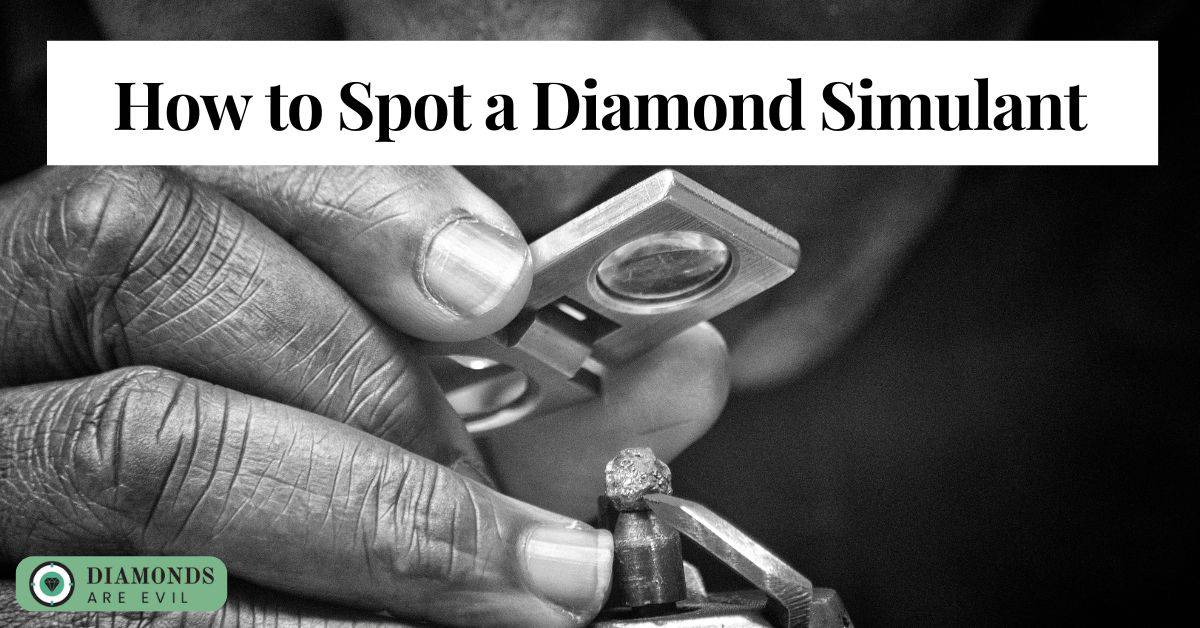
Look at the diamond under magnification: A real diamond will have inclusions (tiny natural imperfections) that are visible under magnification. Diamond simulants will often be flawless, which is a sign that it is not real diamond.
Check the weight: Diamonds are much denser than most other materials, so they will be heavier than a simulant of the same size.
Check the refractive index: Real diamonds have a unique refractive index, which means they will have a certain level of sparkle and fire. Diamond simulants will often have a different refractive index, which can make them look duller or less sparkly.
Check the thermal conductivity: Diamonds are excellent conductors of heat, so if you touch a diamond with a thermal conductivity pen, it will conduct heat much faster than a stimulant.
Have it appraised by a professional: The most accurate way to determine if a diamond is real or a simulant is to have it appraised by a professional gemologist. They will have the knowledge, equipment, and experience to tell the difference between a real diamond and a stimulant.
It is important to be aware that not all simulants are created equal, and some can be very difficult to spot without the help of a professional. It is also important to remember that just because a diamond is real, it does not necessarily mean it is of high quality or value.
Ethical and Environmental Implications of Diamond Simulants and Alternatives
The diamond industry has been associated with a variety of ethical and environmental issues, including human rights violations, forced labor, and environmental degradation. Diamond simulants and alternatives can be a way to avoid these issues.
Human rights: Diamond simulants and alternatives are not associated with the human rights violations that can be found in the diamond mining industry. They are often produced in controlled and monitored environments, which reduces the risk of exploitation and abuse.
Environmental degradation: The diamond mining industry can have a significant impact on the environment. The mining process can lead to deforestation, soil erosion, and water pollution. Diamond simulants and alternatives, on the other hand, are often produced in a more sustainable way and have a lower environmental impact.
Conflict diamonds: Diamonds mined in war zones have been used to fund armed conflicts, resulting in human rights abuses and violence. Diamond simulants and alternatives can be a way to avoid purchasing these conflicting diamonds.
Carbon footprint: The diamond industry has a significant carbon footprint, from the mining to the processing and transportation of the diamond. Diamond simulants and alternatives often have a lower carbon footprint and can be produced in a more sustainable way.
However, it’s important to note that not all diamond simulants and alternatives are created equal. It’s crucial to research the sourcing and production methods to ensure that the materials used are ethically and sustainably sourced.
In conclusion
diamond simulants and alternatives can be a great way to get the look of diamonds at a fraction of the cost. They are often less expensive than natural diamonds and come in a variety of colors and styles. While they may not have the same level of brilliance or fire as natural diamonds, they can still make beautiful pieces of jewelry.
However, it’s important to research the sourcing and production methods of any diamond simulants or alternatives to ensure that they are ethically and sustainably sourced. Ultimately, choosing between a natural diamond and a simulant or alternative will depend on your budget, personal preference, and ethical considerations.