
Why Are Millennials Not Buying Diamonds?
The diamond industry has long been a symbol of love and commitment. However, in recent years, there has been a declining interest among millennials when it comes to buying diamonds.
Millennials are not buying diamonds due to economic factors, changing attitudes toward luxury goods, and different values and preferences. Moreover, millennials place a greater emphasis on experiences over material possessions and are more likely to consider ethical concerns related to diamond mining and production.
This article will explore the reasons why millennials are not buying diamonds, the impact of their diamond-purchasing habits, and potential solutions for the diamond industry. With a better understanding of why millennials are not buying diamonds, the industry can work to bring customers back and stay relevant in an ever-changing marketplace.
Reasons Why Millennials Are Not Buying Diamonds
For many years, diamonds have been a symbol of luxury and status. However, in recent years, the diamond industry has faced a decline in demand from millennials. Millennials, who are the largest living generation, have different values and preferences when it comes to luxury goods, and they have shown a tendency to not invest in diamonds. Here, we will explore the reasons why millennials are not buying diamonds.
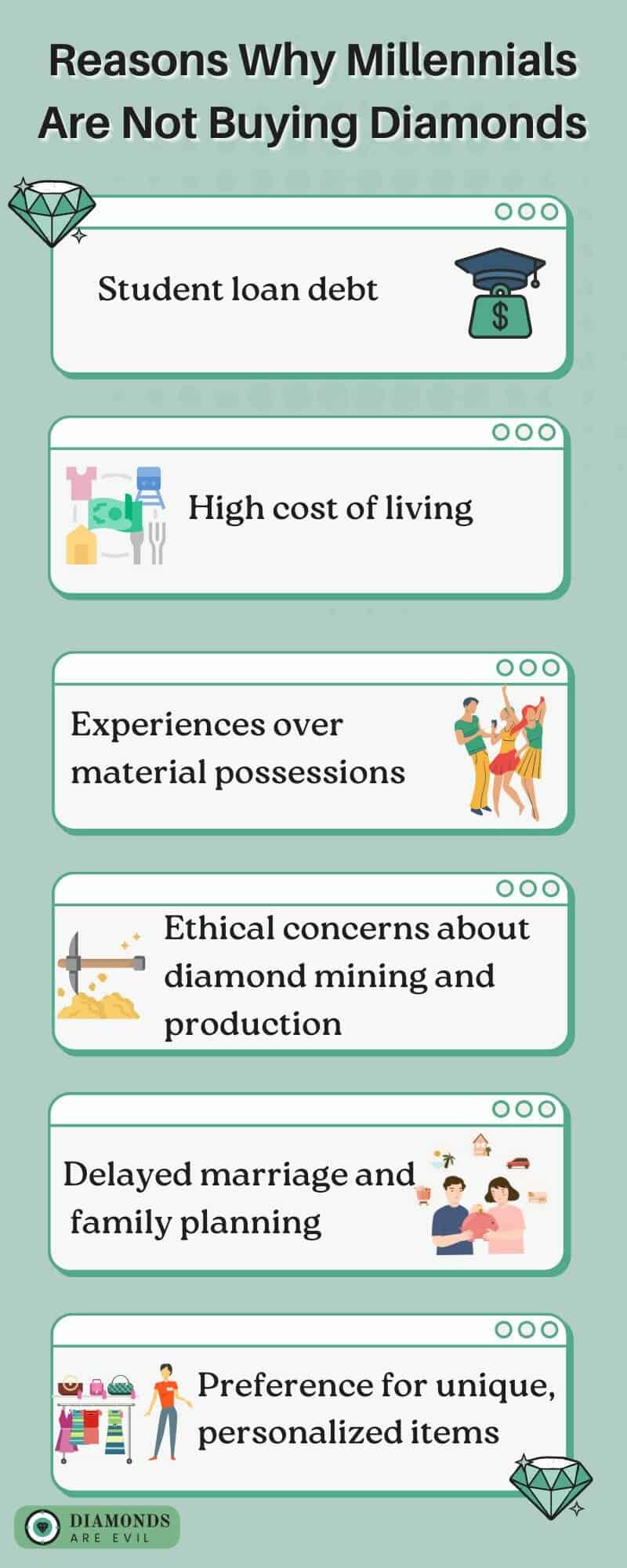
Student loan debt: Student loan debt is a significant economic challenge facing millennials. This debt burden makes it difficult for millennials to allocate funds toward purchasing expensive luxury items like diamonds.
High cost of living: The high cost of living is another economic factor that is limiting the spending power of millennials. The high cost of living also means that millennials are more likely to prioritize spending on experiences like travel and dining out over luxury goods like diamonds.
Experiences over material possessions: Millennials prioritize experiences over material possessions, and this trend is having a significant impact on the diamond industry. Rather than spending money on expensive luxury items like diamonds, millennials are investing in experiences like travel, dining out, and concerts.
This trend is reflected in the rise of “experience-based” proposals and engagements, where couples are choosing to spend money on unique and memorable experiences rather than expensive diamond rings.
Ethical concerns about diamond mining and production: Millennials are more likely to consider ethical concerns related to diamond mining and production. The diamond industry has faced scrutiny over the years due to concerns about the ethical and sustainable sourcing of diamonds.
Many millennials are choosing to avoid purchasing diamonds that may have been sourced in a way that harms the environment or communities where they are mined. They are also opting for alternative options, such as lab-grown diamonds, which are viewed as a more ethical and sustainable alternative.
Delayed marriage and family planning: Millennials are delaying marriage and family planning compared to previous generations, and this trend is impacting the diamond industry. Marriage and engagements have traditionally been significant occasions for diamond purchases, but millennials are choosing to delay or forego these milestones, leading to decreased demand for diamonds.
Preference for unique, personalized items: Millennials have a strong preference for unique and personalized items, and this trend is also impacting the diamond industry. Rather than purchasing traditional, mass-produced diamond jewelry, millennials are seeking out one-of-a-kind pieces that reflect their individual style and values. This has led to increased demand for custom and vintage jewelry, which can offer a more unique and personal touch.
Impact of Millennials’ Diamond Purchasing Habits
Millennials are having a significant impact on the diamond industry, as their purchasing habits differ from previous generations. The industry has seen a decline in diamond sales due to millennials choosing alternative options or delaying or foregoing diamond purchases altogether.
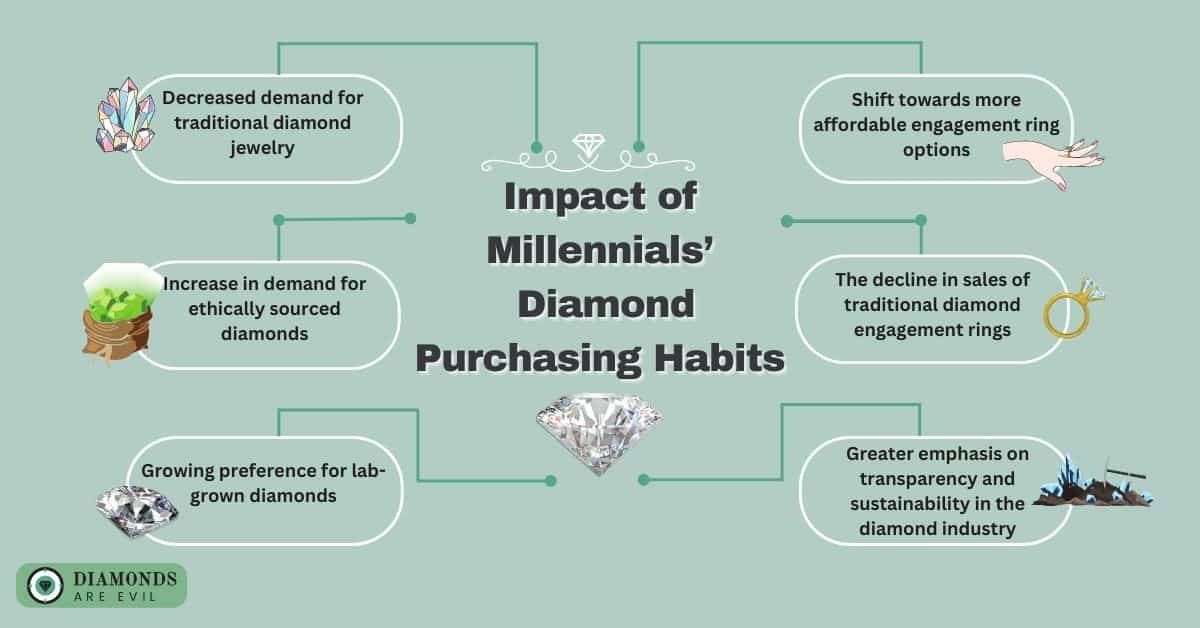
Here are some effects that millennials’ purchasing habits have had on the diamond industry:
- Decreased demand for traditional diamond jewelry
- Increase in demand for ethically sourced diamonds
- Growing preference for lab-grown diamonds
- Shift towards more affordable engagement ring options
- The decline in sales of traditional diamond engagement rings
- Greater emphasis on transparency and sustainability in the diamond industry
Potential Solutions for the Diamond Industry
As the purchasing habits of millennials continue to impact the diamond industry, it is important for the industry to find new ways to appeal to this generation of consumers. Here are some potential solutions for the diamond industry:
Ethical and sustainable production: The diamond industry can address concerns about unethical or unsustainable diamond production by implementing ethical and sustainable production methods. This includes ensuring fair labor practices, reducing the environmental impact of diamond mining and production, and ensuring that diamonds are ethically sourced.
Emphasizing the symbolic meaning of diamonds: The diamond industry can promote the symbolic meaning of diamonds, such as love and commitment, to appeal to millennial consumers. This includes marketing diamonds as timeless investments and highlighting the sentimental value of diamond jewelry.
Offering more affordable options: The diamond industry can provide more affordable options, such as smaller diamonds, alternative gemstones, or lab-grown diamonds, to appeal to millennial consumers who prioritize experiences over material possessions. This can also help make diamond jewelry more accessible to a wider range of consumers.
Investing in innovative technology: The diamond industry can invest in innovative technology, such as blockchain, to ensure transparency in the diamond supply chain. This can improve consumer trust and help address concerns about unethical or unsustainable diamond production.
Collaborating with other industries: The diamond industry can collaborate with other industries, such as fashion or technology, to create new products and experiences that appeal to millennial consumers. This can help the diamond industry stay relevant and adapt to changing consumer preferences.
Developing unique and personalized options: The diamond industry can develop more unique and personalized options, such as custom-designed jewelry or jewelry with sentimental value, to appeal to millennial consumers who prioritize individuality and authenticity
In conclusion
Millennials are not buying diamonds due to economic factors, changing attitudes toward luxury goods, and different values and preferences. The diamond industry must adapt to these changes by taking steps such as emphasizing the symbolic meaning of diamonds, offering more affordable options, investing in innovative technology, collaborating with other industries, and developing unique and personalized options.