
Why Eco-Friendly Consciousness Is Important When Selecting Diamond Jewelry
Diamonds are often seen as a symbol of luxury and extravagance, but they also come with an environmental cost. From the mining process to refining and cutting stones, diamond jewelry production is rife with potential hazards to our environment.
Fortunately, there are ways that consumers can be aware of eco-friendly practices when selecting their diamond pieces. In this blog, we will explore why eco-consciousness is an important factor to consider when choosing diamond jewelry.
We will look into the environmental impact of traditional diamond production and discuss how sustainable practices can help reduce that impact. Additionally, we’ll provide tips for selecting diamonds that have been sustainably sourced or otherwise produced in a way that minimizes environmental damage. By considering the environmental toll of diamond jewelry, you can make more informed decisions when selecting your next diamond piece. Let’s get started!
Diamond Jewelry
Diamond jewelry is a popular choice for many people looking to make a special purchase or celebrate an important milestone. Diamonds are often associated with luxury, elegance, and timelessness, making them a popular choice for engagement rings, wedding bands, and other special occasion jewelry.
Diamonds are formed deep within the Earth’s crust and are brought to the surface through a process known as mining. Diamond mining can have a significant impact on the environment, as it often involves the removal of large amounts of earth and rock, and can lead to the destruction of habitats and ecosystems. Additionally, diamond mining can lead to the displacement of local communities and can contribute to human rights abuses.
Despite these negative impacts, many people still choose to purchase diamond jewelry. To make more ethical choices when buying diamond jewelry, it is important to consider the origin of the diamond, as well as the mining practices used to extract it. One way to ensure that a diamond has been responsibly mined is to look for a certification from an organization such as the Kimberley Process Certification Scheme (KPCS), which aims to prevent the trade of “blood diamonds” (diamonds mined in war zones and sold to finance armed conflict against governments) or other certifying bodies like Responsible Jewellery Council (RJC) or Fairmined.
Another option is to consider alternative materials such as lab-grown diamonds or other gemstones like moissanite. These options offer the same beauty and durability as natural diamonds, but with a lower environmental impact and without the ethical concerns associated with traditional diamond mining.
Ultimately, the choice of whether to purchase diamond jewelry is a personal one. However, by being mindful of the environmental and ethical implications of diamond mining and by making informed choices about where and how diamonds are sourced, consumers can ensure that their purchases align with their values.
Environmental Cost of Traditional Production Process
The traditional production process, which typically involves the use of fossil fuels, large amounts of water, and non-renewable resources, can have a significant impact on the environment. These environmental costs of traditional production can include:
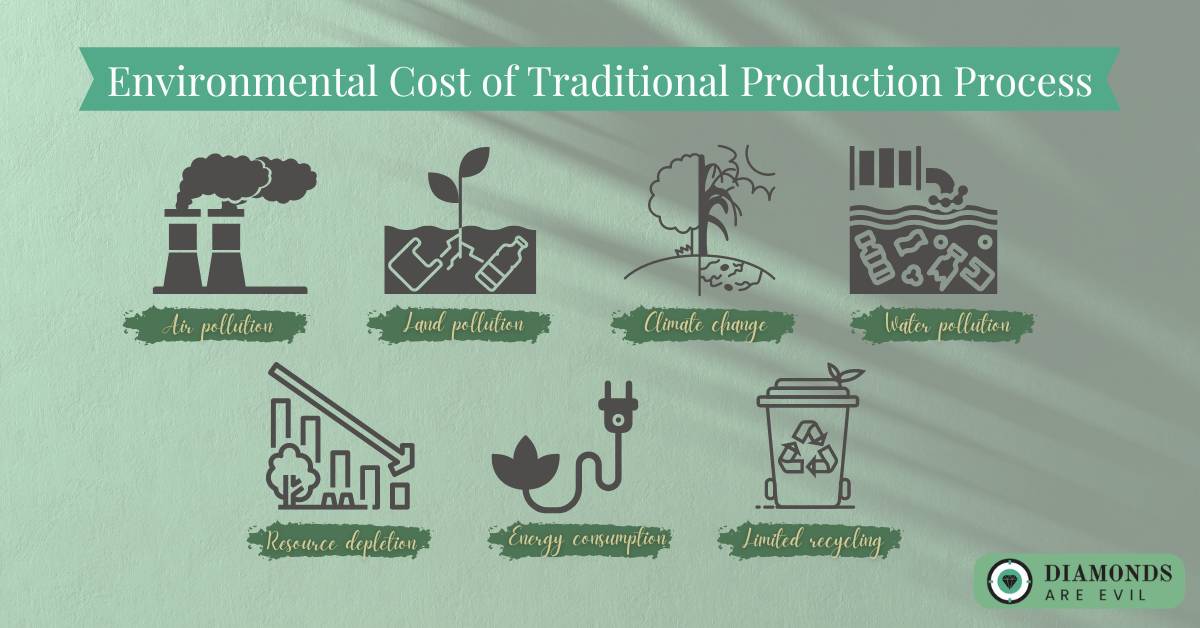
Air pollution
Traditional manufacturing processes often rely on burning fossil fuels, which release pollutants into the air. This can lead to poor air quality and negative health impacts for people living near the manufacturing facility.
Water pollution
Many traditional manufacturing processes also rely on large amounts of water, which can be contaminated by chemicals and other pollutants used in the production process. This can lead to water pollution and negative impacts on aquatic ecosystems.
Land pollution
Traditional manufacturing often generates large amounts of waste, which can include everything from toxic chemicals to solid waste. This can lead to land pollution and negative impacts on wildlife and ecosystems.
Climate change
Traditional manufacturing processes are also major contributors to greenhouse gas emissions, which contribute to climate change. This can lead to changes in weather patterns, rising sea levels, and other negative impacts.
Resource depletion
Traditional manufacturing often relies on non-renewable resources, such as fossil fuels and minerals. The extraction and use of these resources can lead to their depletion, which can have negative impacts on economies and ecosystems.
Energy consumption
Traditional manufacturing processes are energy-intensive, which can lead to high energy consumption and costs. This can also contribute to greenhouse gas emissions and climate change.
Limited recycling
Traditional manufacturing processes have limited recycling options, which can lead to waste and pollution.
It is important to consider these environmental costs when evaluating manufacturing processes and looking for ways to reduce the negative impacts of production on the environment. Additionally, implementing sustainable manufacturing practices, such as using renewable energy sources, reducing water consumption, and increasing recycling can help to minimize the environmental costs of traditional production.

Sustainable Practices for Reducing Impact
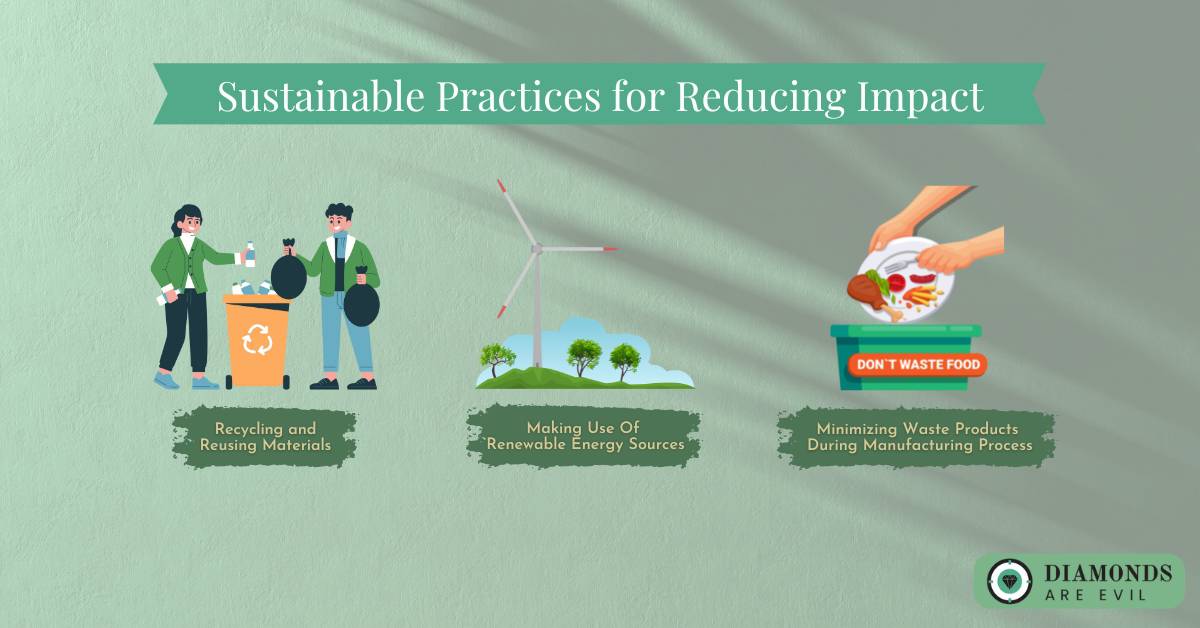
Sustainability is becoming an increasingly important issue in today’s world as we begin to understand the significant impact human activities have on the environment. One of the most effective ways to reduce our impact is by implementing sustainable practices in our daily lives and the production of goods. This includes recycling and reusing materials, making use of renewable energy sources, and minimizing waste products during manufacturing processes.
Recycling and Reusing Materials
Recycling and reusing materials is a simple yet effective way to reduce our impact on the environment. This can be done by separating recyclable materials such as paper, plastic, and metal, and taking them to a recycling facility. Additionally, reusing materials such as plastic bags, containers, and bottles can also help reduce the amount of waste we produce. By recycling and reusing materials, we can conserve natural resources, reduce pollution, and save energy.
Making Use Of Renewable Energy Sources
Another important sustainable practice is making use of renewable energy sources. Renewable energy sources, such as solar, wind, and hydroelectric power, are sustainable because they do not deplete natural resources and do not produce harmful emissions. Using renewable energy sources can help reduce our dependence on fossil fuels, decrease air pollution and reduce the number of greenhouse gases in the atmosphere.
Minimizing Waste Products During Manufacturing Process
Minimizing waste products during the manufacturing process is another important sustainable practice. This can be done by using efficient production methods and designing products that are easy to recycle.
By minimizing waste during the manufacturing process, we can reduce the amount of pollution and conserve natural resources. Additionally, this can also help save money for companies by reducing the number of raw materials and energy needed to produce goods.
Many sustainable practices can be implemented to reduce our impact on the environment. Recycling and reusing materials, making use of renewable energy sources, and minimizing waste products during the manufacturing process are all effective ways to reduce our impact. By implementing these sustainable practices, we can conserve natural resources, reduce pollution, and save energy.

Tips for Selecting Sustainable Diamond Jewelry
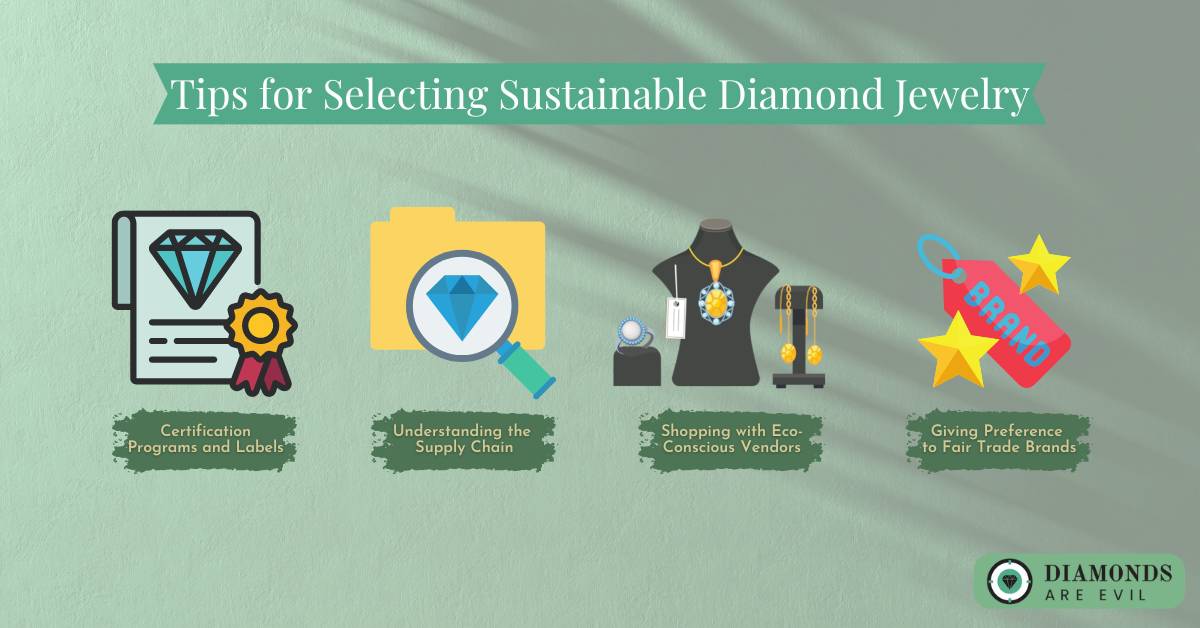
The diamond industry has long been criticized for its environmental and ethical impacts. From the mining process to manufacturing and distribution, the diamond industry can have significant negative effects on the environment and the people involved in the supply chain. However, there are ways to make more sustainable choices when it comes to buying diamond jewelry. Here are some tips to help you select sustainable diamond jewelry:
Certification Programs and Labels
Certification programs and labels can provide valuable information about the sustainability of a diamond. Look for certifications such as the Kimberley Process Certification Scheme (KPCS), which ensures that the diamonds have been mined in a way that does not fund conflict and human rights abuses, and the Responsible Jewellery Council (RJC), which verifies that a company’s policies and practices meet international standards for environmental and social responsibility.
Understanding the Supply Chain
Understanding the supply chain can also help you make more sustainable choices. Ask questions about where the diamonds are sourced, how they are mined and cut, and who is involved in the process. Look for companies that are transparent about their supply chain and have a commitment to sustainability.
Shopping with Eco-Conscious Vendors
Another way to make a more sustainable choice is by shopping with eco-conscious vendors. Look for companies that use sustainable materials and manufacturing processes, and commit to reducing their environmental impact.
Giving Preference to Fair Trade Brands
Fairtrade diamond brands ensure that diamonds are mined and sourced ethically and sustainably, with a focus on the welfare of the workers and the local communities. They also ensure that the diamond prices are fair to the artisans and miners.
There are many ways to make more sustainable choices when it comes to buying diamond jewelry. By looking for certifications, understanding the supply chain, shopping with eco-conscious vendors, and giving preference to fair trade brands, you can ensure that your diamond jewelry is environmentally friendly and ethically sourced.
In conclusion
Diamonds are a beautiful and timeless symbol of love, but they can also come with an environmental cost. By being mindful of the environmental and ethical implications of diamond mining, we can make more informed decisions when selecting our diamond jewelry.
Through sustainable practices such as recycling and minimizing waste products during the manufacturing process, we can reduce our impact and make more ethical choices when buying diamond jewelry.
By considering the origin of a diamond and selecting certified eco-friendly products, we can ensure that our purchases align with our values and help to minimize the environmental impacts of traditional diamond production.
Learn about the eco-consciousness when choosing diamond jewelry, its sustainable practices, ethical sourcing, and environmental impact.