
Are Diamonds Pawnable?
Diamonds are one of the most durable and beautiful stones in existence, symbolizing both love and wealth. But when asking if diamonds are pawnable, the answer depends on several factors.
Yes, diamonds can be pawned. In fact, pawnshops often accept diamonds as collateral for loans. However, the amount of money you can receive for pawning a diamond will depend on a variety of factors such as the size, quality, and market demand for diamonds at the time of appraisal.
This article will explore what exactly diamonds are, how their pawn value is determined, tips for getting the most out of a pawned diamond, and potential alternatives to pawning a diamond.
What Are Diamonds?
Diamonds are naturally occurring minerals composed of carbon atoms arranged in a crystalline lattice structure. They are formed deep beneath the Earth’s surface under extreme heat and pressure over millions of years. Diamonds are known for their exceptional hardness and brilliance, making them highly sought after for use in jewelry and cutting tools.
They are typically colorless but can also come in a range of colors due to the presence of impurities. Diamonds are mined from various locations around the world, including Russia, Australia, and Africa. Due to their rarity and beauty, diamonds have become a symbol of love, commitment, and luxury.
Are Diamonds Pawnable?
It is possible to pawn diamonds, but it is not always an ideal solution. Pawn shops typically only offer around 25-30% of the value of your diamond as a loan. This means that you will be losing a significant amount of money if you do decide to pawn your diamond
Furthermore, pawning can also place your precious jewelry in harm’s way because it can be held for extended periods of time with no guarantee of security or return. Thus, it is important to consider all the pros and cons before deciding whether or not to pawn a diamond.

Requirements for Pawning Diamonds
To pawn diamonds, you will typically need to provide proof of ownership and identification. The following are some of the requirements for pawning diamonds:
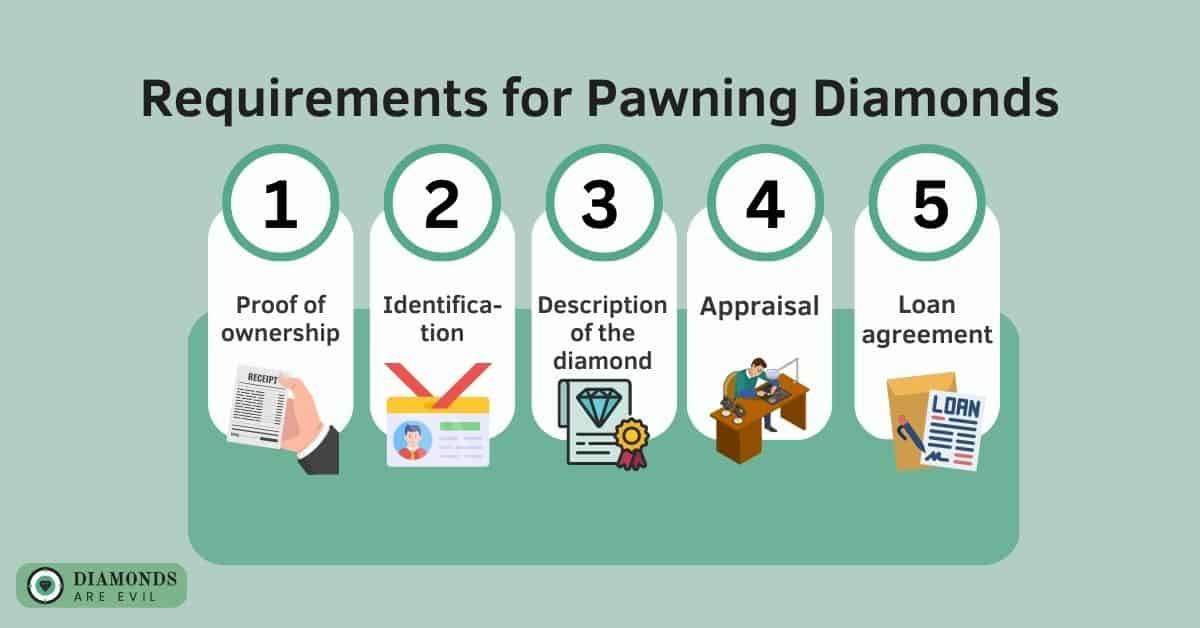
Proof of ownership: You will need to provide proof that you own the diamond you want to pawn. This may include a receipt or appraisal certificate.
Identification: You will need to provide a valid government-issued ID, such as a driver’s license or passport.
Description of the diamond: You will need to provide a description of the diamond, including its carat weight, clarity, cut, and color. If the diamond is certified by a reputable organization, such as the Gemological Institute of America (GIA), you should bring the certificate with you.
Appraisal: The pawnshop will appraise the diamond to determine its pawn value. The appraisal will consider factors such as the diamond’s size, quality, and market demand.
Loan agreement: If you decide to pawn the diamond, you will need to sign a loan agreement that outlines the terms and conditions of the loan, including the loan amount, interest rate, and repayment period.
Pros and Cons of Pawning Diamonds
Pawning diamonds can be a quick way to get cash, but it’s important to consider the pros and cons before making a decision. The following are some of the advantages and disadvantages of pawning diamonds:
Here is a table summarizing the pros and cons of pawning diamonds:
| Pros | Cons |
|---|---|
| Quick access to cash | Lower loan amounts than the diamond is worth |
| No credit check required | High interest rates |
| No impact on credit score | Risk of losing your diamond if you can’t repay the loan |
| Flexible repayment terms | Limited pawn value depending on diamond size, quality, and market demand |
Ultimately, whether pawning diamonds is the right choice for you depends on your individual circumstances. It’s important to weigh the pros and cons carefully and consider alternatives before making a decision.
Factors That Affect the Pawn Value of Diamonds
Several factors can affect the pawn value of diamonds. The following are some of the most significant factors:
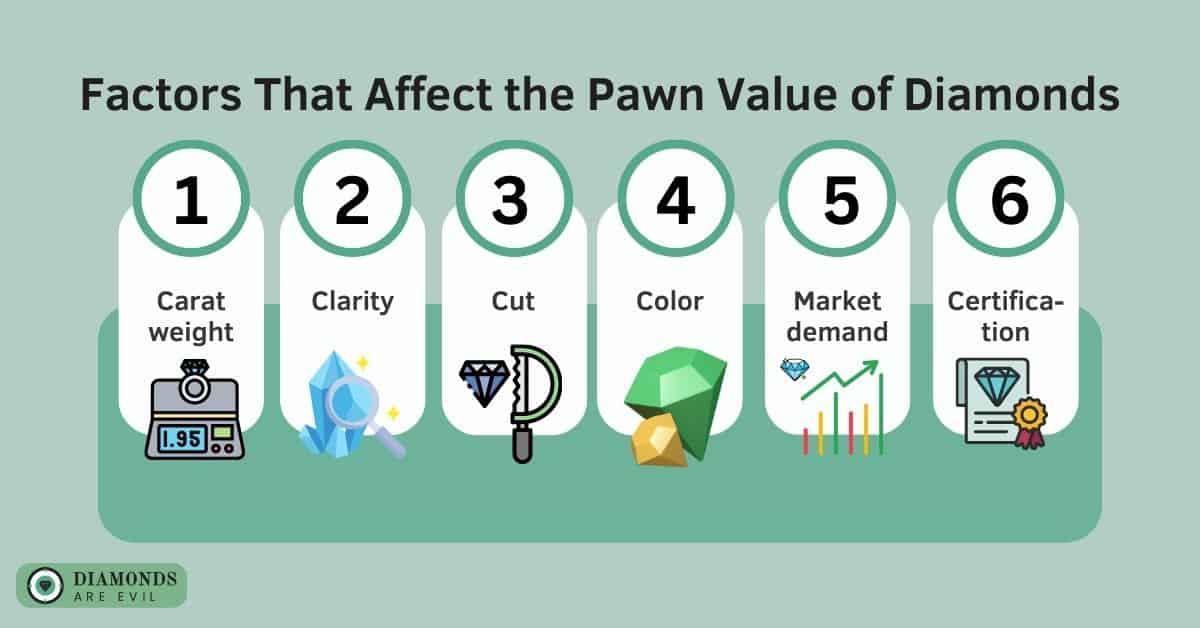
Carat weight: The carat weight of a diamond refers to its size and is one of the most important factors that affect its pawn value. The larger the diamond, the higher the pawn value.
Clarity: The clarity of a diamond refers to the number and size of inclusions or blemishes in the stone. The fewer imperfections, the higher the pawn value.
Cut: The cut of a diamond refers to its proportions and symmetry, which affects its brilliance and overall appearance. A well-cut diamond will have a higher pawn value than a poorly cut one.
Color: The color of a diamond refers to the presence or absence of color in the stone. Colorless diamonds are the most valuable, followed by near-colorless diamonds.
Market demand: The current market demand for diamonds can affect their pawn value. If there is a high demand for diamonds at the time of appraisal, the pawn value may be higher.
Certification: If a diamond is certified by a reputable organization, such as the Gemological Institute of America (GIA), it can increase its pawn value as it provides proof of the diamond’s quality.
Tips on Selling or Pawning a Diamond
Are you looking to sell or pawn your diamond? Here are some tips to make sure you get the best deal possible:
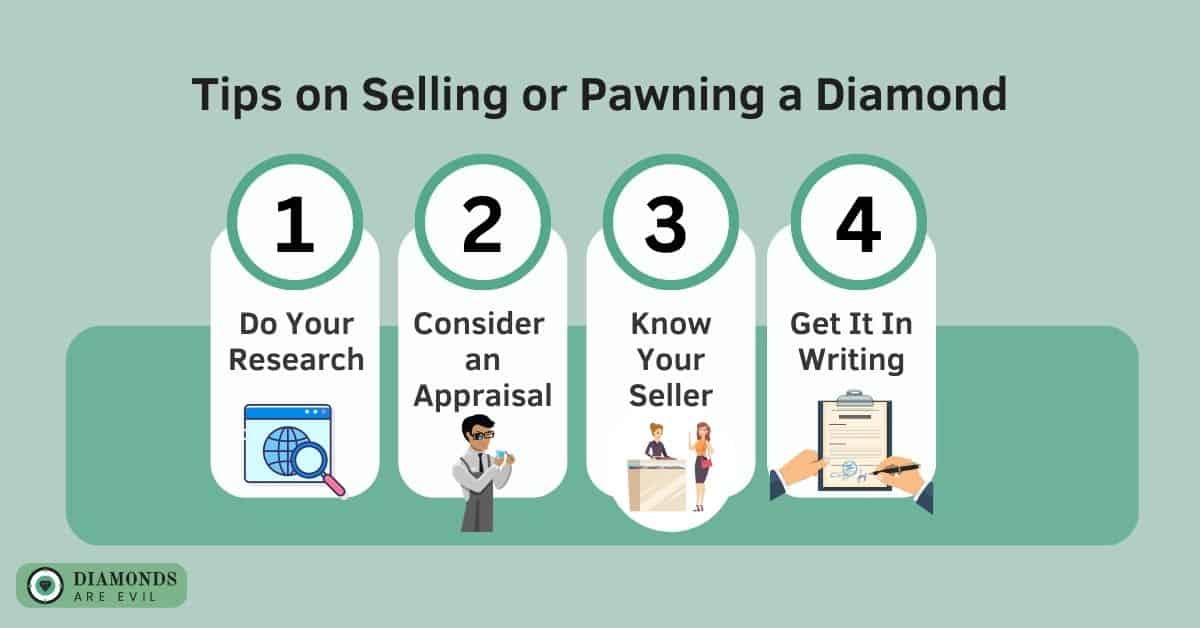
Do Your Research: Before attempting to sell or pawn your diamond, it’s important to research the current market prices for diamonds. Knowing the estimated value of your diamond is crucial in ensuring that you receive fair compensation for what it is worth.
Consider an Appraisal: Getting a professional appraisal of your diamond is another great way to determine the corresponding market price of its value. An appraiser can also identify any imperfections or features that might increase or decrease its worth.
Know Your Seller/Pawnbroker: When selling or pawning a diamond, it’s important to know who you are dealing with and ensure they have a good reputation within the industry. Ask around or search online reviews before doing business with them.
Get It In Writing: Always secure a written agreement regarding the sale or pawning of your diamond before proceeding with any transaction. This will protect both you and the seller/pawnbroker from potential scams or disagreements about payment later on down the line.
Alternatives to Pawning a Diamond
Are you considering pawning your diamond? Although it is a common practice, there are other options to consider before taking that route. Here are some alternative ways to sell or use your diamond:
Sell Your Diamond Online: Websites like eBay and Craigslist offer the chance to directly sell your diamond for cash. Similarly, a local classifieds website could be an opportunity to connect with buyers in your area. When selling online, remember to set up a secure payment process and be aware of any fees associated with the platform.
Exchange Your Diamond for Jewelry: Consider exchanging your diamond for new jewelry instead of selling it outright. You can take it to a jeweler and receive credit toward a new piece or trade the stone in exchange for something of equal value.
Donate Your Diamond: Charitable organizations such as The Diamond Empowerment Fund use donated diamonds and turn them into funds that help students in developing countries access education. Alternatively, if you’re crafty, you could turn your diamond into custom accessories like earrings or cufflinks.
Pawn Shop Loan: If none of the above options have worked out, receiving a loan from your local pawn shop may be an option worth considering—although keep in mind that you will likely need to pay interest on top of the loan amount.
In conclusion
Diamonds can be pawnable depending on the size, quality, and market demand for them at the time of appraisal. However, it is important to consider all of the pros and cons before deciding whether or not to pawn a diamond. Keep in mind that you may only receive 25-30% of the value of your diamond as a loan and the diamond can be held for an extended period of time with no guarantee of return. Additionally, there are other alternatives to pawning a diamond such as selling it online or exchanging it for jewelry that you may want to consider. Ultimately, the best option for you will depend on your individual circumstances.