
Biggest Mistakes You Can Make When Buying Diamonds as an Investment – And How to Avoid Them
Investing in diamonds is not a decision to be taken lightly. With the diamond market growing steadily, more people are turning to this precious stone as an investment option. Many buyers make costly mistakes that could have been avoided if they did their research beforehand, understand the different types of diamonds available, and understand the market before committing to a purchase.
In this article, we will discuss the biggest mistakes you can make when buying diamonds as an investment and how to avoid them. We’ll also provide tips on how to maximize your returns when investing in diamonds. By following these guidelines, you can ensure that your diamond investment is successful.
Overview of Buying Diamond as an Investment
Diamonds have been considered a symbol of wealth and luxury for centuries and have been used as a form of investment for decades. The value of a diamond is based on the “4 Cs” – cut, clarity, color, and carat weight. A well-cut, high-clarity, and rare-color diamond with a high carat weight can be worth a significant amount of money and may appreciate in value over time.
However, buying a diamond as an investment can be a complex and confusing process. It’s important to consider the source of the diamond, its authenticity and certification, and the reputation of the seller.
Additionally, the market for diamond investments is not as well regulated as other financial markets, and there have been instances of fraud and misrepresentation. It’s crucial to work with a trusted and reputable dealer to ensure that you’re getting a quality investment.
Common Mistakes in Buying Investment Diamonds
Diamonds come in various shapes, sizes, colors, and quality grades—all of which can affect their value as investments. Unfortunately, many people make mistakes when buying diamonds for investment purposes because they don’t do the necessary research and due diligence.
Here are some of the most common mistakes to avoid when buying diamonds for investment purposes:
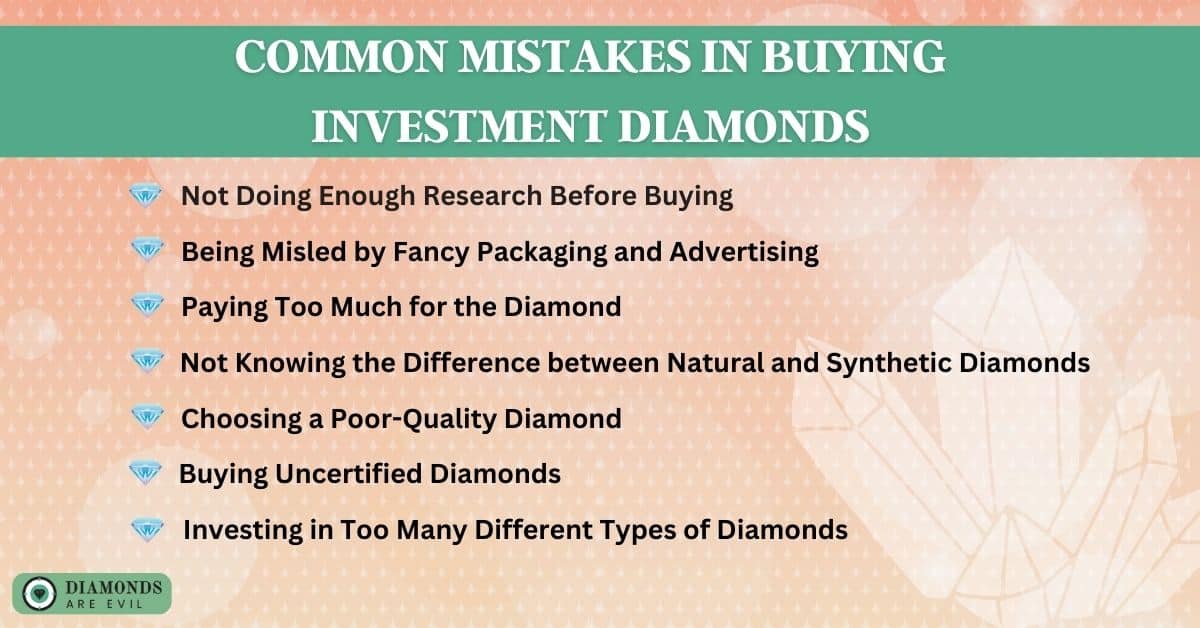
Not Doing Enough Research Before Buying – It’s crucial to educate yourself about the diamond market, the 4 Cs of diamonds (cut, clarity, color, and carat weight), and the different types of diamonds before making a purchase.
Being Misled by Fancy Packaging and Advertising – Diamonds can be packaged and advertised in a way that makes them seem more valuable than they actually are..
Paying Too Much for the Diamond – Make sure to compare prices from multiple sources and negotiate to get the best price. Don’t overpay for a diamond, as this will lower your potential return on investment.
Not Knowing the Difference between Natural and Synthetic Diamonds – Synthetic diamonds are man-made and typically have a lower value than natural diamonds. Be sure to verify the authenticity of any diamond you purchase.
Choosing a Poor-Quality Diamond – A low-quality diamond may not hold its value, so it’s important to choose a diamond with a good cut, clarity, color, and carat weight.
Buying Uncertified Diamonds – Diamonds should always come with a certificate from a reputable organization such as the Gemological Institute of America (GIA) or the International Gemological Institute (IGI)..
Investing in Too Many Different Types of Diamonds – Diversifying your investments is generally a good strategy, but investing in too many different types of diamonds can increase your risk and reduce the potential return on investment. Focus on investing in high-quality diamonds that have a proven track record of holding
their value.
How to Avoid Making Mistakes when Buying Investment Diamonds
When it comes to investing in diamonds, doing your research is essential. After all, a diamond’s value largely depends on its quality and rarity. Avoiding common mistakes when buying investment diamonds will help ensure that you get the most out of your purchase and maximize your return on investment.
Here are some tips for avoiding mistakes when purchasing an investment diamond:
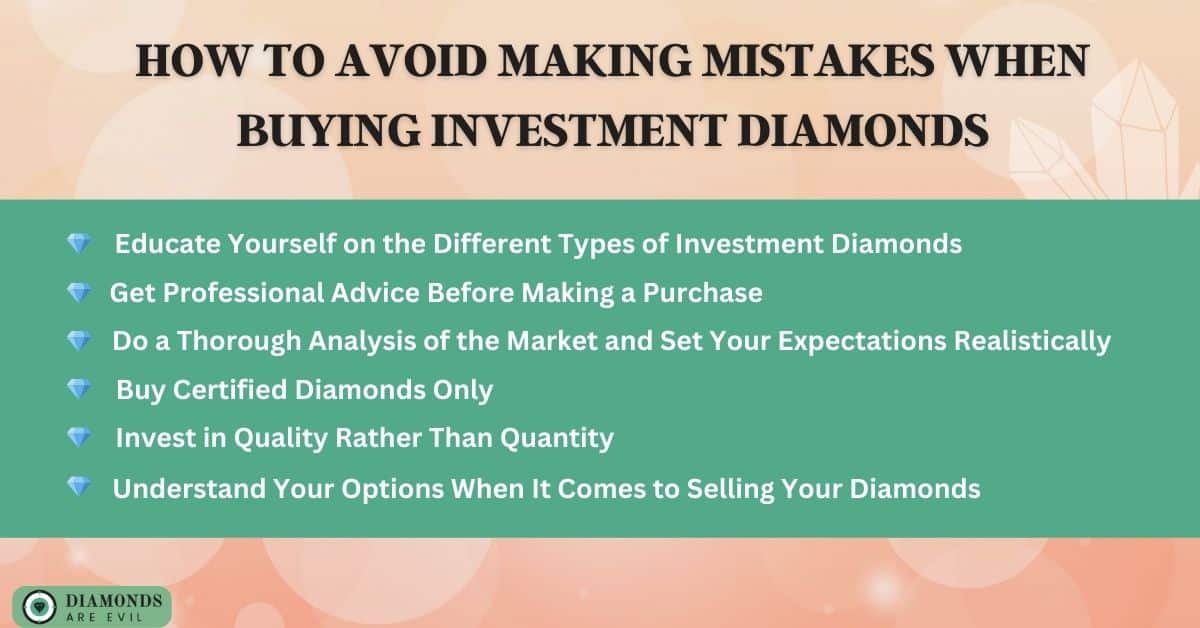
Educate Yourself on the Different Types of Investment Diamonds – Learn about the 4 Cs of diamonds (cut, clarity, color, and carat weight), the different types of diamonds, and the diamond market to make informed decisions.
Get Professional Advice Before Making a Purchase – Consult with a professional diamond appraiser or a trusted investment advisor to get expert advice on the best options for your investment.
Do a Thorough Analysis of the Market and Set Your Expectations Realistically – Research the diamond market and understand its historical trends, as well as the current supply and demand, to set realistic expectations for your investment.
Buy Certified Diamonds Only – Choose diamonds that come with a certificate from a reputable organization, such as the Gemological Institute of America (GIA) or the International Gemological Institute (IGI), to ensure their authenticity and quality.
Invest in Quality Rather Than Quantity – Rather than investing in a large number of low-quality diamonds, focus on purchasing high-quality diamonds that have a good cut, clarity, color, and carat weight.
Understand Your Options When It Comes to Selling Your Diamonds – Research the resale value of diamonds and understand the different options for selling, such as through a private buyer, a jewelry store, or an auction house.
In conclusion
Buying diamonds as an investment can be a great way to diversify your portfolio and benefit from their potential appreciation in value over time.
Avoiding the common mistakes discussed in this article will help ensure that your diamond investment is successful. By educating yourself on the 4 Cs of diamonds, understanding market trends and supply/demand, and only buying certified diamonds from trusted sources, you can maximize your returns when investing in diamonds.