
How Much Are Diamonds Worth?
The value of a diamond can vary widely depending on a variety of factors. The four primary factors that determine diamond value are the four C’s: carat weight, cut, clarity, color, shape and proportion, certification, and market demand and availability. To give a more specific breakdown, the wholesale price of diamonds can range from around $1,500 to $30,000 per carat, while the retail price can range from around $4,000 to $80,000 per carat.
In this blog post, we will explore the different factors that influence the pricing structure of diamonds, the pricing structure for diamonds, and how to get your diamond appraised so you can determine its true worth.
Factors that Determine Diamond Value
Diamonds are highly sought-after for their aesthetic beauty, but what really determines their value? There are several factors to consider when evaluating a diamond’s worth, such as the four Cs – cut, clarity, color, and carat weight. Additionally, other important aspects come into play -shape and proportion, certification, market demand, and availability. With so many elements to consider, buying diamonds can be complicated—but understanding these key factors can help buyers make more informed decisions.
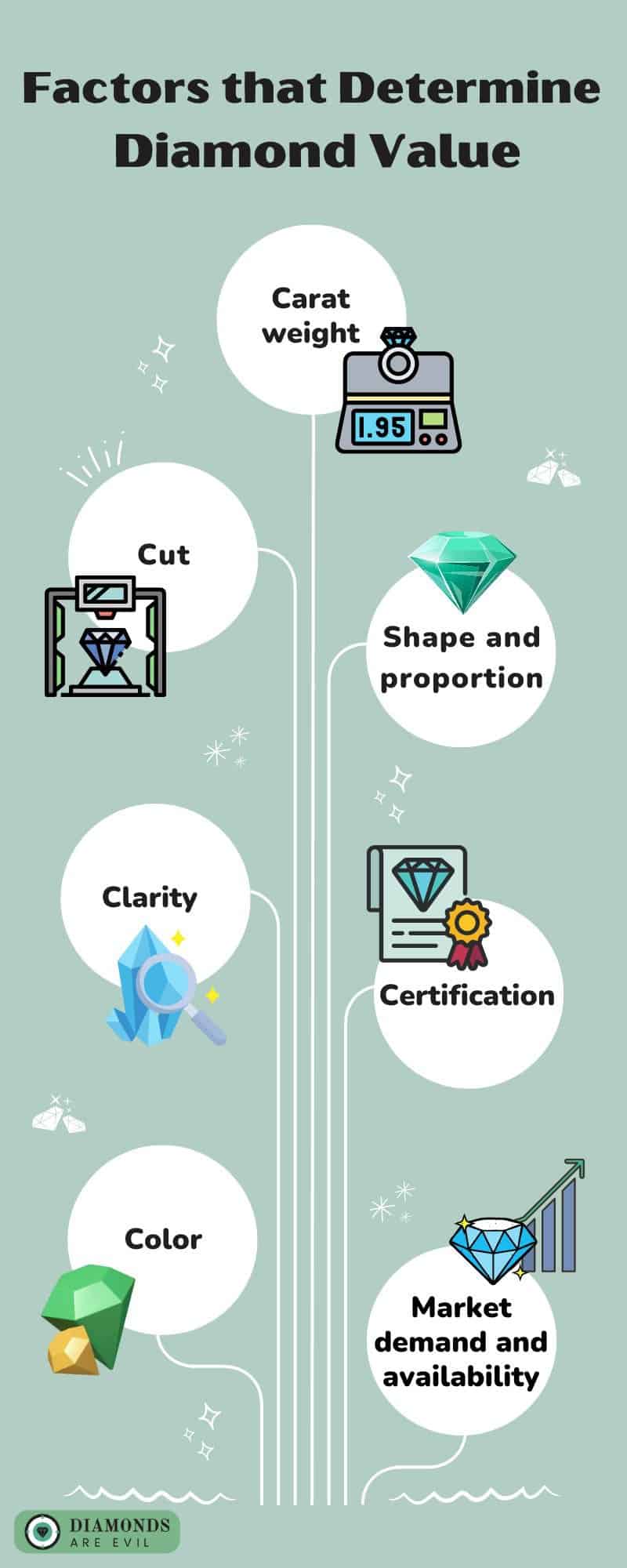
Carat weight– refers to the weight of the diamond and is a major factor in determining its value. One carat is equal to 0.2 grams, and the weight of a diamond can range from fractions of a carat to several carat. Generally, the higher the carat weight, the more valuable the diamond.
Cut– refers to its shape and proportions, as well as the quality of the cut. A well-cut diamond will have better sparkle and brilliance, making it more valuable. There are several different diamond cuts, including round, princess, emerald, and cushion cuts, among others.
Clarity– refers to the level of imperfections or blemishes in the diamond, with fewer imperfections resulting in a more valuable diamond. Imperfections can include blemishes on the surface of the diamond or inclusions within the diamond itself. The clarity of a diamond is graded on a scale from FL (flawless) to I3 (included).
Color-also an important factor in determining a diamond’s value. Colorless or near-colorless diamonds are the most valuable, while diamonds with more color, such as yellow or brown, are less valuable. The color of a diamond is graded on a scale from D (colorless) to Z (yellow or brown).
Shape and proportion– Different diamond shapes have different characteristics, and some shapes are more popular or desirable than others. Additionally, the proportions of the diamond (such as the depth and table size) can impact its brilliance and fire, and thus its value.
Certification– A diamond’s certification provides documentation of its authenticity, as well as its 4 C’s grading information. A certification from a reputable organization such as the Gemological Institute of America (GIA) can add value to a diamond and provide peace of mind for buyers.
Market demand and availability– Diamonds that are in high demand or are considered rare can command higher prices. Conversely, diamonds that are readily available may be less valuable. Additionally, market trends, such as changes in supply and demand or economic factors, can also affect diamond pricing.
Pricing Structure for Diamonds
When it comes to the pricing structure for diamonds, there are several factors at play. The pricing structure for diamonds includes wholesale pricing and retail pricing.
Wholesale pricing refers to the price that diamond manufacturers or dealers pay for diamonds. This price is typically lower than the retail price, as the diamond must go through several stages of production and distribution before it reaches the consumer. Retail pricing, on the other hand, is the price that consumers pay for diamonds in a retail setting, such as a jewelry store.
Here’s a table showing the difference between wholesale and retail pricing of diamonds:
| Carat Weight | Wholesale Price per Carat | Retail Price per Carat |
|---|---|---|
| 0.50 | $1,500 – $5,000 | $4,000 – $10,000 |
| 1.00 | $4,000 – $30,000 | $8,000 – $50,000 |
| 2.00 | $10,000 – $60,000 | $20,000 – $120,000 |
| 3.00 | $20,000 – $100,000 | $40,000 – $200,000 |
| 4.00 | $30,000 – $150,000 | $60,000 – $300,000 |
| 5.00 | $50,000 – $250,000 | $100,000 – $500,000 |
Please note that these prices are just examples and can vary greatly based on the specific characteristics of the diamond, as well as market demand and availability. The retail price includes additional costs, such as marketing and overhead, that are not present in the wholesale price. Additionally, retail prices can also vary depending on the location and reputation of the jewelry store.
Importance of Understanding Diamond Pricing
It is important for both buyers and sellers to understand the pricing structure of diamonds in order to make informed decisions when buying or selling jewelry. Here are some reasons why it’s important to understand diamond pricing:
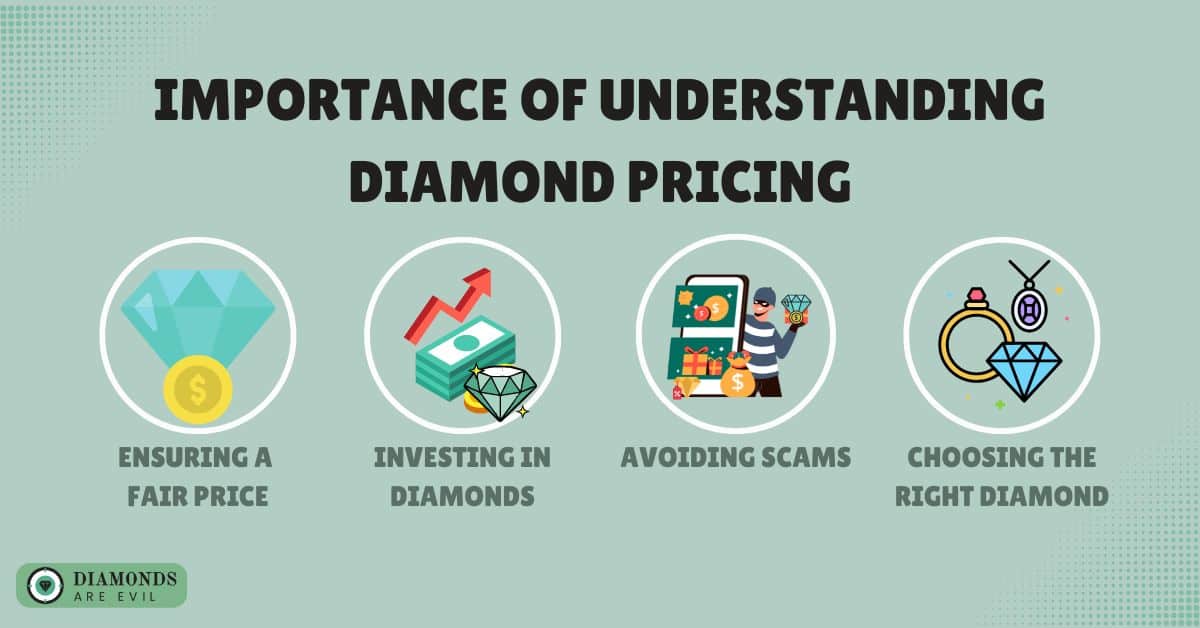
Ensuring a fair price: If you’re buying or selling a diamond, understanding its value and pricing is crucial to ensuring that you’re getting a fair price. Knowing the market value of a diamond can help you negotiate a better deal and avoid paying too much.
Investing in diamonds: Diamonds can be a good investment, but it’s important to understand their pricing and value before making a purchase. By understanding the factors that affect diamond pricing, you can make informed decisions about which diamonds to invest in and when to sell them.
Avoiding scams: Unfortunately, there are many scams and fraudulent practices in the diamond industry, and understanding diamond pricing can help you avoid these. For example, some unscrupulous sellers may try to pass off low-quality diamonds as higher-quality ones, or inflate the price of a diamond based on false information.
Choosing the right diamond: Whether you’re buying a diamond for an engagement ring, a piece of jewelry, or as an investment, understanding diamond pricing can help you choose the right diamond for your needs and budget. By knowing the factors that affect diamond pricing, you can prioritize which characteristics are most important to you and find a diamond that meets your criteria.
How to Get a Diamond Appraised
Getting a diamond appraised is an important step in understanding its value and ensuring that you receive a fair price if you decide to sell it. Here are some steps to take to get a diamond appraised:
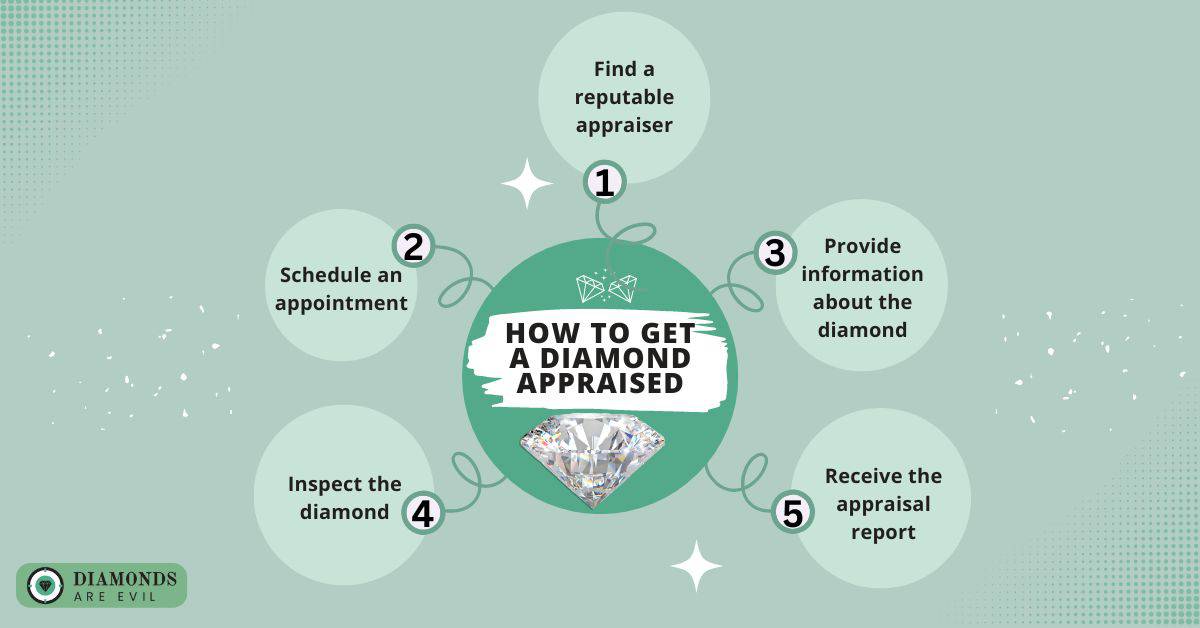
Find a reputable appraiser: Look for a qualified and experienced appraiser who specializes in diamond appraisals. You can ask for recommendations from friends or family, or search online for accredited appraisers in your area.
Schedule an appointment: Once you’ve found an appraiser you trust, schedule an appointment to have your diamond appraised. Make sure to bring any relevant documentation or certificates, such as a diamond grading report, with you.
Provide information about the diamond: The appraiser will ask you for information about the diamond, such as its carat weight, cut, color, and clarity. If you don’t have this information, the appraiser can help you determine it.
Inspect the diamond: The appraiser will inspect the diamond using specialized equipment and techniques to determine its quality and value. They may also take measurements and photographs of the diamond for their records.
Receive the appraisal report: After the appraisal is complete, the appraiser will provide you with a detailed report outlining the diamond’s characteristics and estimated value. Make sure to keep this report in a safe place for future reference.
In conclusion
Understanding the diamond pricing structure and having a diamond appraised are both important steps when it comes to buying or selling diamonds. Being aware of the factors that influence diamond value and knowing how to get a reliable appraisal can help buyers make informed decisions, while sellers can ensure that they’re receiving fair prices for their diamonds. By taking these steps, buyers and sellers can gain peace of mind when dealing with diamonds.