
Why Are Diamonds So Expensive?
Diamonds have long been a symbol of wealth, power, and romance since ancient times. As such, it is no surprise that diamonds are some of the most valuable stones on earth. But why are diamonds so expensive?
It is because they possess a unique combination of qualities that set them apart from other gemstones. The cost of diamonds is determined by a variety of factors, including economic, certification, quality, and cultural and historical forces.
In this article, we will explore each of these components in detail to give you a better understanding of why diamonds are so expensive.
What is Diamond
Diamond is a mineral composed of carbon, which is prized for its exceptional hardness, brilliance, and durability. It is the hardest known natural substance, with a rating of 10 on the Mohs scale of mineral hardness. Diamonds are typically colorless, but can also come in a range of colors such as pink, blue, and yellow, depending on the presence of impurities.
Diamonds are formed deep within the Earth’s mantle under high pressure and temperature and are brought to the surface through volcanic eruptions. They are widely used in jewelry, as well as in industrial applications due to their hardness and thermal conductivity.
Overview of Diamond Pricing Factors
Diamond pricing is influenced by various factors, including the carat weight, color, clarity, and cut of the stone. Carat weight refers to the size of the diamond, with larger stones typically commanding higher prices. Color grading evaluates the presence of color in the stone, with higher grades of colorlessness being more valuable.
Clarity grading assesses the presence of internal and external blemishes, with fewer inclusions indicating a higher value. Cut grading measures the proportions, symmetry, and polish of the stone, which can greatly impact its sparkle and overall beauty. Additionally, market supply and demand, certification, and the shape of the diamond can also affect its price.
Economic Factors
Diamond pricing is not only influenced by the characteristics of the stone, but also by various economic factors that affect its supply and demand. These factors play a crucial role in determining the value of diamonds and are considered by diamond merchants, investors, and consumers alike.
Supply and Demand: The basic principles of supply and demand determine the market value of diamonds. When the demand for diamonds is high and the supply is limited, prices tend to increase, and vice versa.
The rarity of the Stones: Rarity is a key factor in diamond pricing. The scarcer the diamond, the higher its value.
Cost of Extraction and Processing: The cost of extracting diamonds from mines, as well as processing and refining them, can greatly impact their value. The more difficult and expensive it is to extract and process a diamond, the higher its value will be.
Labor Costs Involved in Cutting and Polishing: The cutting and polishing of diamonds require highly skilled labor, which can be expensive. The cost of labor can greatly impact the price of diamonds, especially those that require intricate cuts and polishing.
Manufacturing and Distribution Overhead: The cost of manufacturing and distributing diamonds, including marketing, overheads, and profit margins, is another factor that influences their price. This cost can vary depending on the type of diamond, the market demand, and the competition.
Certification and Quality Factors
When purchasing a diamond, it is important to consider its quality and authenticity.
The Four C’s of Diamonds: Diamonds are some of the most valuable and sought-after gemstones in the world, and their value is determined by a number of factors.
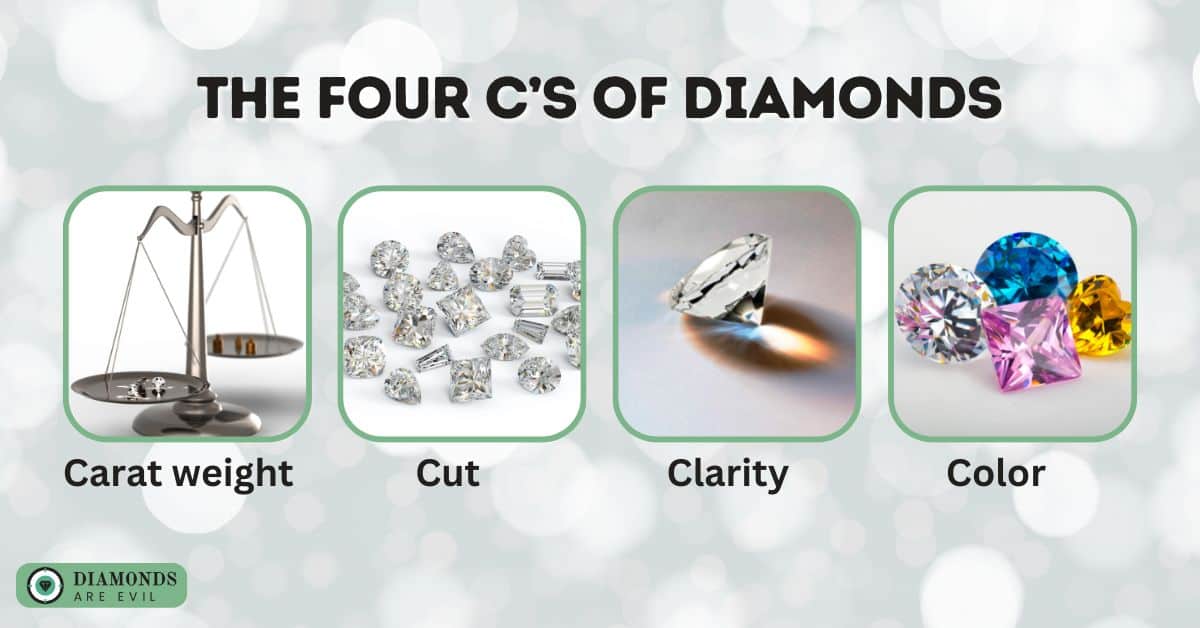
- Carat weight– is a measure of how much a diamond weighs, and it is one of the most important factors that is used to determine its value. Generally, the larger the diamond, the higher its value.
- Cut– is another important factor that determines the value of a diamond. A well-cut diamond will have excellent sparkle and brilliance, while a poorly-cut diamond may appear dull and lifeless.
- Clarity– refers to the presence of inclusions and blemishes within a diamond. Inclusions are small imperfections within the diamond, while blemishes are surface-level imperfections. A diamond with fewer inclusions and blemishes will generally be more valuable than one with more.
- Color– The color grading scale ranges from D (colorless) to Z (light yellow or brown). The less color a diamond has, the more valuable it is likely to be.
Evaluation of Quality by Jewelers: Jewelers use a variety of tools and techniques to evaluate the quality of a diamond, such as magnification, loupe, and gemological equipment. They also consider the overall appearance, brilliance, and fire of the diamond.
Grading Certificates from Laboratories: Certificates issued by independent laboratories, such as the Gemological Institute of America (GIA) and the American Gem Society (AGS), provide a detailed evaluation of a diamond’s quality based on the 4Cs.
Insurance Requirements for High-value Stones: High-value diamonds may require insurance, and insurance companies typically require a grading certificate as proof of the diamond’s value and quality.
| C | Meaning | Factors that affect it |
| Carat
|
Weight | Size of the diamond |
| Cut | Proportions and angles | How well the diamond is cut, including its depth, symmetry, and polish |
| Clarity | Flaws and inclusions | Number, size, and position of internal and external characteristics |
| Color | Tint or hue | Presence and degree of color, measured on a scale from D (colorless) to Z (light yellow or brown) |

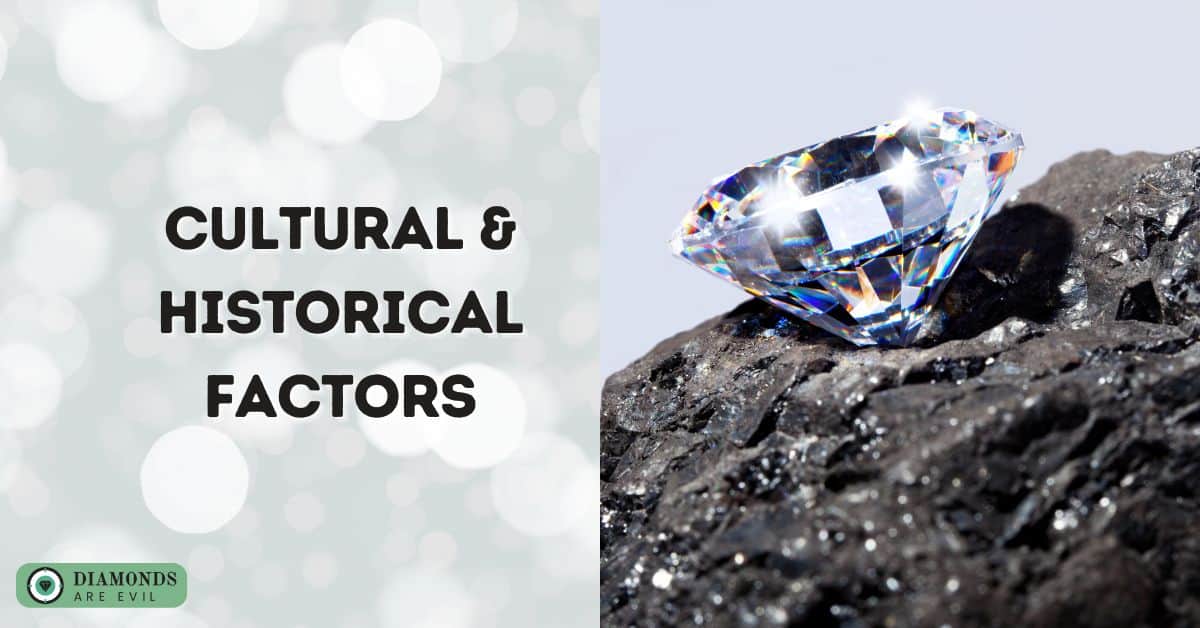
Cultural & Historical Factors
Diamonds have played a significant role in culture and history, and their value extends beyond their physical properties.
Association of Diamonds with Wealth: Diamonds have been used as a status symbol by royalty and aristocracy throughout history, and continue to be a symbol of luxury and success today.
Use of Diamonds in Engagement Rings: The tradition of giving a diamond engagement ring dates back to the 15th century when Archduke Maximilian of Austria gave a diamond ring to Mary of Burgundy.
Historical Rarity and High Prices for Specific Stones: Throughout history, certain diamonds have been especially rare and highly prized, commanding extraordinarily high prices. These rare and unique diamonds have a cultural significance beyond their intrinsic value.
In conclusion
Diamonds are some of the most valuable stones on earth due to their unique combination of qualities. Their value is determined by economic, certification, quality, and cultural and historical factors.
Supply and demand, rarity, cost of extraction and processing, labor costs involved in cutting and polishing, manufacturing overhead, color grading clarity grading, cut grading, carat weight, as well as religious and cultural significance all contribute to making diamonds so expensive. Ultimately, diamonds are a timeless symbol of wealth, power, romance, and luxury that will continue to fascinate us for years to come.